
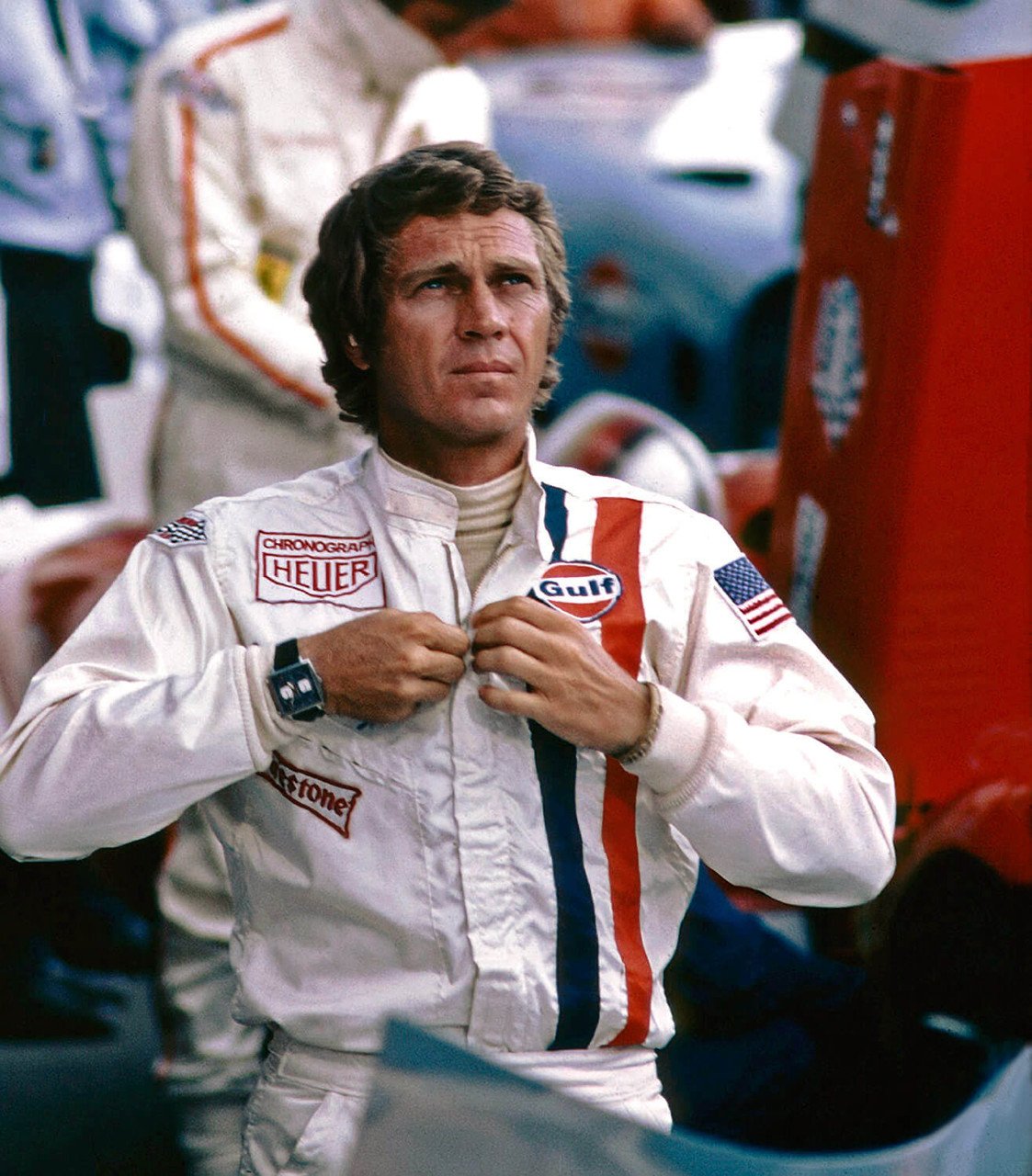
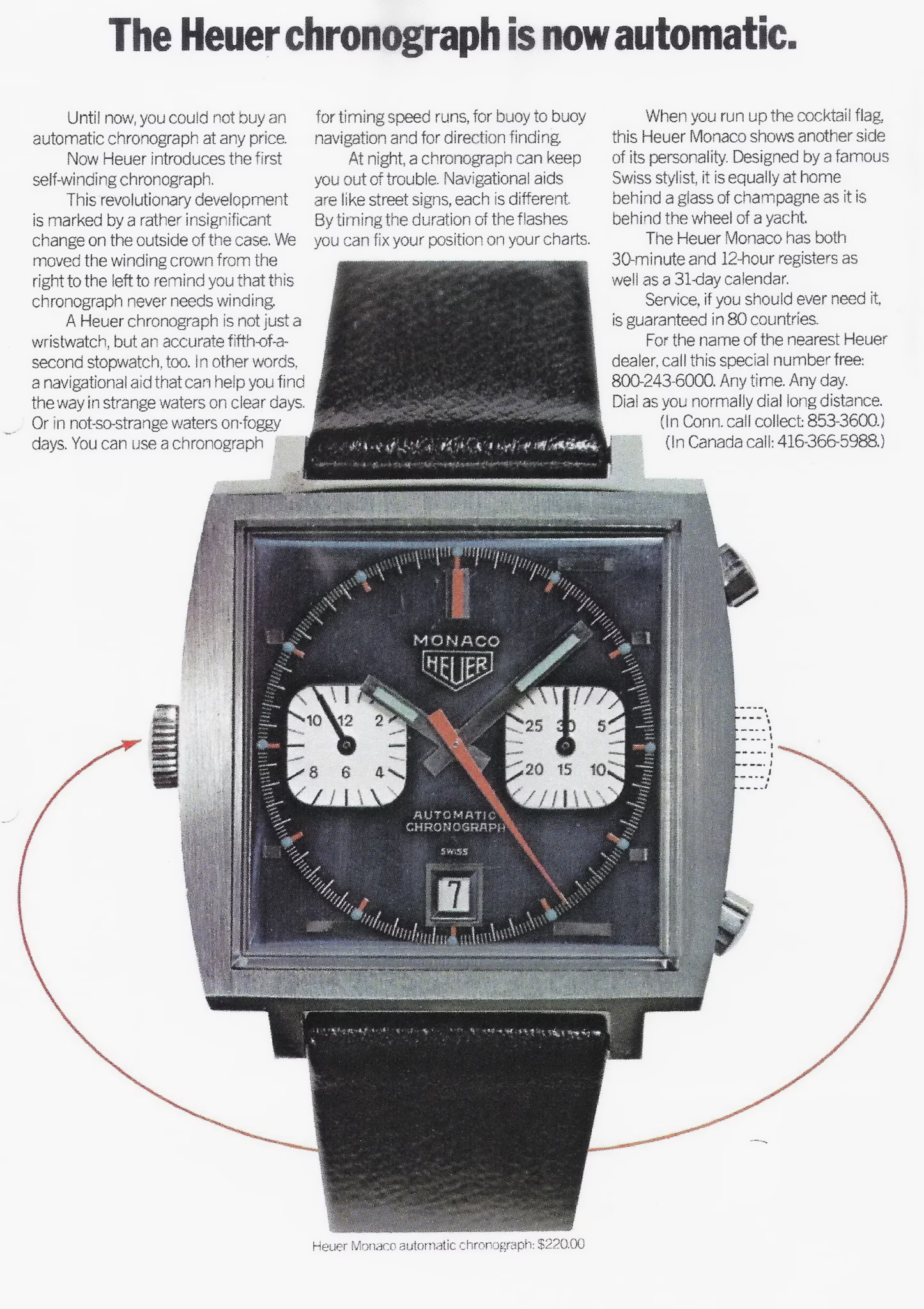
Few watches are as inseparable from motorsport as the TAG Heuer Monaco. Introduced in 1969, the Monaco was one of the world’s first automatic chronographs and quickly earned cult status thanks to its unconventional square case and its association with Steve McQueen in the 1971 film Le Mans. More than five decades later, the Monaco remains one of the most recognizable designs in modern watchmaking—a watch that has consistently balanced technical experimentation with racing heritage.
Now, on the eve of another Formula 1 Monaco Grand Prix weekend, TAG Heuer has unveiled one of the most ambitious Monaco models in recent memory: the Monaco Speed 12. Limited to just 50 pieces worldwide, the new release abandons the familiar chronograph layout entirely and instead introduces a dramatic mechanical display inspired by a V12 engine.
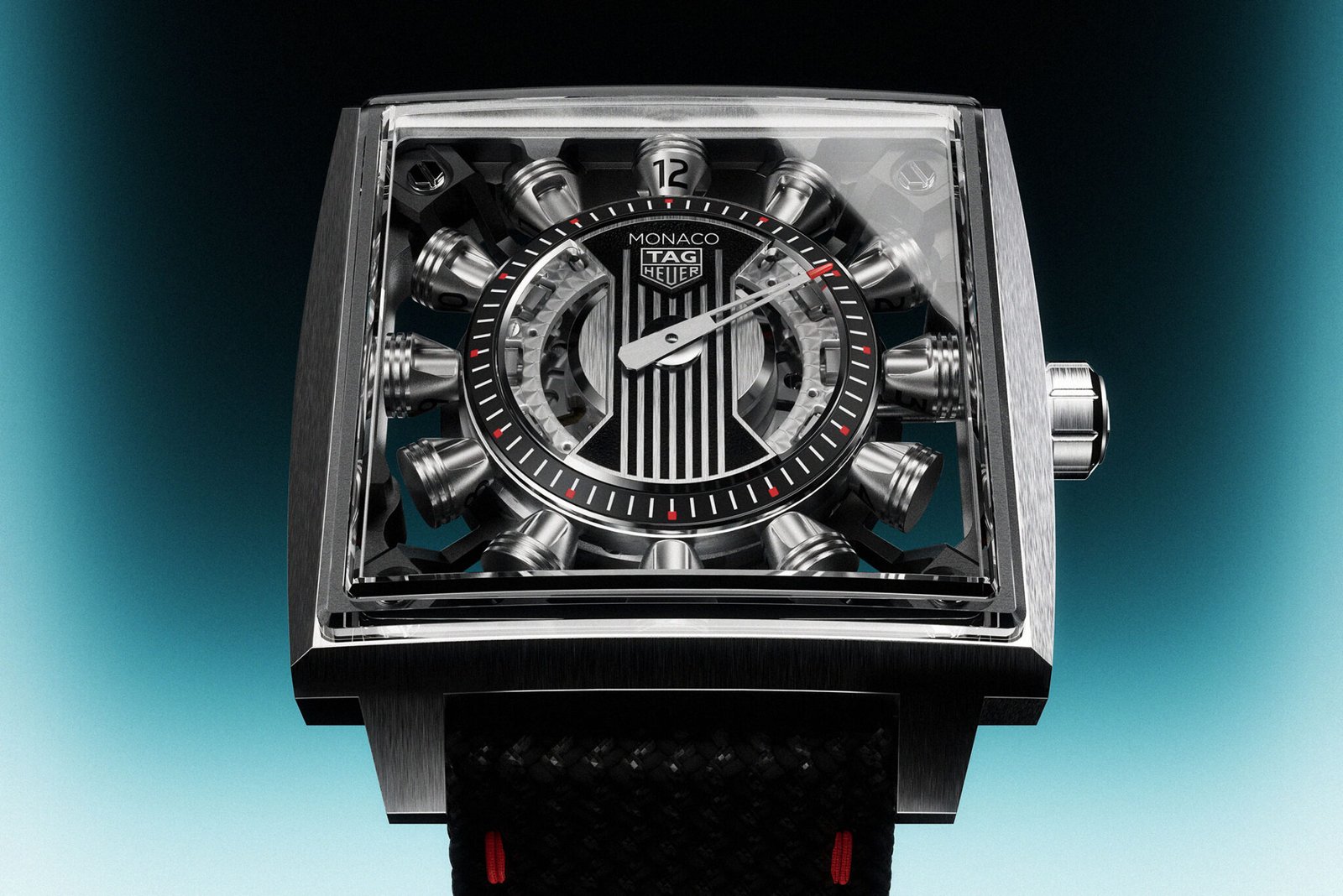
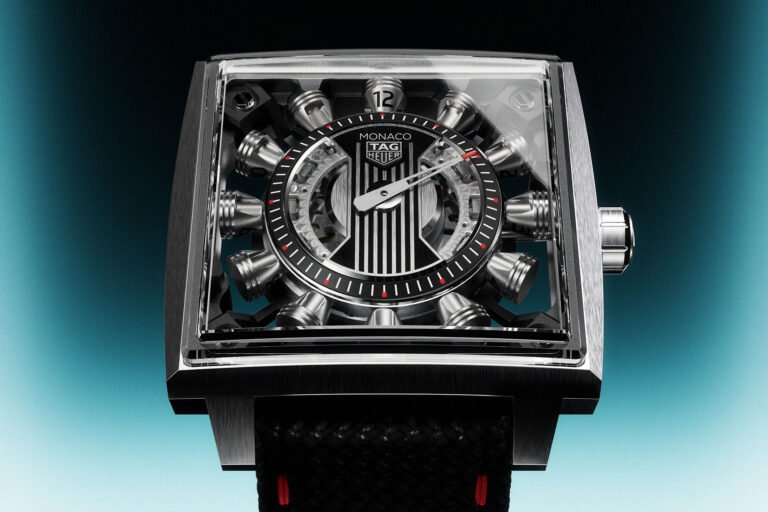
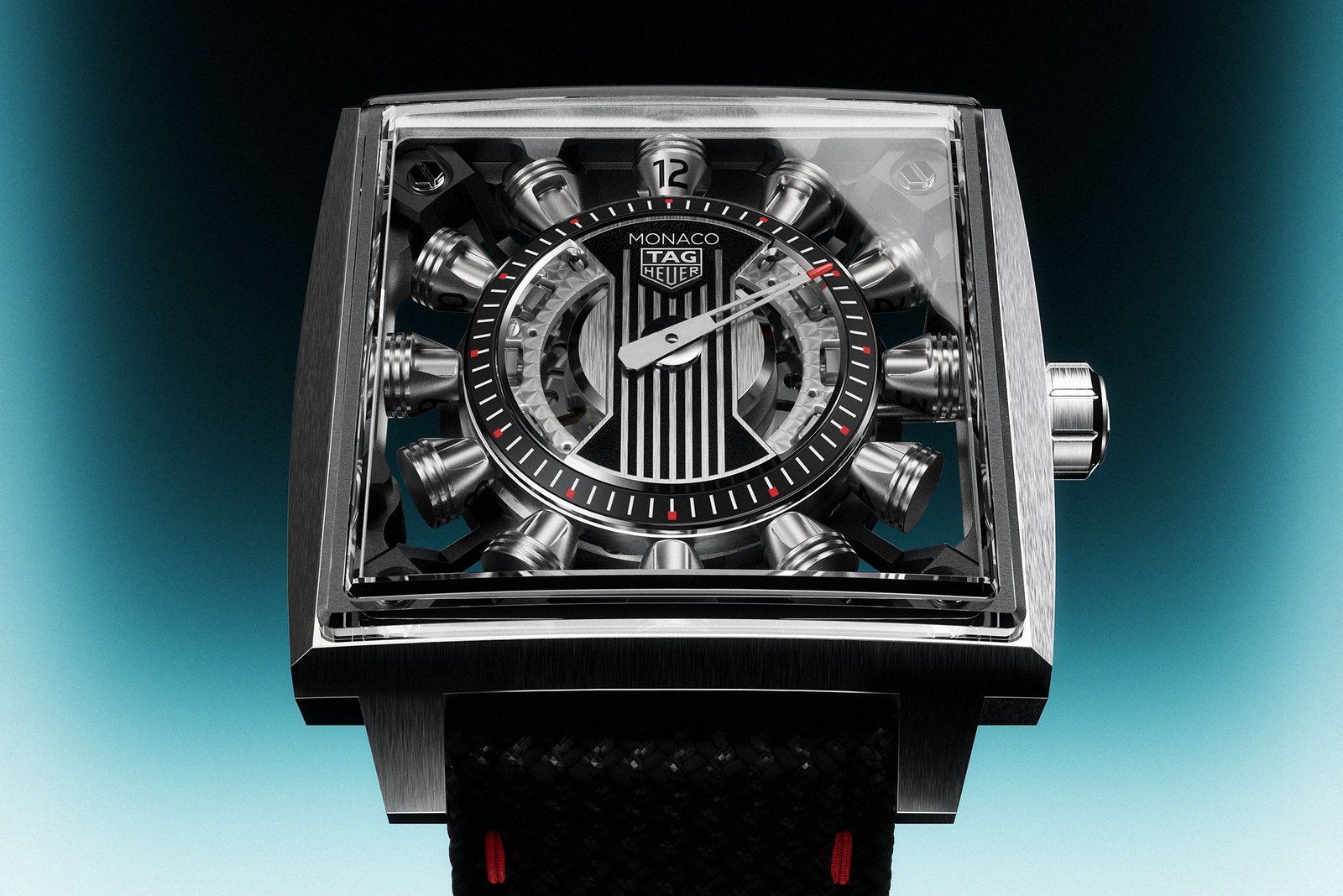
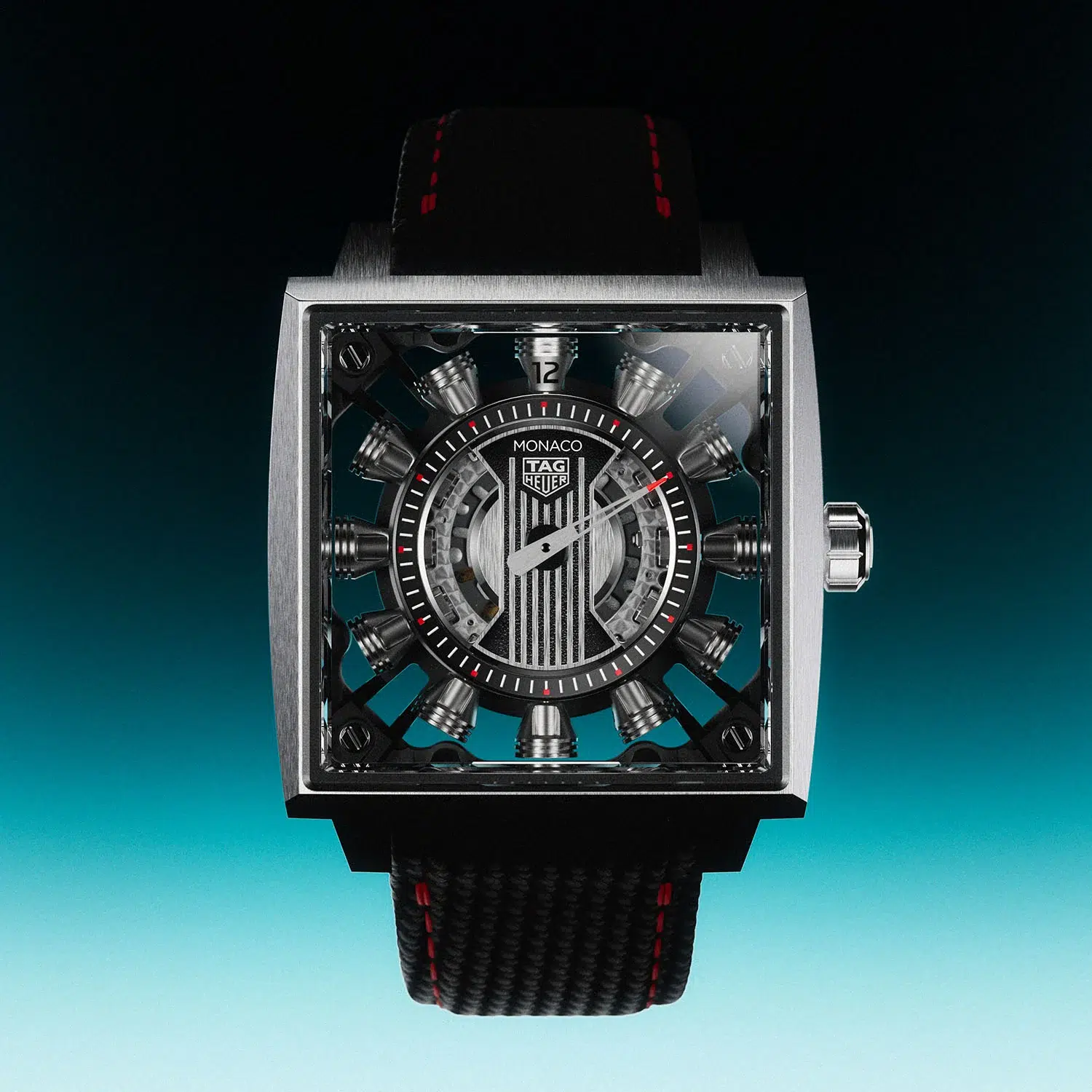
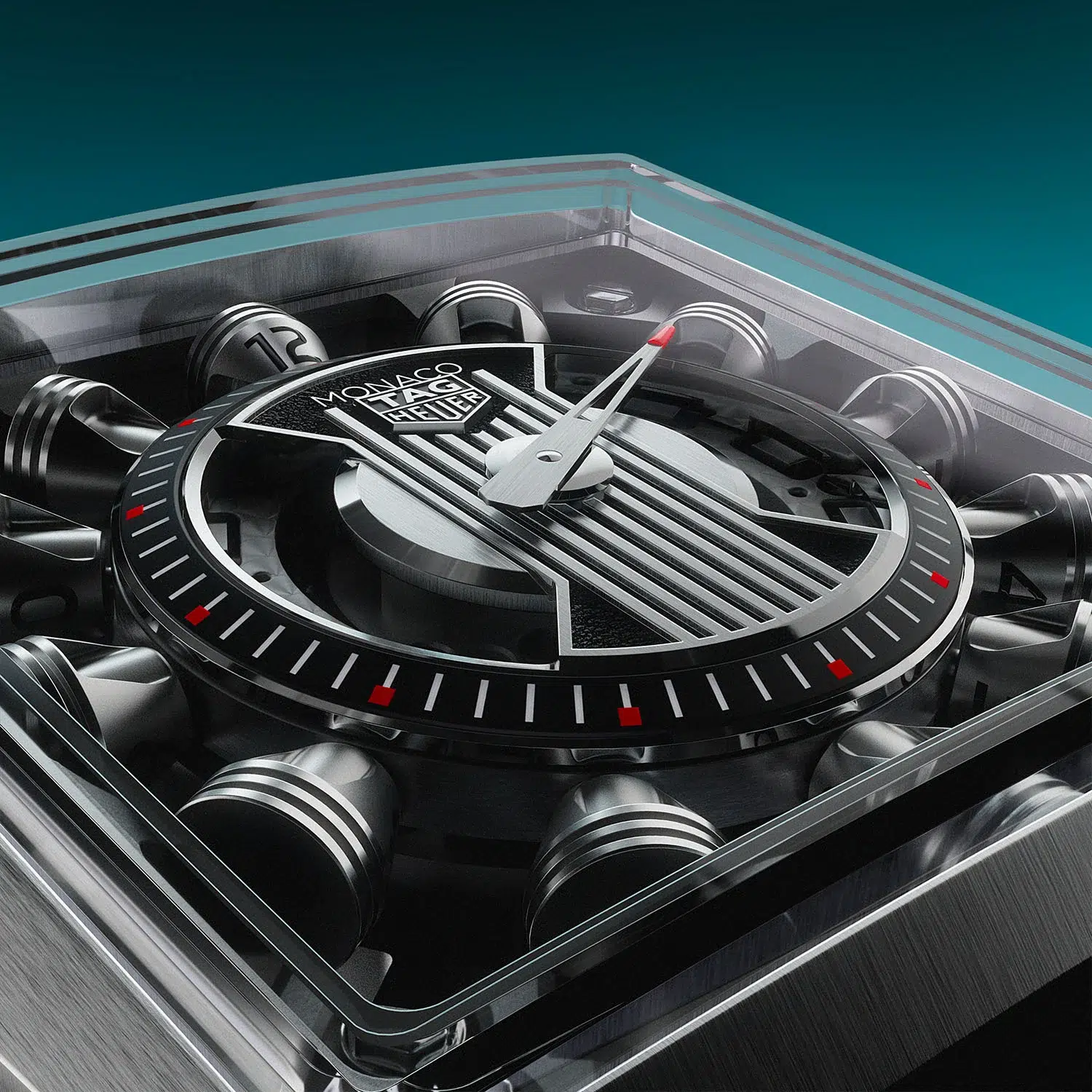
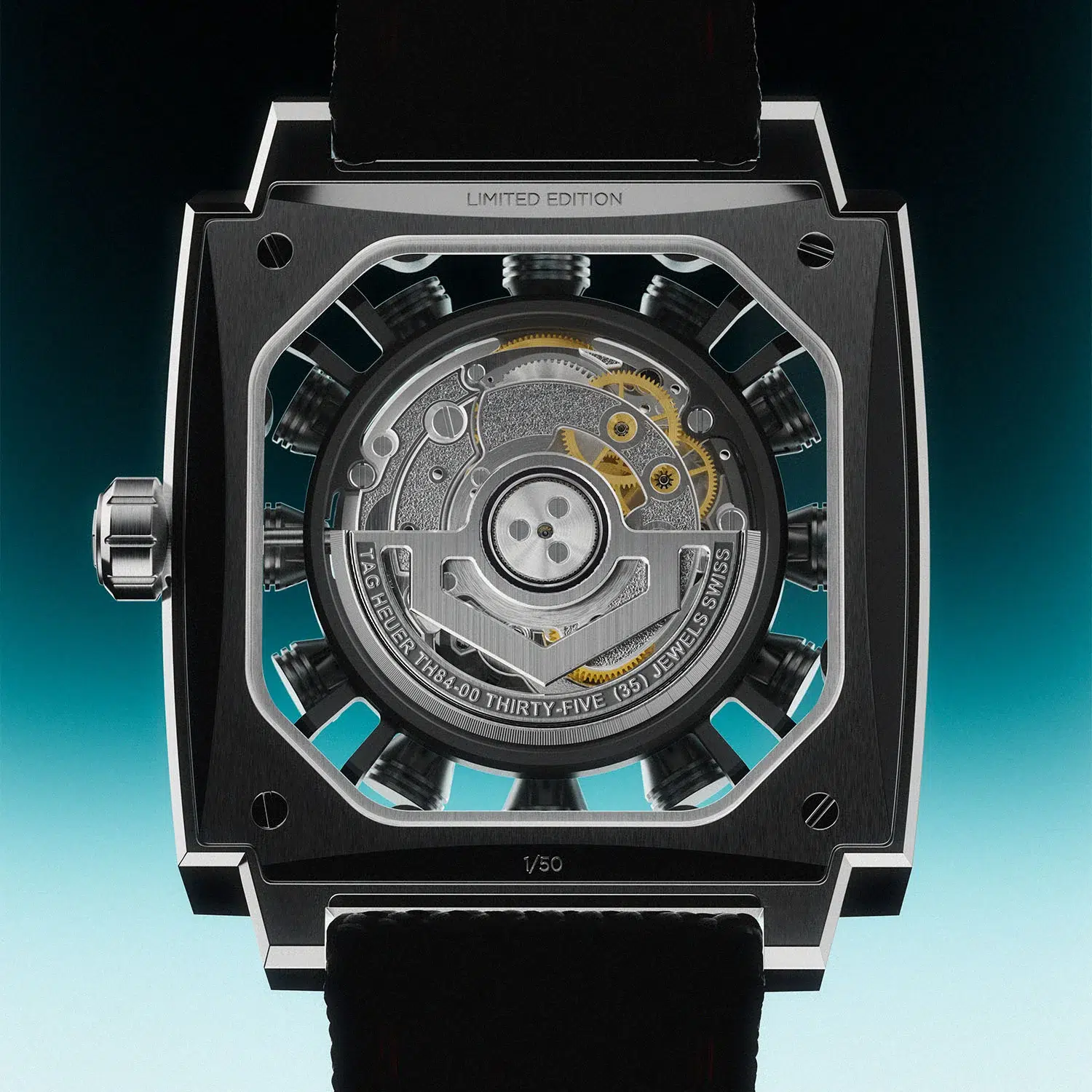
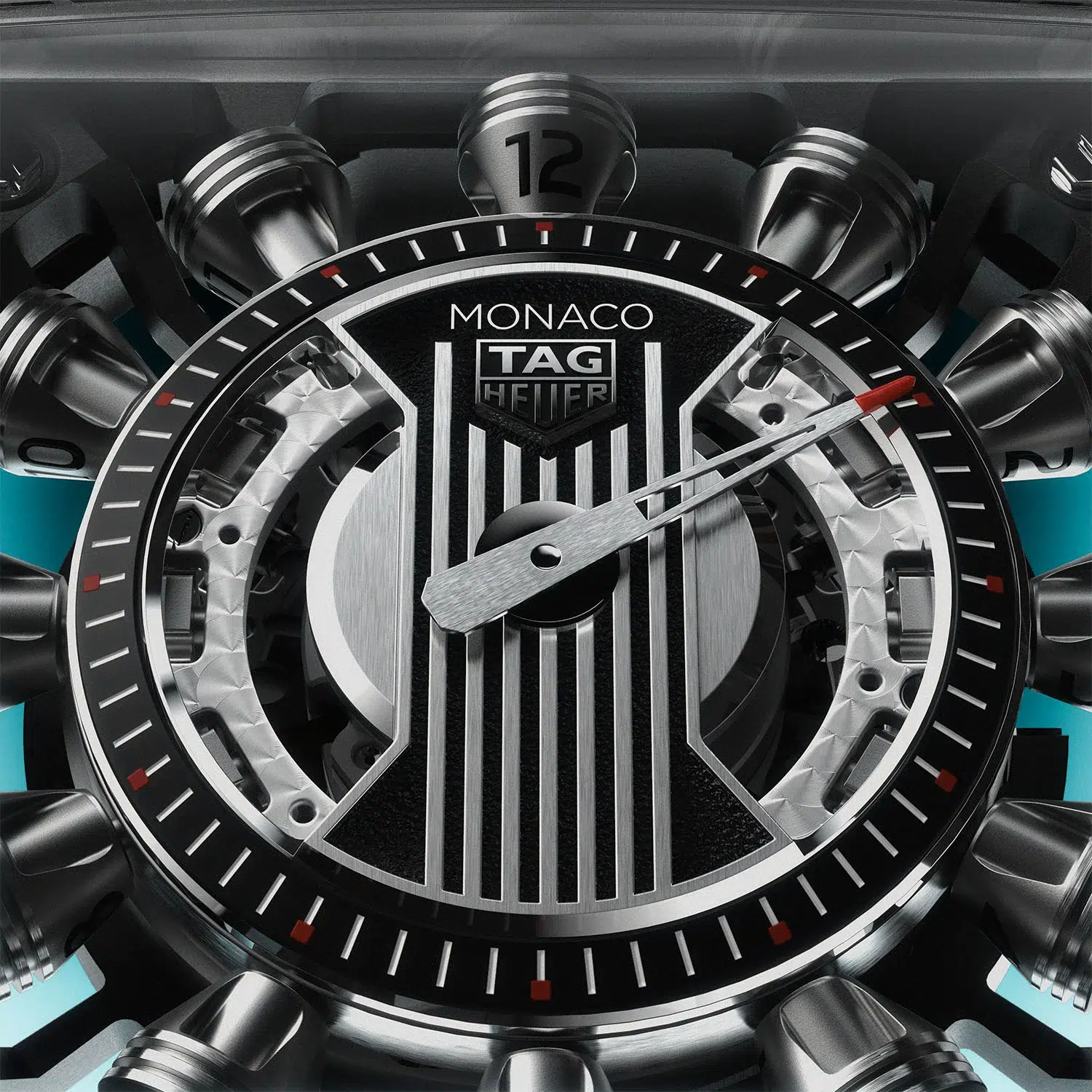
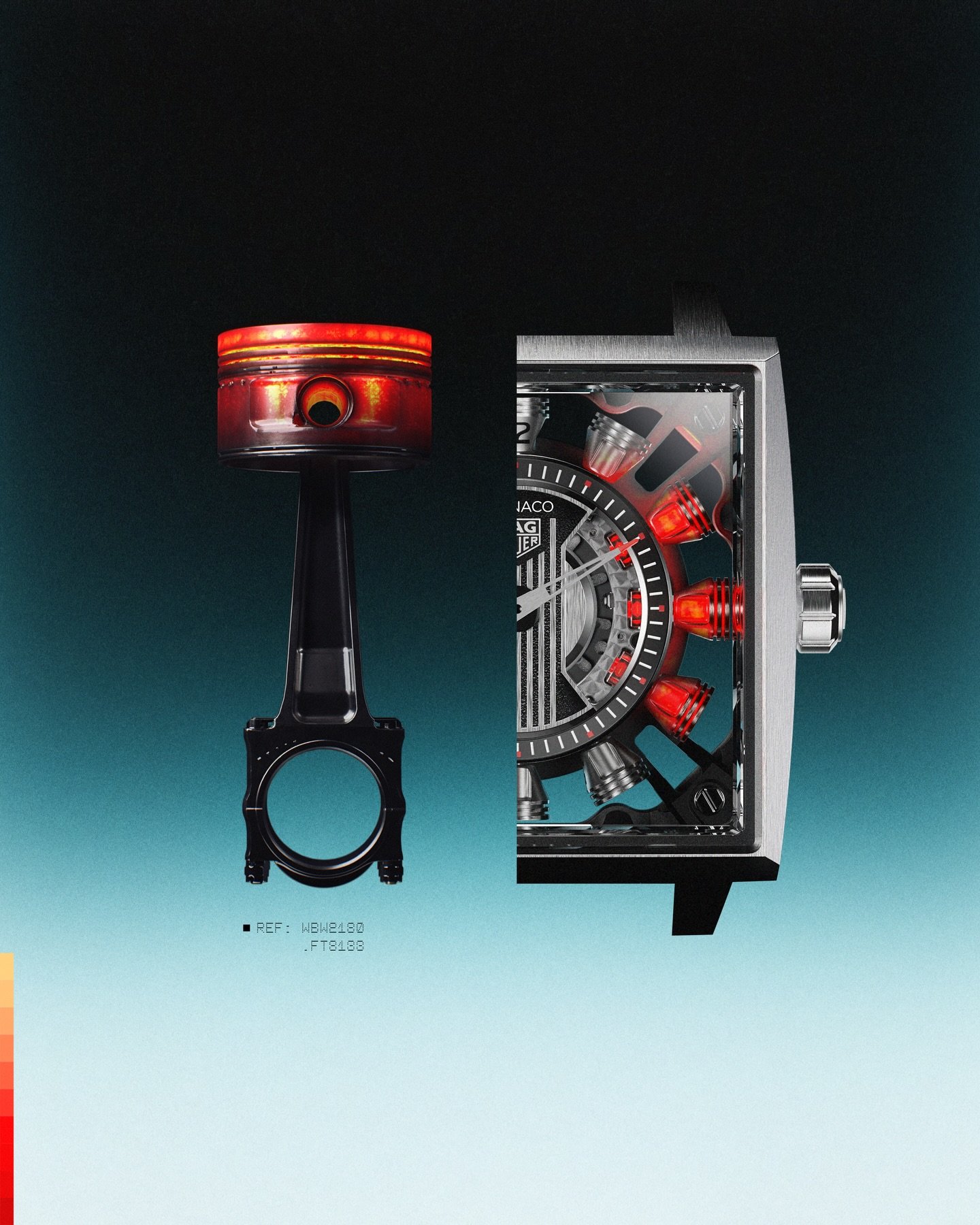
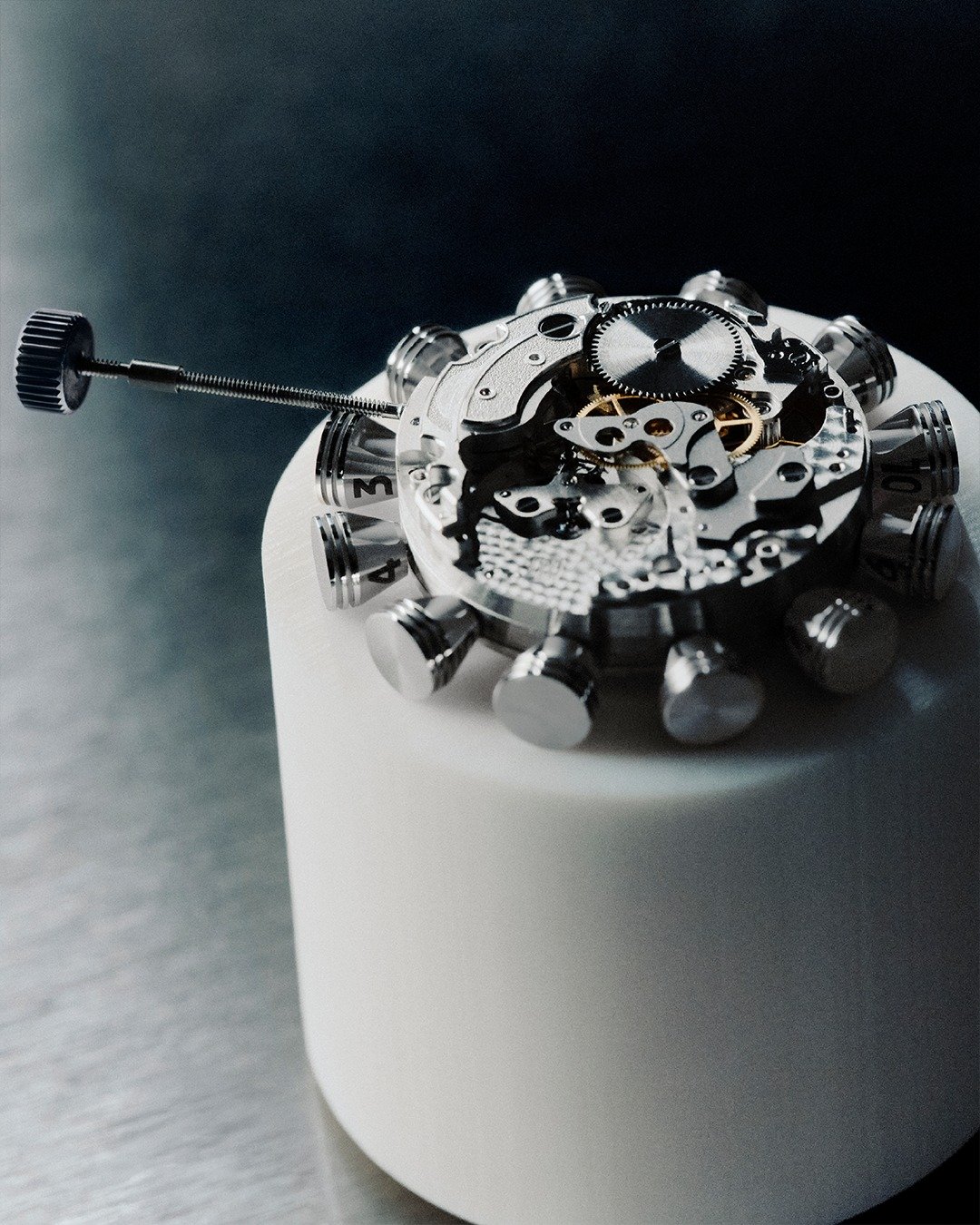
At first glance, the watch looks unlike any Monaco before it. Housed in a 40mm Grade 5 titanium case, the Monaco Speed 12 features a fully open-worked dial that exposes an intricate system of twelve rotating piston-shaped indicators. Arranged in a circular formation, these rhodium-plated pistons display the hours through a jumping-hour mechanism, creating an animated display that immediately recalls the movement of a high-performance engine.
The concept feels perfectly aligned with the Monaco’s racing DNA. While many automotive-inspired watches rely on visual cues and color schemes, the Monaco Speed 12 integrates the spirit of mechanical engineering directly into the time display itself. The result is less a traditional watch dial and more a miniature engine bay worn on the wrist.
A New Interpretation of the Monaco
Powering the watch is the hand-wound TH84-00 caliber, a highly specialized movement developed to drive the rotating jumping-hour display. The movement delivers a 45-hour power reserve and displays time through hours and minutes only, allowing the complex architecture of the mechanism to take center stage.
The black opaline minute track frames the display while preserving legibility amid the visual spectacle. Every hour, one piston rotates to reveal the next numeral, creating a dynamic transition that gives the watch a sense of movement even when viewed casually.
This mechanical choreography is what separates the Monaco Speed 12 from many contemporary high-end sports watches. Rather than pursuing thinner dimensions, additional complications, or vintage-inspired aesthetics, TAG Heuer has chosen to celebrate mechanical creativity—a direction increasingly appreciated by collectors seeking something genuinely different.
Technical Specifications
TAG Heuer Monaco Speed 12
- Reference: WBW2180.FT8133
- Case Diameter: 40mm
- Case Material: Grade 5 Titanium
- Dial: Open-worked dial with black opaline minute track
- Hour Display: Rhodium-plated rotating pistons
- Movement: TH84-00
- Functions: Jumping hours, minutes
- Power Reserve: 45 hours
- Winding: Hand-wound
- Limited Edition: 50 pieces
- Price: CHF 70,000 / USD 87,000
More Than a Limited Edition Statement
The Monaco Speed 12 arrives at an interesting moment for TAG Heuer. As the brand continues to strengthen its connection to Formula 1 and motorsport culture, this watch demonstrates a willingness to push beyond nostalgia and reinterpret its most famous model through contemporary mechanical innovation.
Collectors have become accustomed to heritage-inspired Monaco releases, making the Speed 12 feel refreshingly unexpected. It takes the iconography of racing engines and translates it into a complication that is both visually dramatic and technically engaging. More importantly, it reinforces the idea that the Monaco remains a platform for experimentation rather than simply a historical design preserved behind glass.
With only 50 examples being produced, the Monaco Speed 12 was never intended to be a mainstream release. Instead, it serves as a statement piece—one that showcases what can happen when bold design, motorsport inspiration, and high-end mechanical watchmaking converge. For TAG Heuer, it may be one of the clearest indications yet that the future of the Monaco will be defined as much by innovation as by heritage.