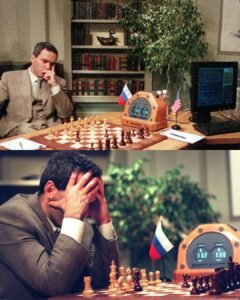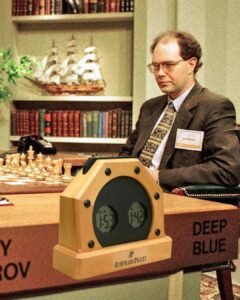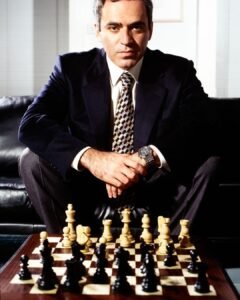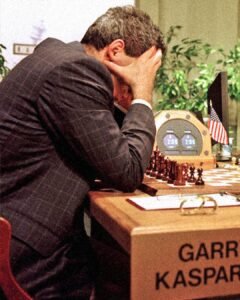

In 1997, the world watched one of the most iconic intellectual battles ever staged: Garry Kasparov facing IBM’s Deep Blue. The match symbolized a pivotal moment in technological history—human intuition and creativity confronting the raw computational power of artificial intelligence.
Millions followed every move as Kasparov, widely regarded as the greatest chess player of his generation, attempted to outmaneuver a machine capable of calculating millions of positions per second. Yet beyond the drama unfolding across the board, another object quietly shaped the rhythm of the contest.
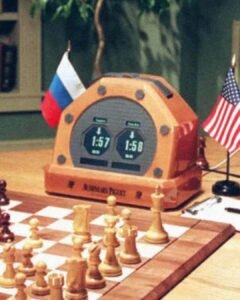
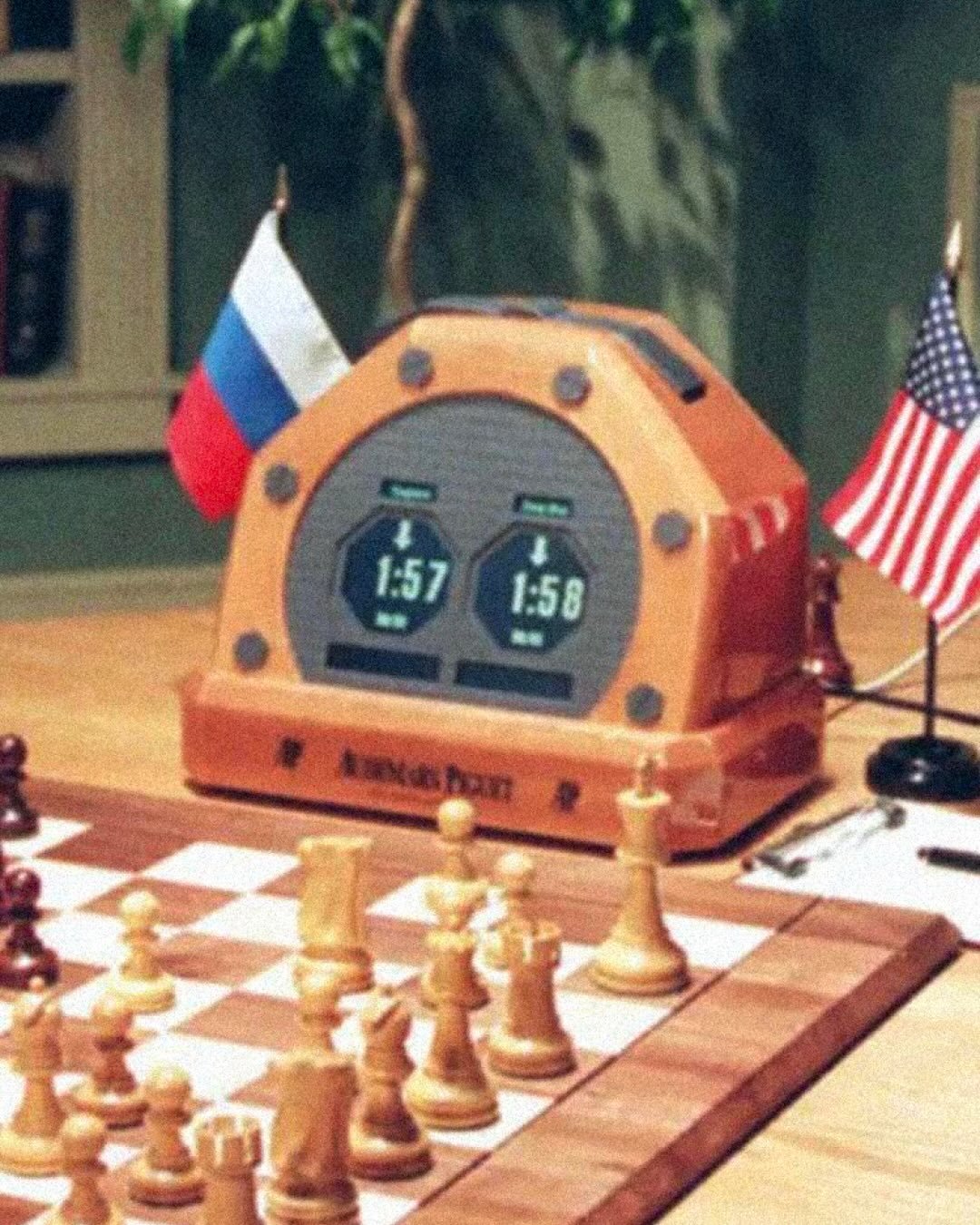
Sitting between the players was a chess clock by **Audemars Piguet—a precise mechanical referee governing every second of the match.
In elite chess, time pressure is often as decisive as the pieces themselves. Every pause costs valuable seconds, every decision must balance calculation with instinct. During the Kasparov–Deep Blue encounter, the ticking clock served as a constant reminder that even the greatest minds must race against time.
The Audemars Piguet Table Chess Clock
The Audemars Piguet Table Chess Clock is a fascinating example of how haute horlogerie occasionally steps beyond the wrist. Designed specifically for high-level chess competition, the clock reflects the same commitment to precision and craftsmanship found in the brand’s mechanical watches.
Unlike traditional wristwatches, a chess clock must perform a very specific task: track two independent time measurements with absolute clarity and reliability. Each player’s time runs until the moment they complete their move and press the button, instantly transferring the countdown to their opponent.
Audemars Piguet’s version elevated this utilitarian tool into a piece of horological design. Built with refined finishing and meticulous engineering, the clock embodies the brand’s philosophy that even functional instruments can be objects of beauty.
Its presence during the Kasparov–Deep Blue match reinforced a deeper symbolic connection. In a contest between human intellect and machine computation, the physical measurement of time remained firmly rooted in traditional watchmaking.
When Chess Meets Haute Horlogerie
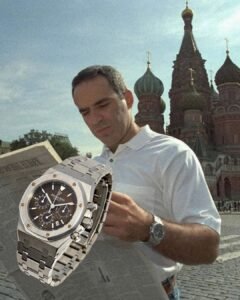
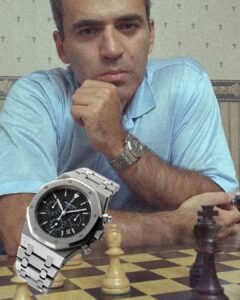
The relationship between Audemars Piguet and chess did not end with the historic match. In the years that followed, Garry Kasparov became a Friend of the Brand, forming a partnership that feels remarkably natural.
Both worlds revolve around precision and strategy. In chess, victory often hinges on calculating variations several moves ahead. In watchmaking, master watchmakers pursue microscopic tolerances and mechanical perfection. Success in either discipline comes down to mastering small margins.
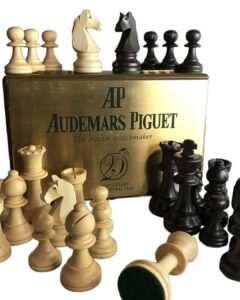
This shared philosophy has inspired several chess-related creations from Audemars Piguet over the years, including special editions and design objects that blur the line between functional instrument and collectible artwork.
The chessboard becomes a stage—much like a watch dial—where craftsmanship, symmetry, and mechanical precision intersect.
Time, Technology and the Outcome of the Match
The 1997 rematch ultimately ended in a historic victory for Deep Blue, which defeated Garry Kasparov 3.5–2.5 over six games. It marked the first time a reigning world chess champion had lost a match to a computer under standard tournament conditions—an outcome that signaled the arrival of a new technological era.
Throughout the match, the Audemars Piguet chess clock quietly measured every moment of hesitation, calculation, and decision. While the battle on the board represented the future of artificial intelligence, the clock symbolized something far older: the human tradition of measuring time through mechanical precision.
For watch enthusiasts, that small detail adds a poetic layer to the story. One of the most technologically significant contests of the modern era unfolded under the steady rhythm of traditional horology—reminding us that whether on the chessboard or inside a mechanical movement, mastery often comes down to the smallest increments of time.