

Few watches have altered the course of horology as decisively as the Audemars Piguet Royal Oak. Conceived at a time when Swiss watchmaking favored classic round gold dress watches, the Royal Oak emerged in 1972 as a radical statement: a luxury sports watch forged in stainless steel, designed to command attention without sacrificing technical refinement. Nearly five decades later, it continues to define Audemars Piguet’s identity and inspire designers worldwide.
Origins: Gérald Genta’s Revolutionary Vision
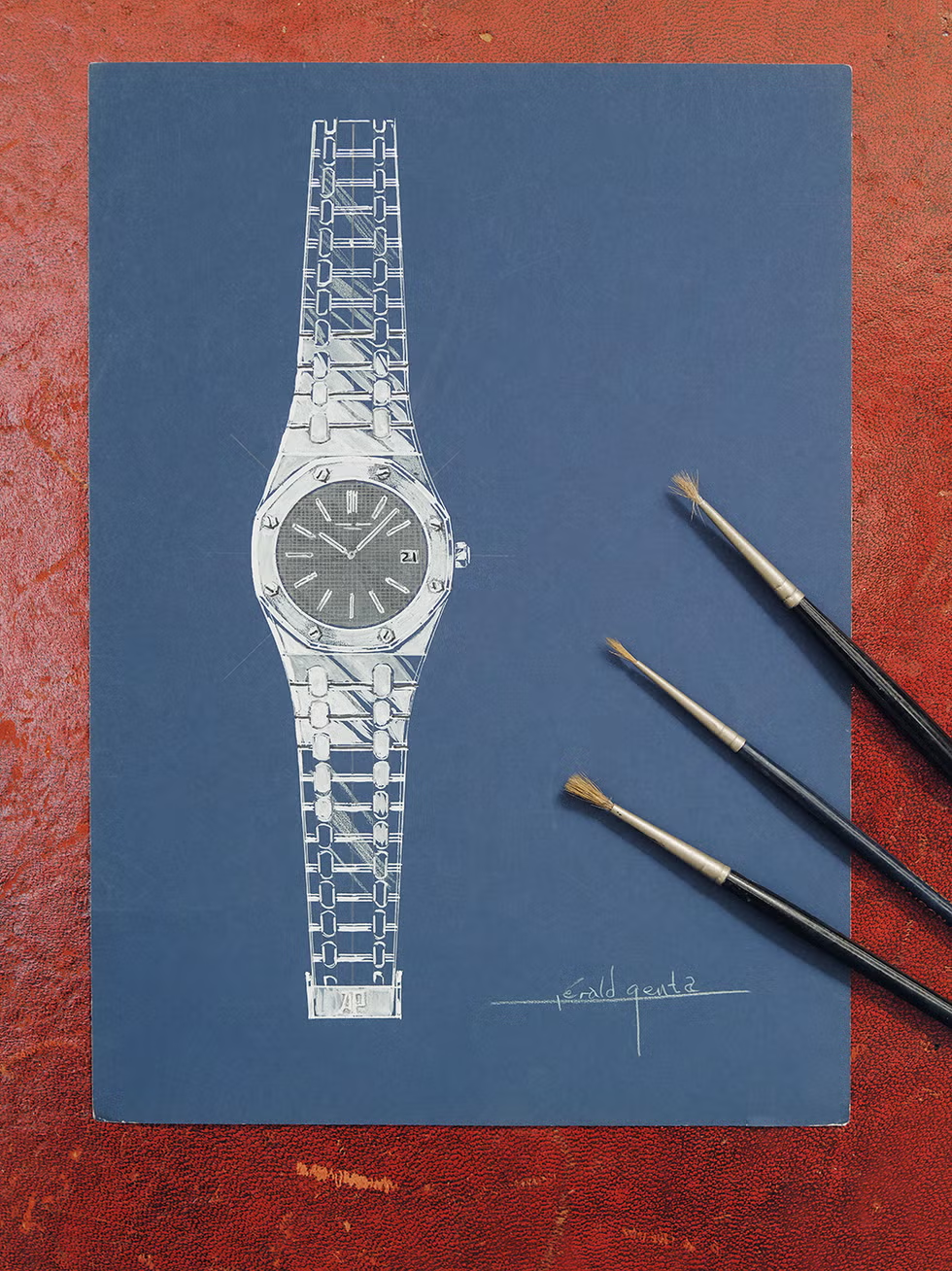
The Royal Oak owes its creation to the visionary designer Gérald Genta, whose sketches in a single night would set the blueprint for one of the most recognizable watches ever made. Genta drew inspiration from the octagonal portholes of Royal Navy battleships, translating riveted industrial aesthetics into a refined wristwatch.
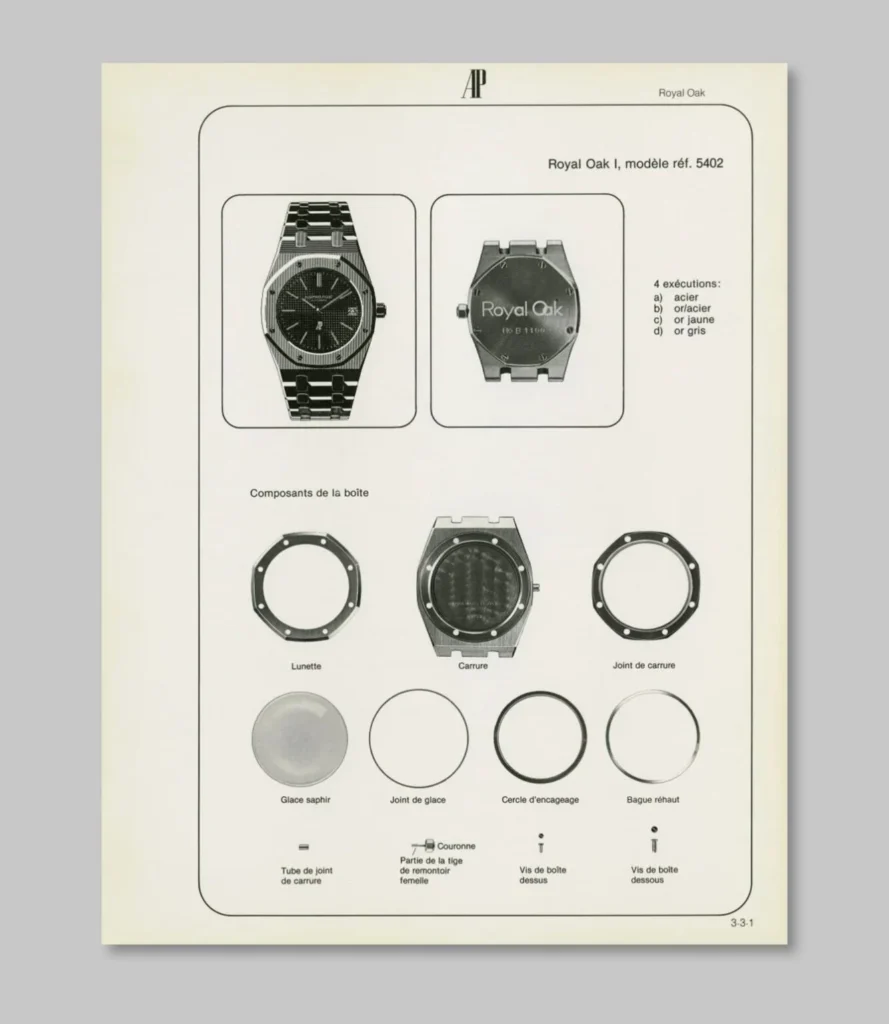
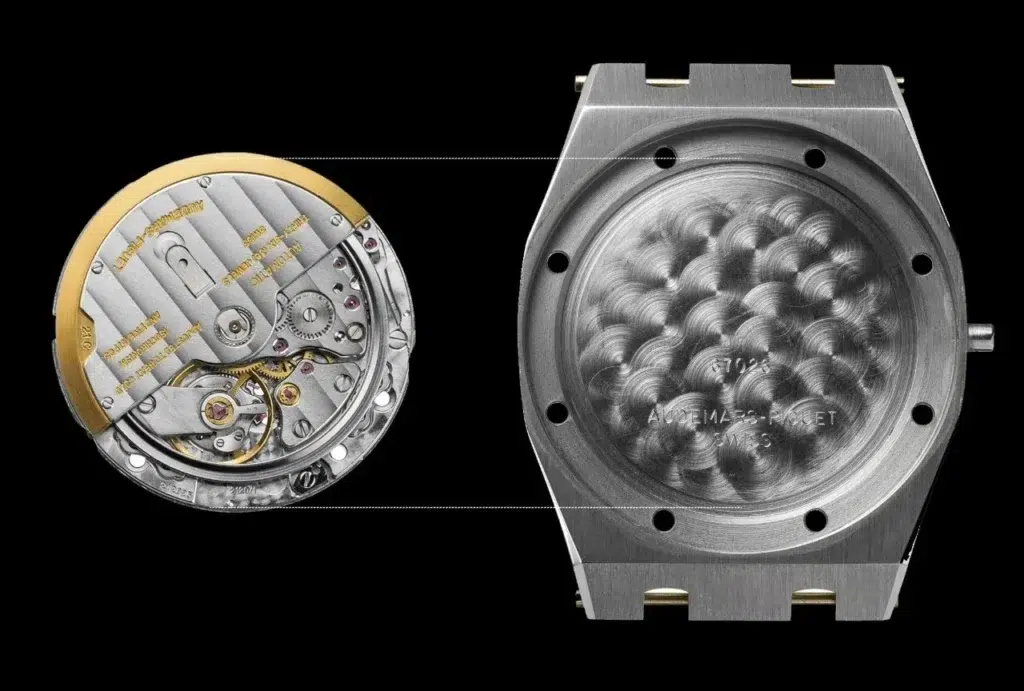
Launched as the reference 5402ST, the “Jumbo” featured an integrated bracelet and an exposed bezel secured with eight hexagonal screws—elements that challenged the prevailing notion that luxury watches should be understated and precious. Its 39 mm case, considered oversized for the era, instantly distinguished it from contemporaries. Paired with the ultra-thin Calibre 2120, sourced from Jaeger-LeCoultre, the Royal Oak combined daring aesthetics with technical sophistication, a combination rarely seen at the time.

The Jumbo and the Evolution of Design
The 5402ST set the stage for what would become known as the “Jumbo” series, establishing a design language that has persisted, with subtle refinements, into modern Royal Oaks. Over the years, Audemars Piguet updated dimensions, materials, and dial designs, but the essence—octagonal bezel, “Tapisserie” guilloché dial, integrated bracelet—remained untouched.
The Royal Oak 15202, introduced decades later, exemplifies this continuity, preserving the original Jumbo’s proportions while incorporating contemporary manufacturing techniques. Its restrained elegance underscores how design longevity can coexist with modern performance, cementing the Royal Oak as an enduring archetype in sports-luxury watchmaking.

Complications and Technical Milestones
Audemars Piguet has used the Royal Oak platform to explore complications while retaining its signature aesthetic. The first Royal Oak Tourbillon, introduced in 1997, merged the octagonal steel case with one of horology’s most demanding mechanisms, reinforcing the model’s capacity to serve as a canvas for technical innovation.
Further expansions included perpetual calendars, chronographs, and high-complication skeletonized pieces. Each iteration maintained the hallmarks of the Royal Oak—visually cohesive yet mechanically ambitious—demonstrating that luxury sports watches could be both elegant and horologically sophisticated.
Cultural Impact and Market Position
Beyond technical achievements, the Royal Oak transformed how collectors and the public perceived steel watches. Once considered utilitarian, steel now became aspirational, and the concept of a “sports-luxury” watch entered the mainstream. Its influence is visible across brands that followed, from integrated bracelet chronographs to octagonal bezels echoing the Royal Oak’s geometry.
Audemars Piguet leveraged this design ethos to establish a distinct market identity. By balancing rarity, craftsmanship, and visibility, the Royal Oak has become a symbol of taste and technical mastery—a watch that conveys both heritage and contemporary relevance.


Why the Royal Oak Matters Today
Fifty years on, the Royal Oak remains more than a design classic; it represents a philosophy. It demonstrates that audacious design, combined with mechanical integrity, can redefine industry expectations. Every new complication, every reinterpretation—from the 15202 Jumbo to the high-complication Tourbillon models—reflects a brand conscious of its past yet unafraid to innovate.
In a market saturated with trends and limited editions, the Royal Oak endures because it balances aesthetic daring with horological rigor. It is both a reference point for designers and a benchmark for collectors—a watch that changed not only Audemars Piguet but the entire concept of modern luxury sports watches.