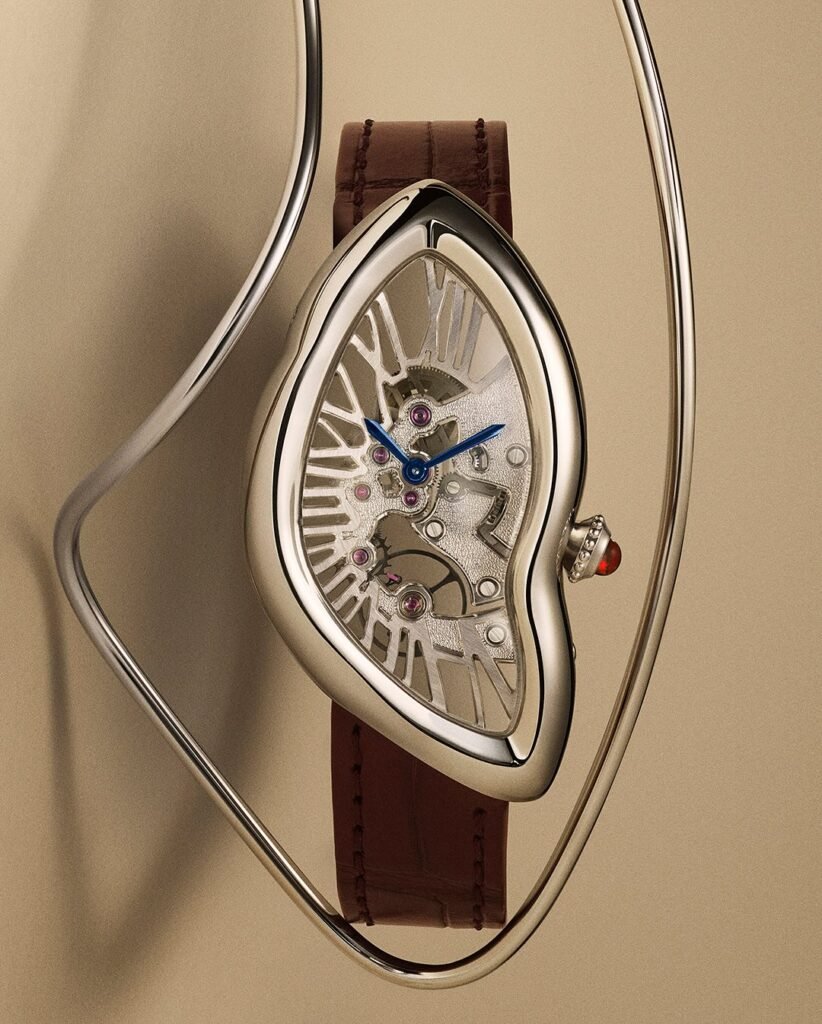

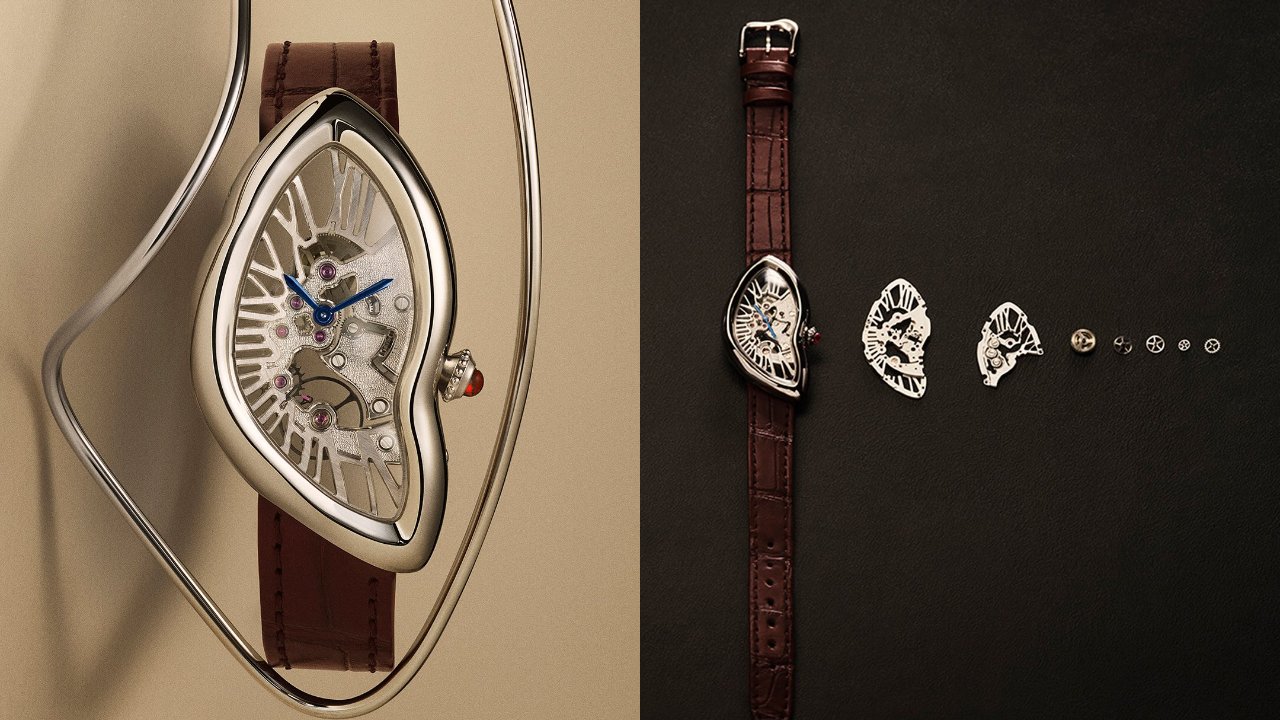
Few watches carry the same mystique as the Cartier Crash. It’s not just a timepiece—it’s a story, a statement, and arguably one of the most unconventional shapes ever to leave a watchmaker’s bench. Now, at Watches and Wonders 2026, Cartier has reignited that legend with the release of the Crash Skeleton in platinum, a piece that feels both reverent and radically fresh.
The Crash: From Counterculture Curiosity to Collectors’ Grail
The Cartier Crash first emerged in London in 1967, during a period when creativity, rebellion, and experimentation were reshaping culture. Its asymmetrical, almost molten silhouette—often likened to a watch that has melted in a surrealist dream—quickly became a symbol of that era’s avant-garde spirit.
Contrary to popular myth, the design wasn’t born from a literal car crash but rather from the imaginative minds at Cartier London, drawing inspiration from distorted forms and the free-spirited aesthetics of the time. Produced in extremely limited numbers, early Crash models became highly coveted, eventually reaching grail status among collectors. Vintage examples now command extraordinary prices, reinforcing the model’s place as one of Cartier’s most iconic creations.
Over the decades, Cartier has revisited the Crash sparingly, preserving its exclusivity. Each reinterpretation has walked a fine line: maintaining the integrity of the original while subtly evolving it for modern audiences. The introduction of skeletonization in recent years added a technical dimension to what was historically a design-led icon.
The 2026 Platinum Crash Skeleton: A Study in Contrast
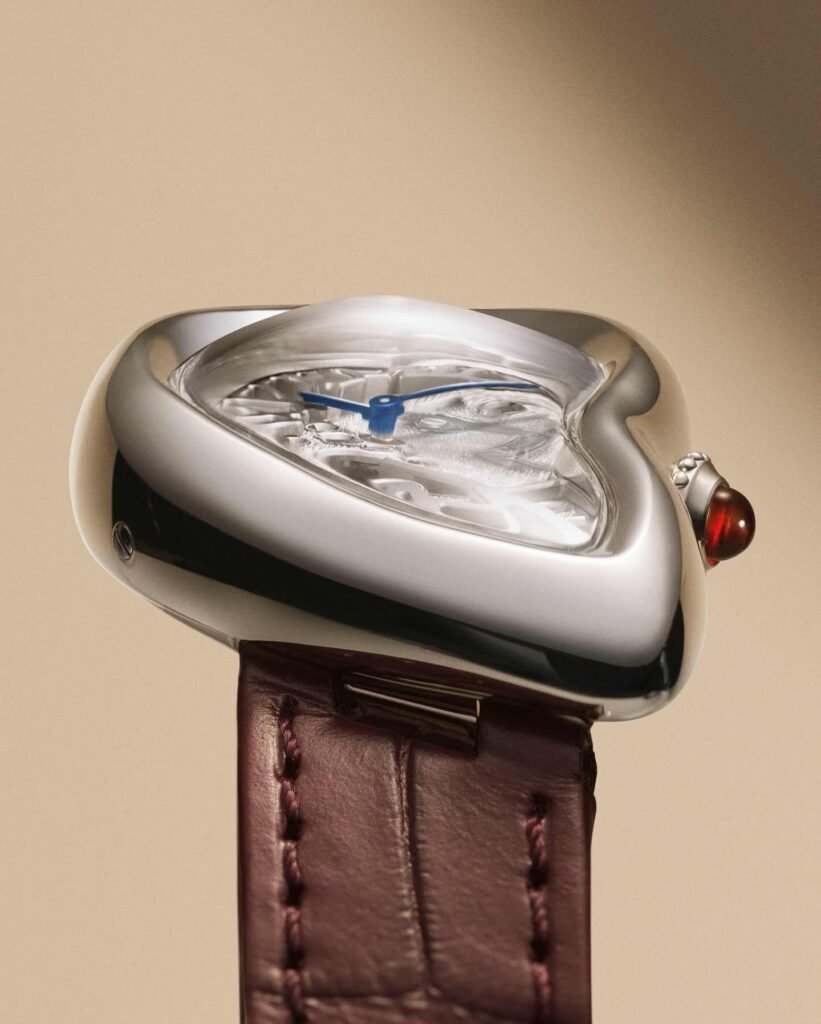
The latest chapter arrives in platinum—a material choice that instantly elevates the Crash’s presence. Known for its density and subdued luster, platinum gives the watch a cooler, more contemporary tone compared to previous gold iterations. It feels less flamboyant, more architectural—an intriguing shift for such an expressive design.
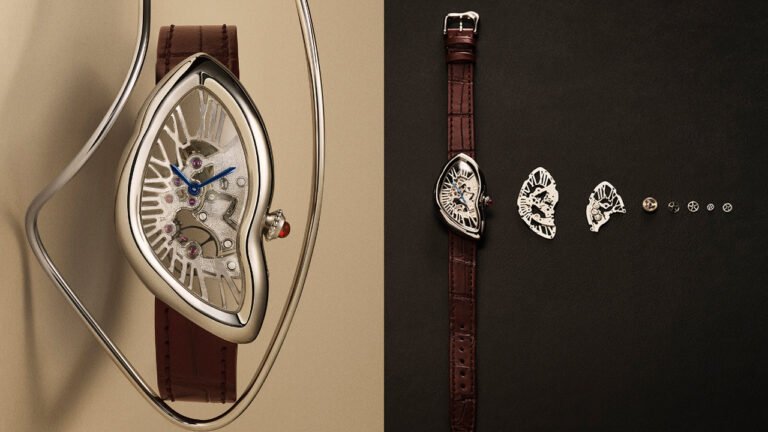
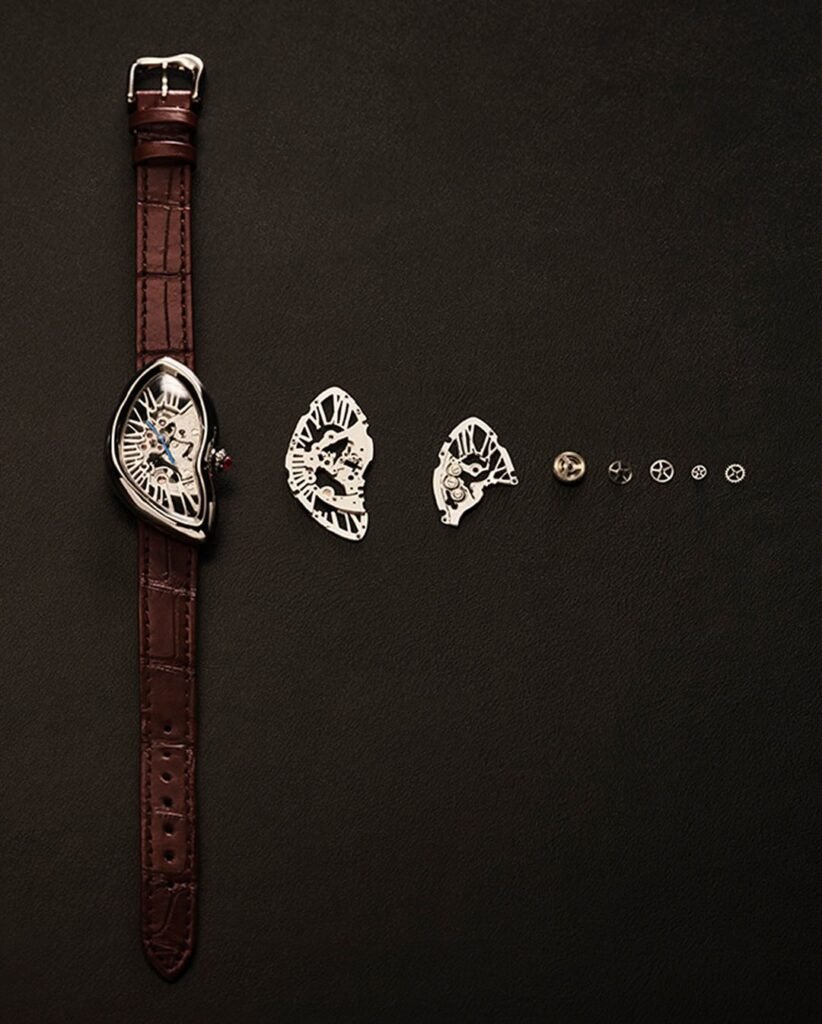
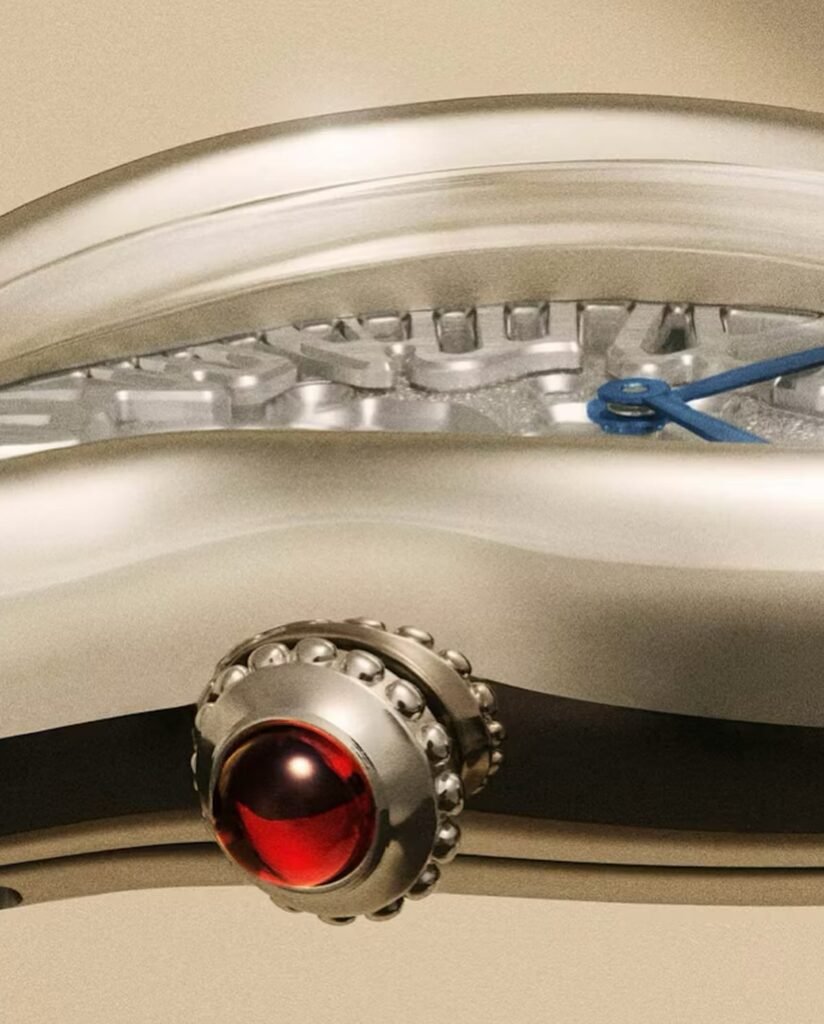
At the heart of this release is Cartier’s skeletonized movement, meticulously shaped to follow the warped contours of the Crash case. The bridges double as Roman numerals, a signature Cartier design flourish that transforms the movement into both structure and display. This is not skeletonization for the sake of transparency; it’s a deliberate integration of form and function.
The manually wound caliber offers approximately 72 hours of power reserve, a practical upgrade that aligns with modern expectations while remaining discreetly in the background. The case, measuring roughly 38.5mm in length but visually far more dynamic due to its asymmetry, wears like a sculptural object on the wrist rather than a traditional watch.
A sapphire crystal reveals the intricate mechanics, while the absence of a conventional dial ensures nothing distracts from the architectural interplay within. Paired with a classic alligator strap, the watch balances avant-garde design with traditional luxury codes.
A Bold Evolution of a Design Icon
The Crash Skeleton in platinum isn’t just another iteration—it signals Cartier’s continued commitment to pushing boundaries within its heritage lines. In an industry often preoccupied with incremental updates, this piece feels refreshingly bold.
More importantly, it reflects a broader trend: the fusion of high design and high watchmaking. Where the original Crash was primarily celebrated for its aesthetics, this modern version elevates the conversation by integrating serious horological craftsmanship. It bridges two worlds—art and engineering—in a way few watches can.
For collectors, this release ticks multiple boxes: rarity, historical significance, and technical intrigue. It also reinforces Cartier’s position not just as a jeweler that makes watches, but as a genuine watchmaking force capable of innovation without sacrificing identity.
A Glimpse Into Cartier’s Future
With the platinum Crash Skeleton, Cartier demonstrates that even its most unconventional designs can evolve without losing their soul. It’s a reminder that true icons don’t stand still—they adapt, reinterpret, and surprise.
As the watch industry continues to lean into storytelling and emotional connection, Cartier’s approach feels particularly resonant. The Crash remains a conversation piece, but now it’s also a technical showcase—proof that artistry and horology are no longer separate pursuits.
If this release is any indication, Cartier’s future lies in deepening that intersection, turning its storied past into a platform for ever more daring creations.