
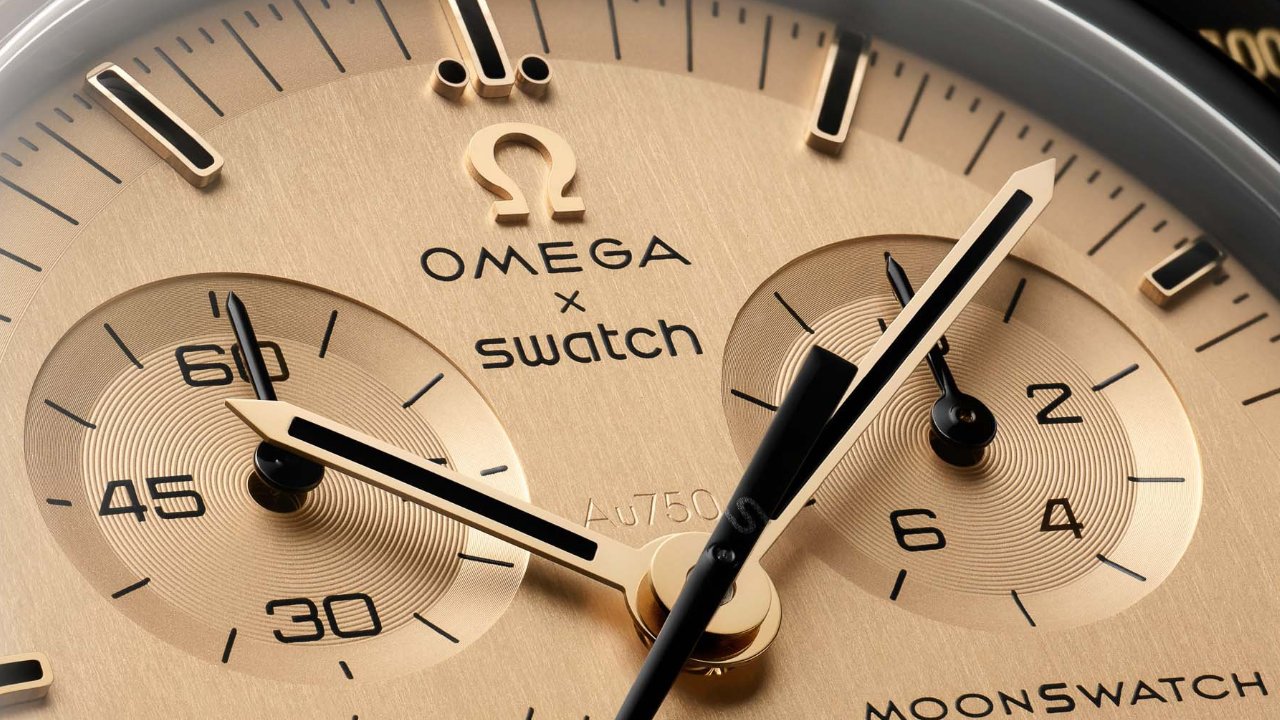
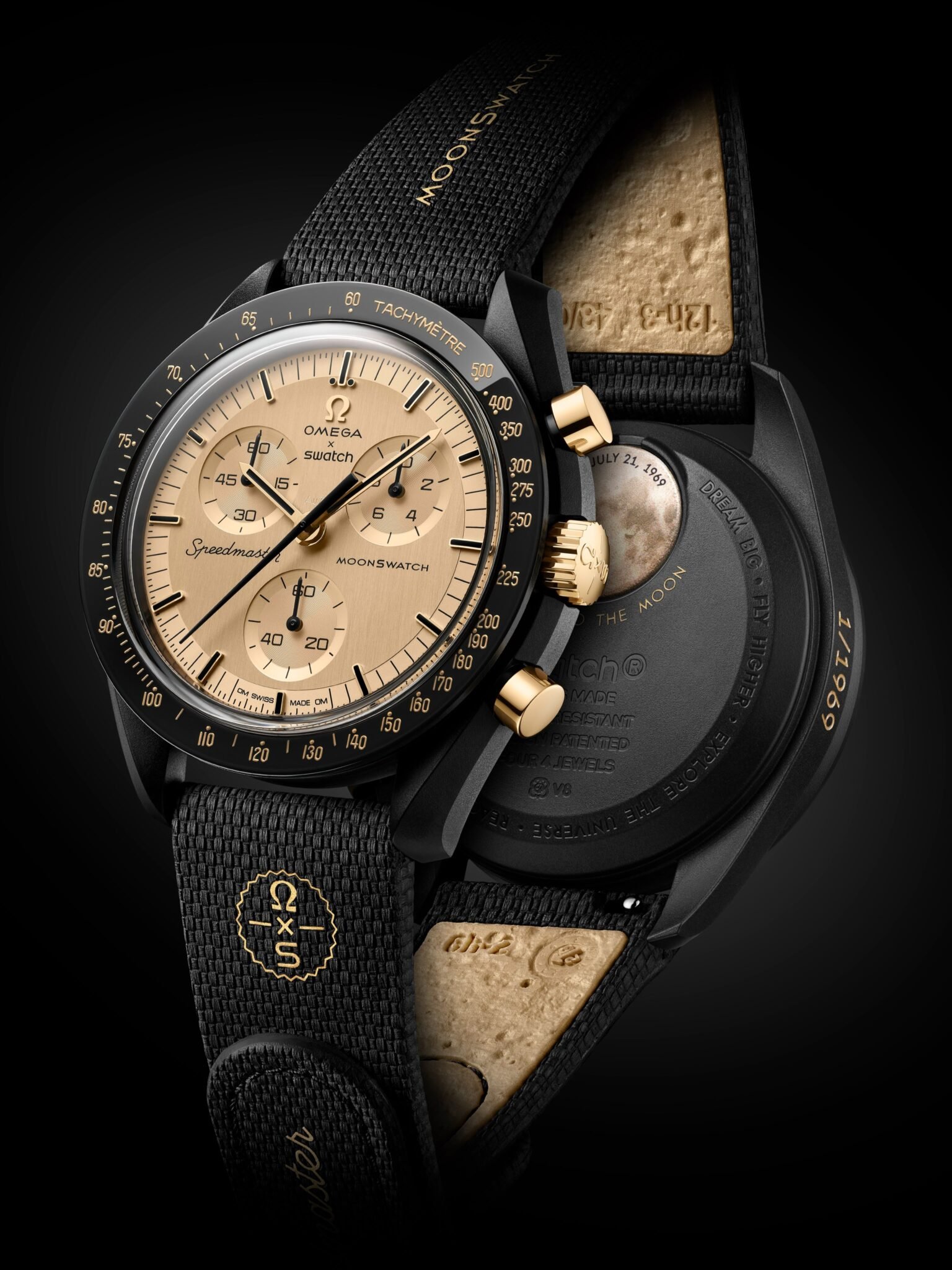
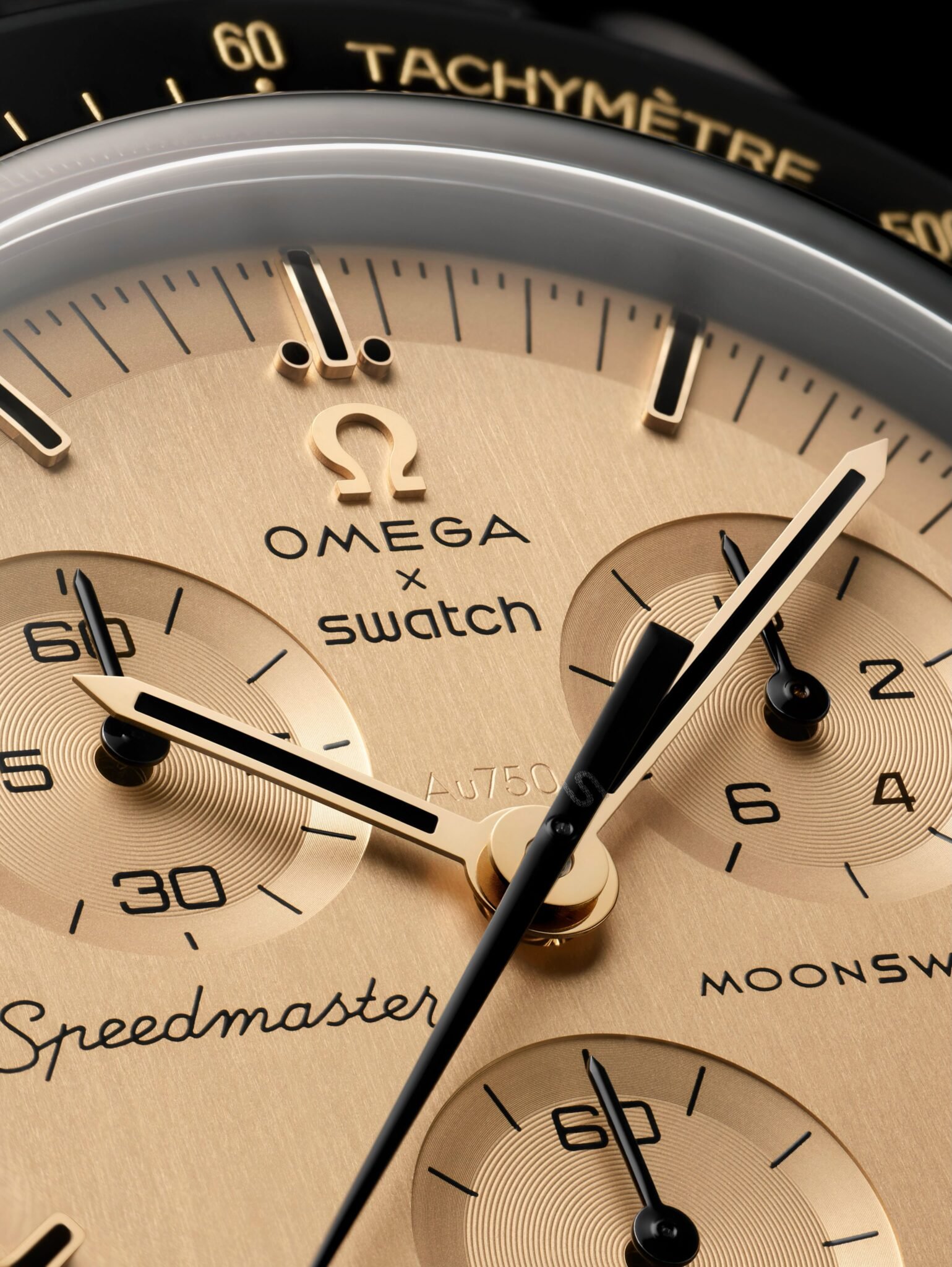
Four years after Swatch and Omega turned the watch world upside down with a $260 quartz chronograph, the two Swatch Group siblings have pulled off something far stranger: a MoonSwatch made partly of gold. MISSION TO THE MOON 1969 keeps the familiar 42mm Bioceramic silhouette that made the original collaboration a phenomenon, but its dial, hands, crown, and pushers are cast from Omega’s proprietary 18K Moonshine Gold. It is priced at CHF 500, capped at exactly 1,969 individually numbered pieces, and it may be the most conceptually loaded MoonSwatch yet released.
From Queue-Clogging Sensation to Considered Anniversary Piece
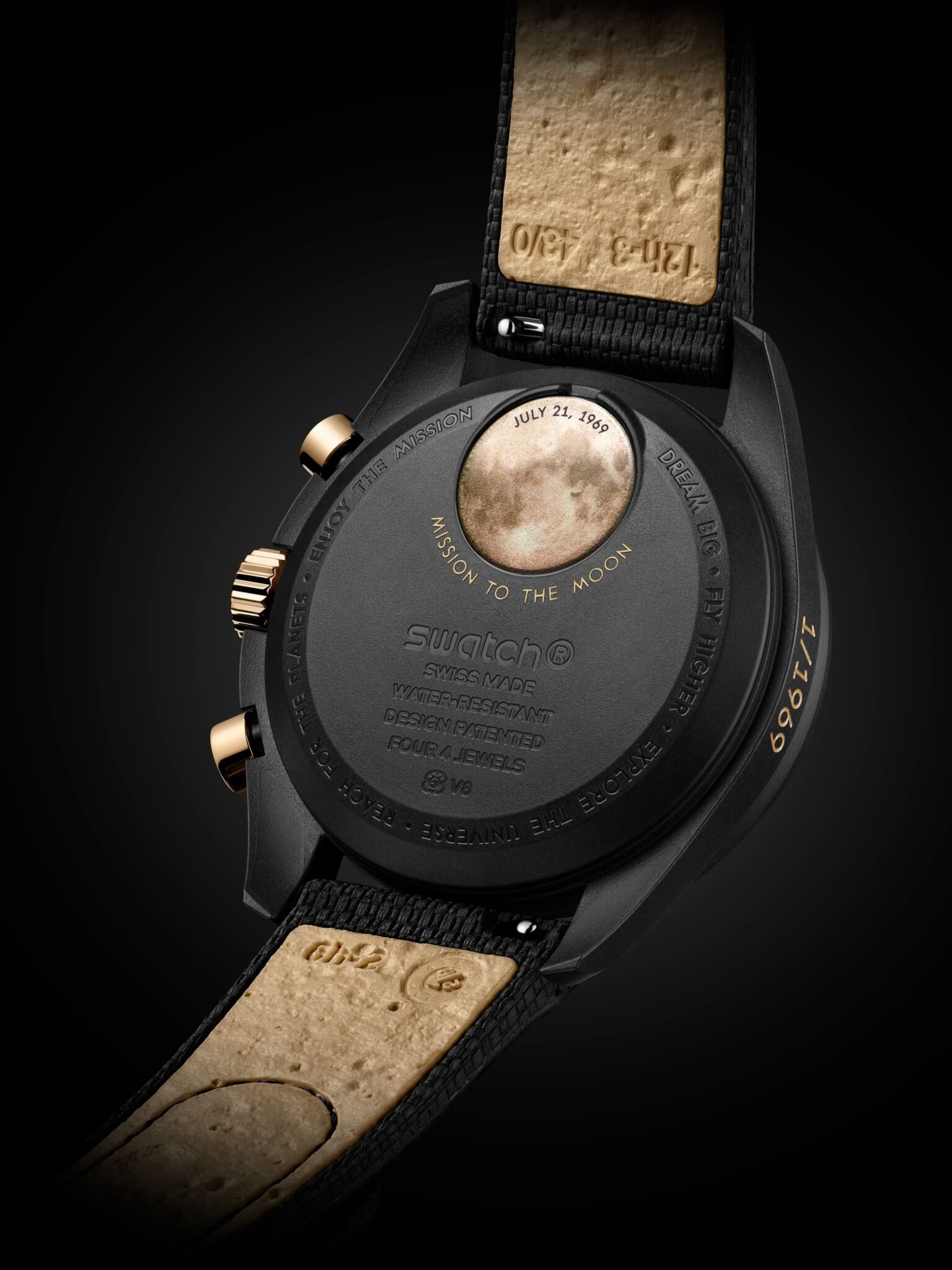
When the original Bioceramic MoonSwatch collection landed in March 2022, it triggered lines around blocks in Sydney, Tokyo, Milan, and London for a watch that, on paper, was simply a colorful reinterpretation of the Speedmaster Moonwatch in a ceramic-castor-oil composite. Eleven planetary-themed models later, the collaboration had done something remarkable: it introduced an entirely new generation to Omega’s design language without anyone spending Speedmaster money. Since then, Swatch has kept the concept moving with moonphase editions, seasonal colorways, and now, fittingly, a piece built around the anniversary that started it all. MISSION TO THE MOON 1969 marks the date Apollo 11 touched down, July 21, 1969, and it does so with a level of material seriousness the earlier Velcro-strapped playthings never attempted.
The Gold Is the Whole Story
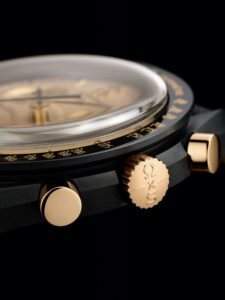
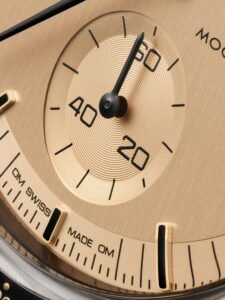
What separates this release from every MoonSwatch before it is where the gold actually comes from. Swatch has stated that the 18K Moonshine Gold used here was recast from genuine Omega spare parts dating to 1969, meaning the metal on your wrist has a documented lineage back to the exact era of the lunar landing rather than being newly sourced material shaped to look vintage. Collectively, the gold components weigh 11 grams, a detail Swatch frames as a nod to the Apollo 11 mission number. Priced at CHF 500, the watch’s price is notably based on the value of those 11 grams of 18K gold back in 1969, rather than today’s considerably higher gold price — a detail that turns the price tag itself into part of the tribute. Layered onto the case is a black Bioceramic bezel with a gold-toned tachymeter, a vertically satin-brushed dial, and bevelled gold indexes finished in black lacquer, all echoing the rare 18K gold Speedmaster that Omega produced to commemorate the same landing back in 1969. It is, in effect, a MoonSwatch quoting a Moonwatch quoting the moon itself.

Getting One Won’t Be Simple
Where the 2022 launch rewarded whoever showed up first at a physical Swatch store, MISSION TO THE MOON 1969 flips the model entirely. It’s sold exclusively through Swatch’s Electronic Swatch Timepiece Application, or ESTA, meaning interested buyers need an approved Swatch account just to be considered, with no guarantee of allocation. Combined with the hard cap of 1,969 pieces, this shifts the release from “sensation you could theoretically queue for” to something closer to a genuine limited-edition drop, with all the scarcity dynamics that implies for a piece carrying real precious metal.
What This Signals for the Collaboration’s Future
MISSION TO THE MOON 1969 reads less like another flavor in an increasingly crowded MoonSwatch lineup and more like a statement of intent. By introducing gold sourced from period-correct Omega components, Swatch and Omega are demonstrating that a collaboration once defined by accessible plastic-adjacent fun can also carry genuine heritage weight when the occasion calls for it. For a partnership that has already reshaped how younger collectors enter watchmaking, this release suggests the MoonSwatch concept still has room to surprise: not by getting louder or more colorful, but by getting more historically serious. Whether this becomes a template for future anniversary pieces or a one-off flex, it confirms that four years on, Omega and Swatch are still finding new ways to make the moon landing feel personal.