
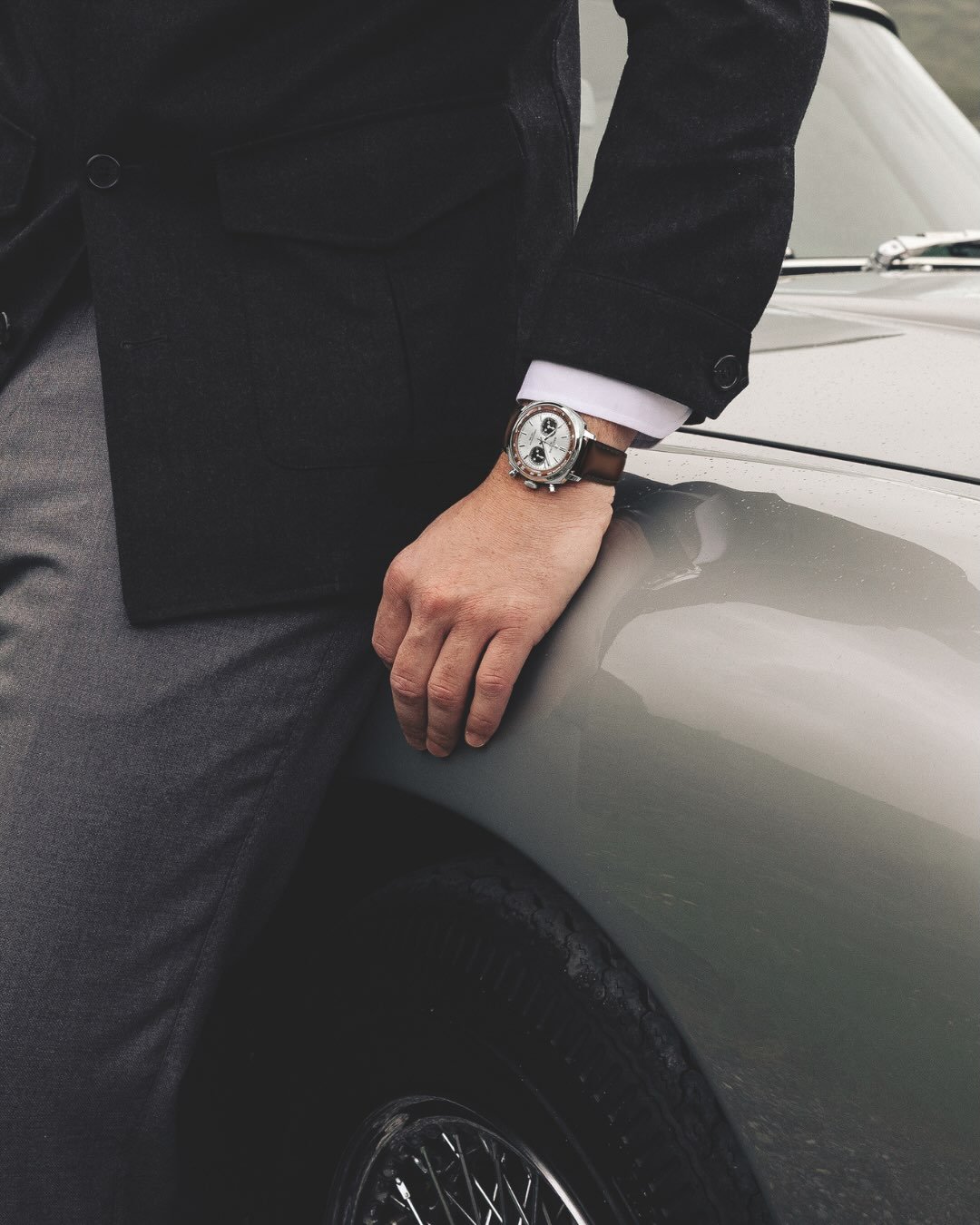
Some watch releases chase a trend. This one chases a memory. On July 20, Breitling and Aston Martin unveiled the Top Time B01 Chronograph 41 Tribute to Aston Martin DB5, and if that name sounds like it belongs in a museum rather than a press release, that’s sort of the point. This is a watch built around a single, very specific moment in 1965 when a Breitling Top Time appeared on Sean Connery’s wrist alongside an Aston Martin DB5 in Thunderball, and it is exactly the kind of release Timekeepers Magazine readers who care about both watches and cars should know about.
Breitling: A Brand Built on Precision Instruments
Breitling has spent nearly a century and a half building tools for people who needed accuracy under pressure. Founded in Saint-Imier in the Swiss Jura in 1884, the brand made its name supplying chronographs to aviators and became closely tied to cockpit instrumentation as flight became a defining technology of the twentieth century. That engineering pedigree carried into its wristwatch chronographs, and by the 1960s Breitling had built a reputation as the chronograph specialist willing to take unconventional design risks. That reputation is exactly why the original Top Time exists.
The Top Time and Its James Bond Moment
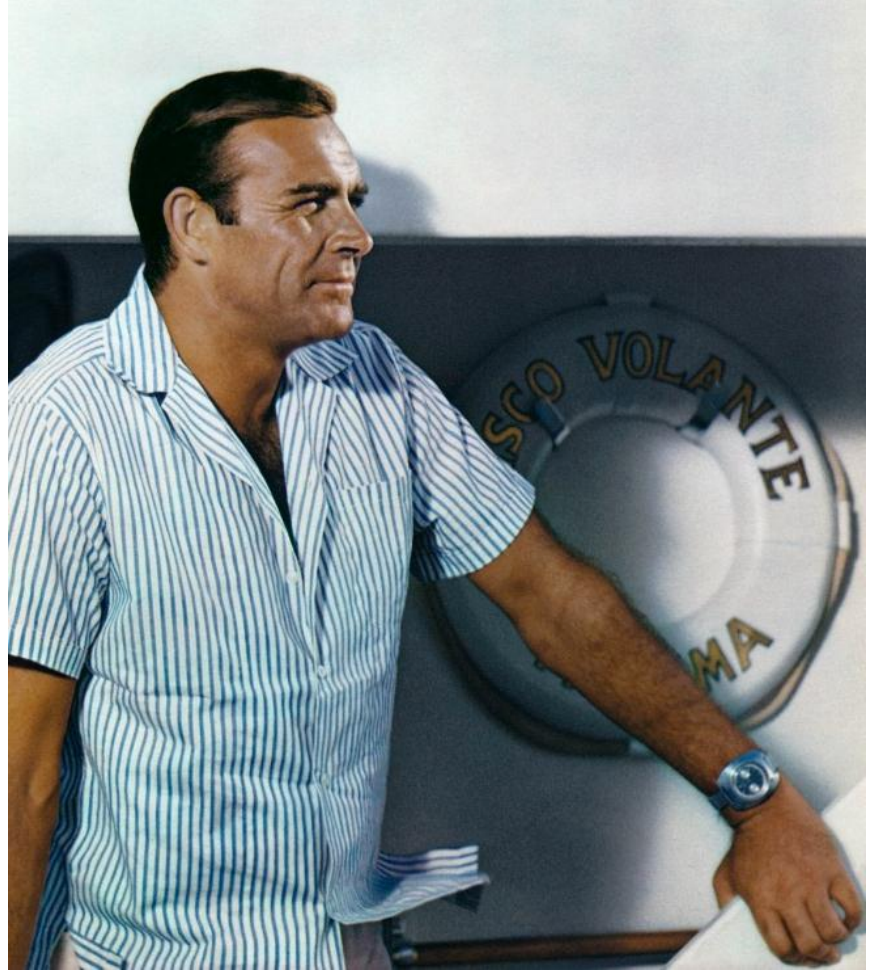
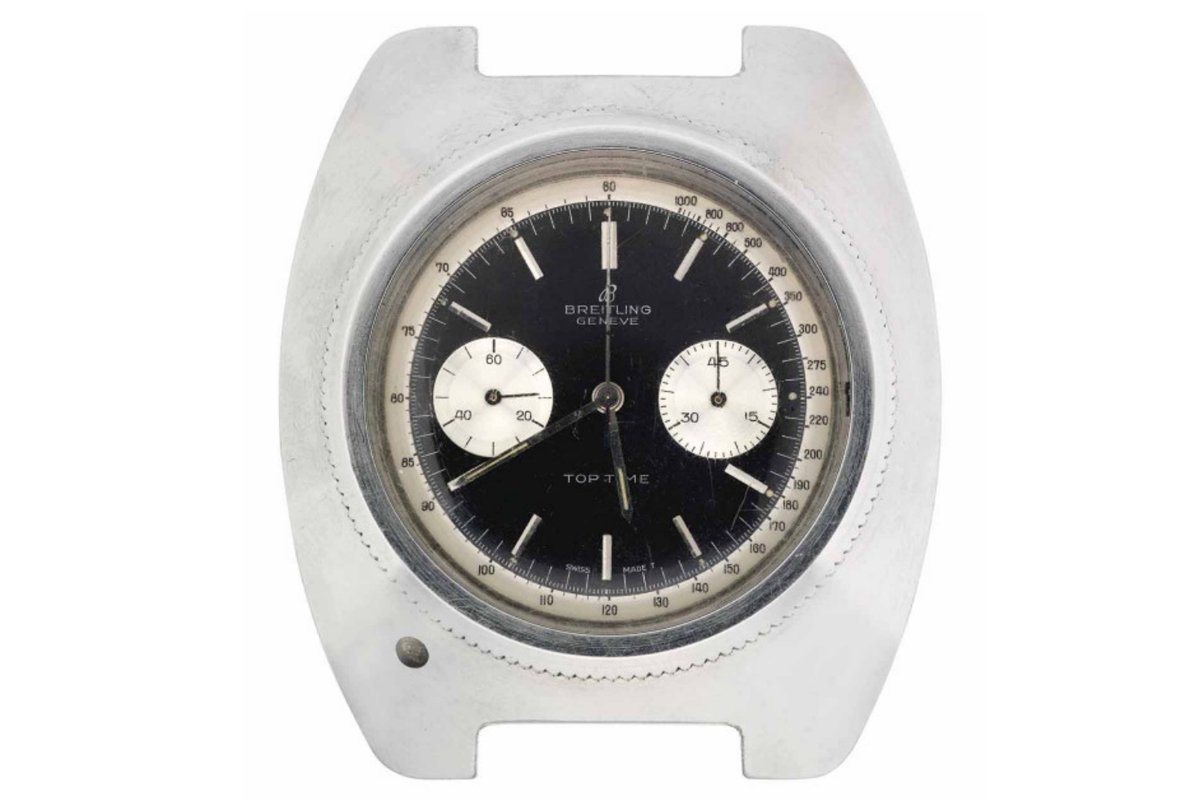
In the 1960s, the Top Time was Breitling’s unconventional chronograph, created for a new, youthful, speed-driven audience. When a Top Time ref. 2002 appeared on Sean Connery’s wrist in Thunderball, worn alongside the Aston Martin DB5, two icons of the era shared a defining moment in design history, marking the first Q-modified watch in the James Bond series. That single scene linked two British-adjacent icons of speed and style for decades to come, and it’s the exact reference point Breitling and Aston Martin chose to revisit for their new partnership, first announced at the start of 2026.
Inside the Tribute to Aston Martin DB5
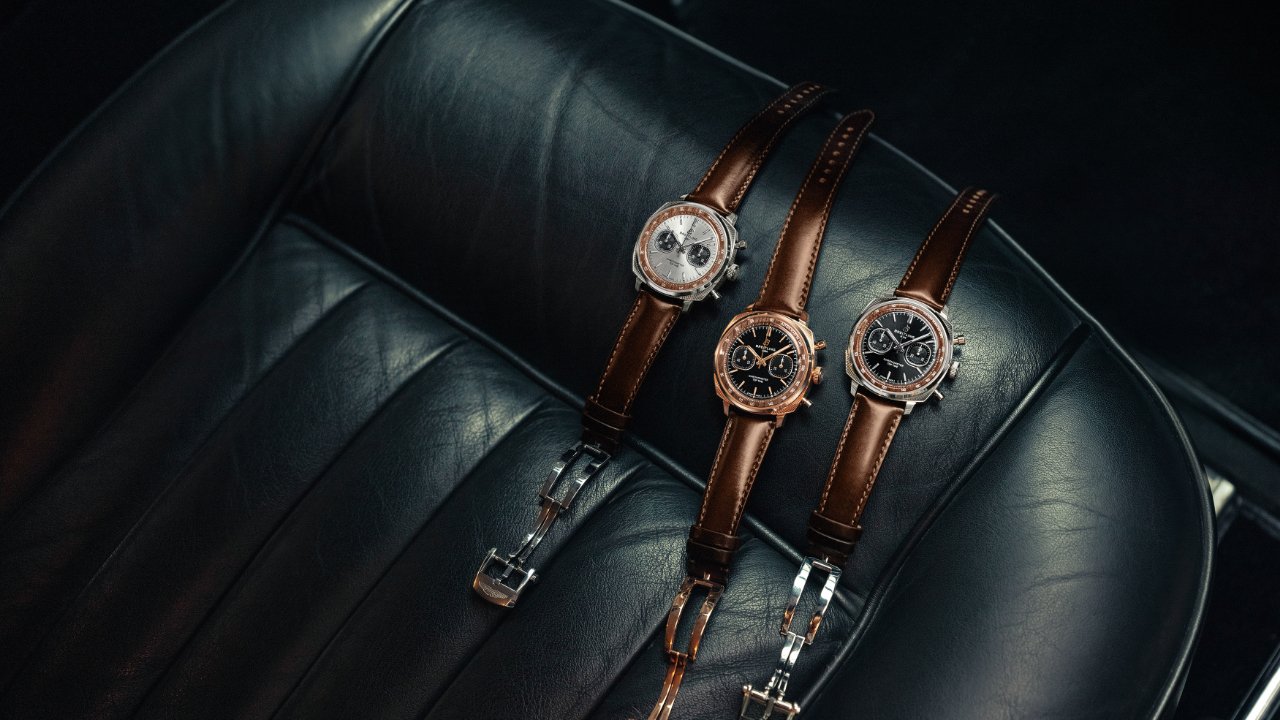
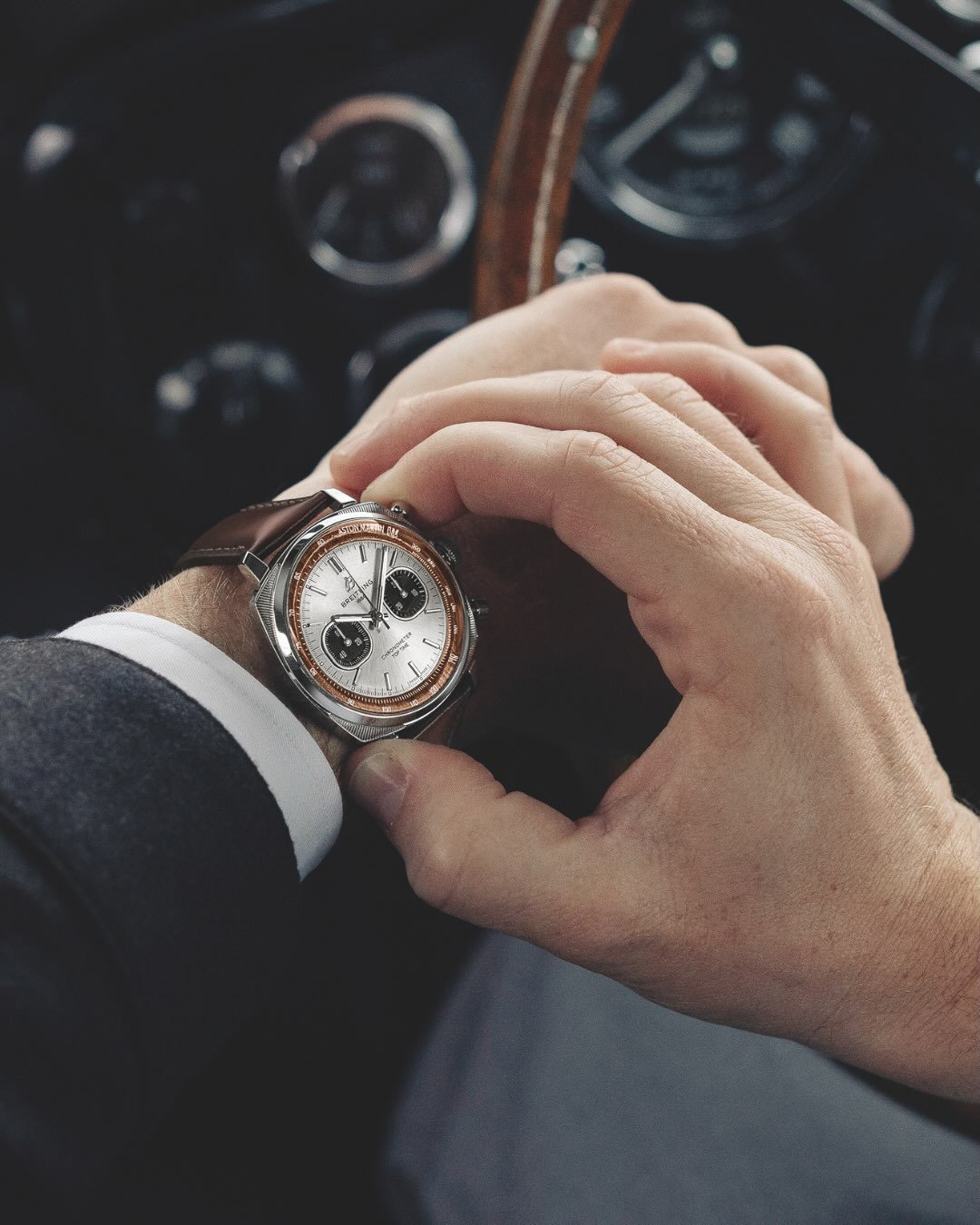
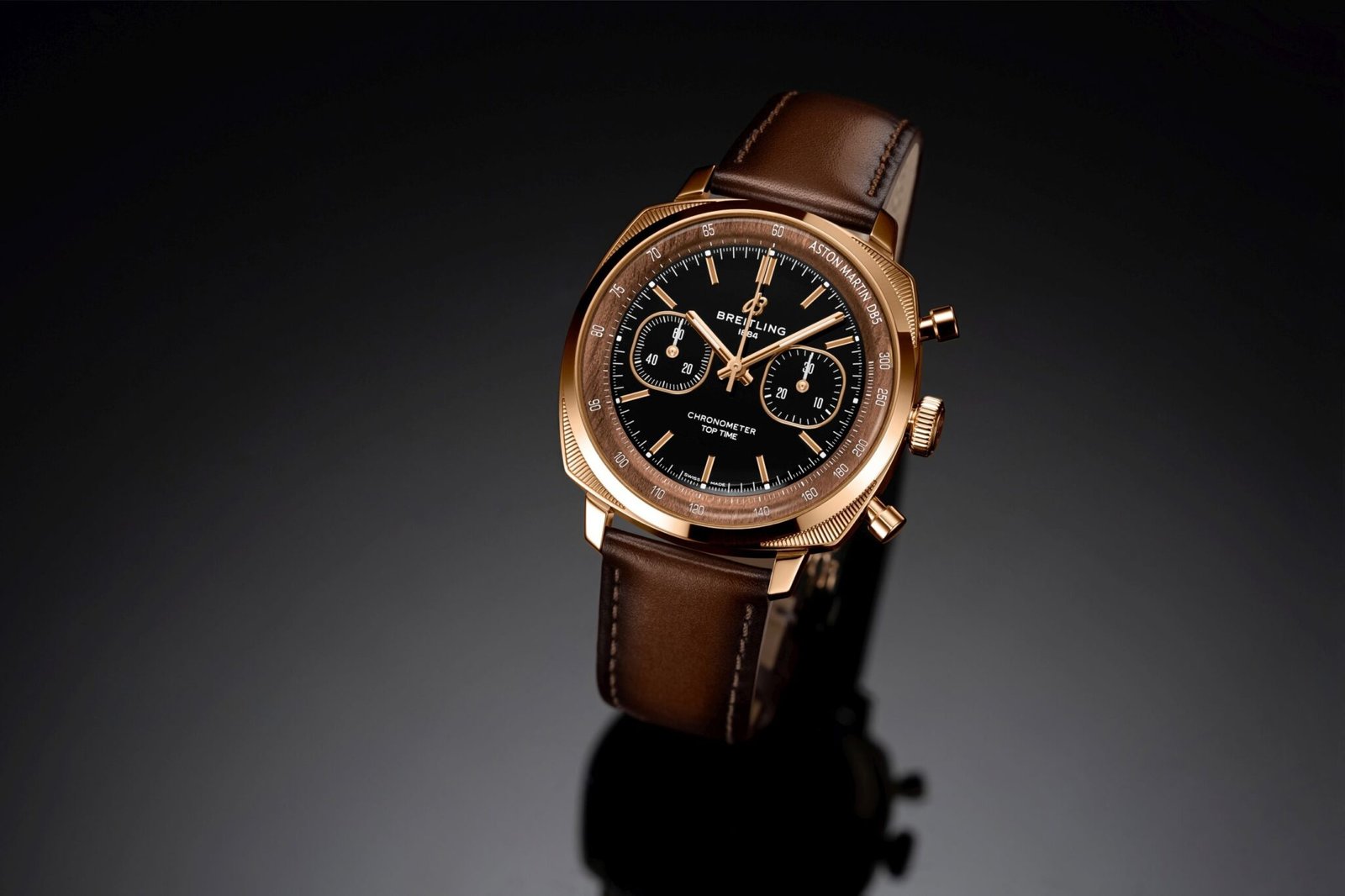
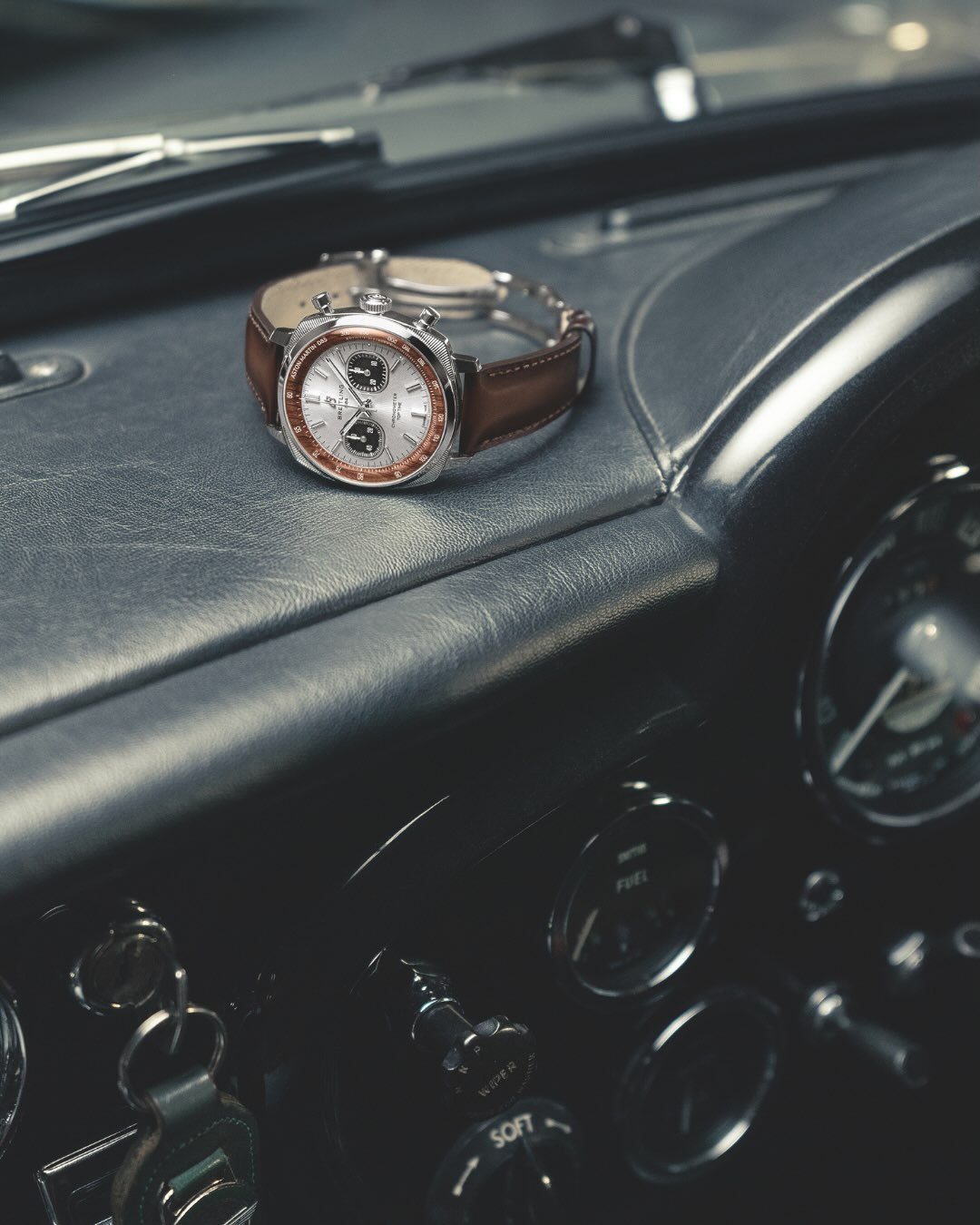
The cushion-shaped case, grooved corners, and mushroom pushers recall the distinctive profile of the 1960s chronograph, while squircle-shaped subdials capture the look of classic car dashboard gauges. The details go deeper than the case shape. A wooden inner ring draws on the DB5’s steering wheel, and the hand-colored gradient leather strap reflects the depth and tone of fine automotive upholstery, translating the tactile feel of a 1960s British grand tourer’s cockpit directly onto the wrist.
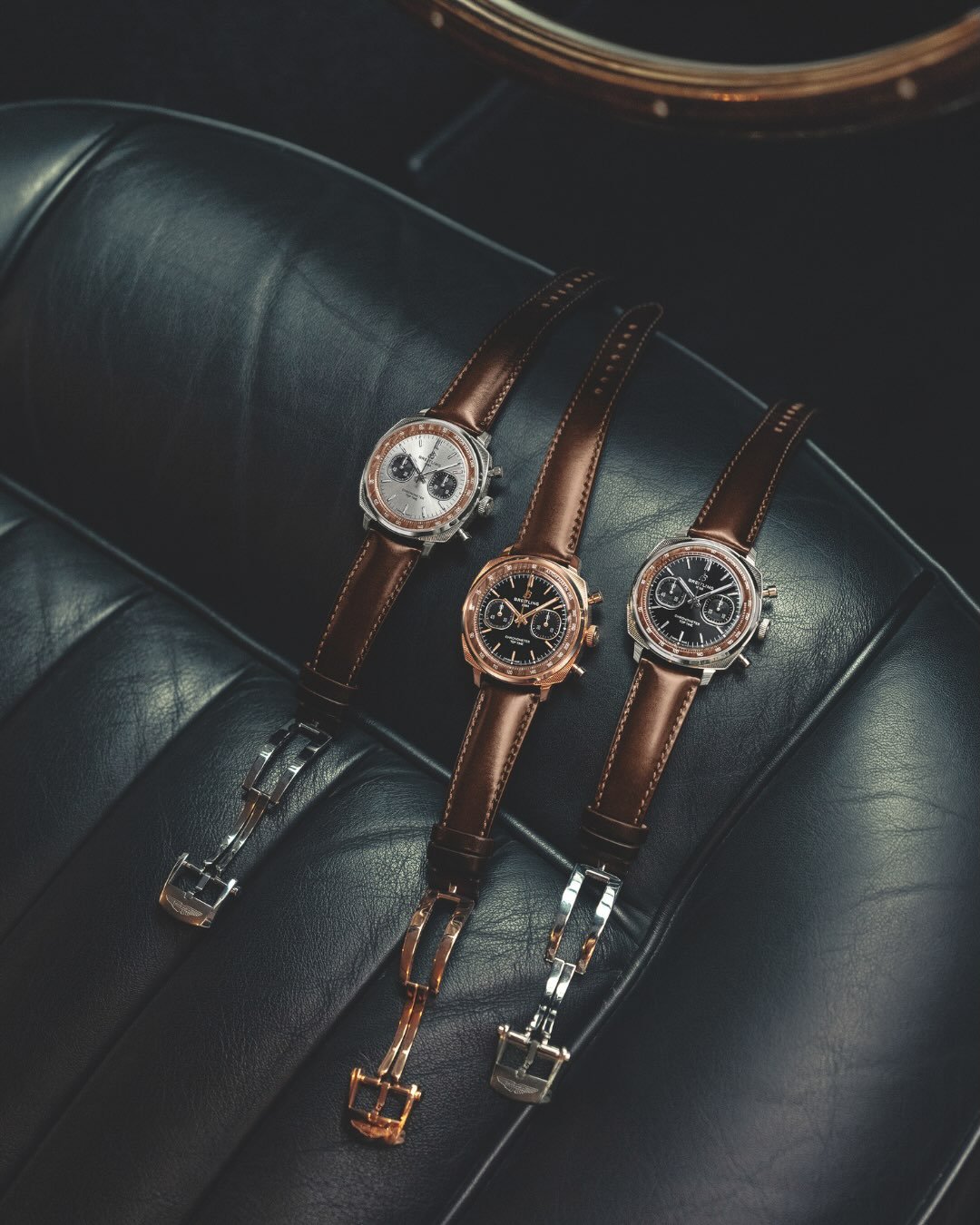
The collection arrives in three limited editions, each pulling from a different part of the DB5’s character. The stainless steel version with a silver dial is limited to 1,022 pieces and offers a balanced take closest in spirit to the original Top Time ref. 2002. The steel and platinum edition with a black lacquered dial is limited to 315 pieces, with its platinum bezel adding weight and presence against the high-gloss black surface. At the top sits an 18k red gold edition with an onyx dial, limited to 250 individually numbered pieces, marking the first time Breitling has used onyx on a dial.
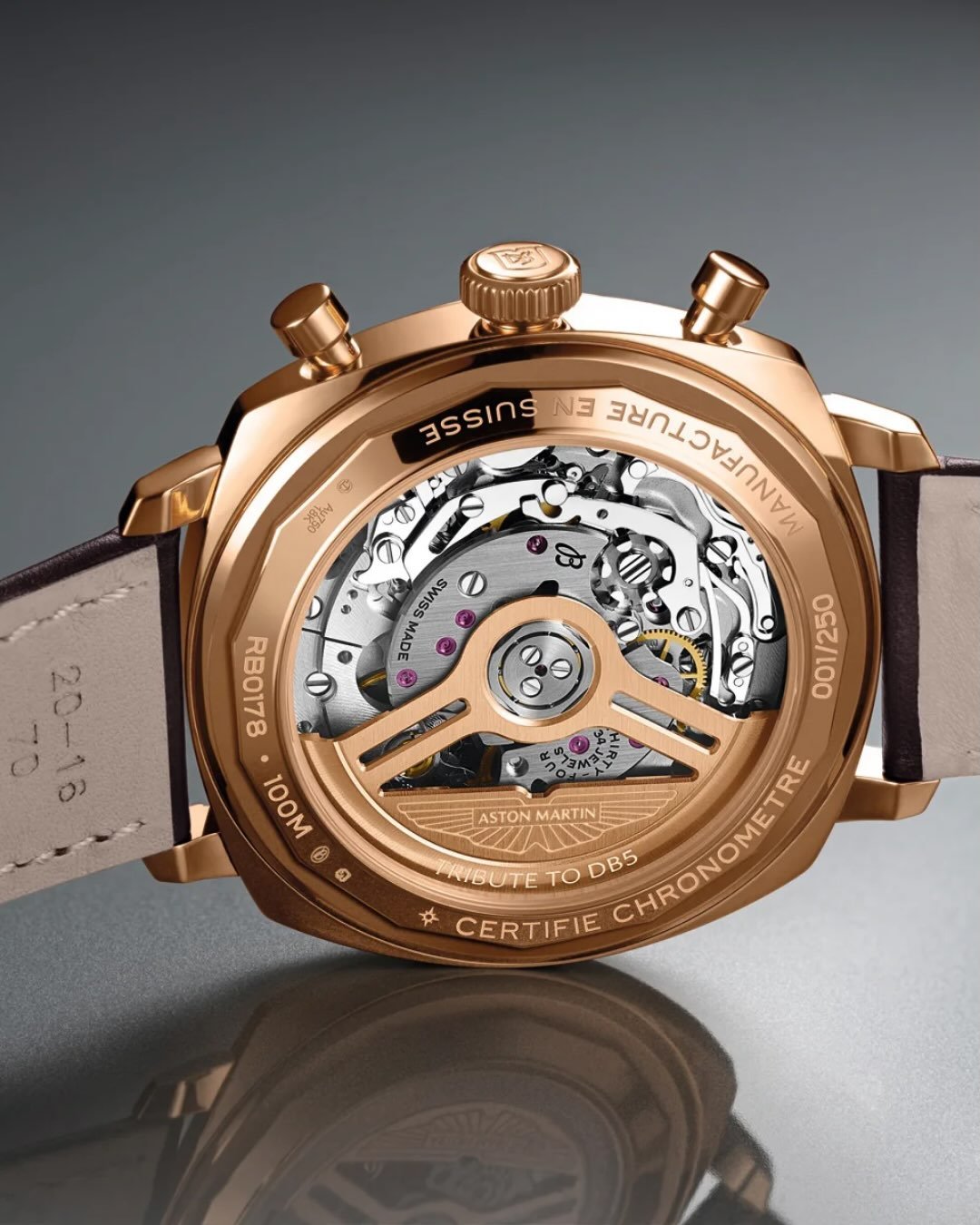
Power comes from the Breitling Manufacture Caliber 01, a COSC-certified chronograph movement with column-wheel architecture, a vertical clutch, and a 70-hour power reserve. Flip the watch over and the movement is visible through an open sapphire-crystal caseback, finished with a dedicated Aston Martin-engraved rotor in rhodium-plated or 18k red gold depending on the version. All three editions will be available starting in July 2026.
What This Partnership Signals for the Industry
Brand collaborations in watchmaking are common, but most borrow a logo rather than a memory. This one works because the connection between Breitling and Aston Martin isn’t manufactured for the occasion, it’s historical fact, dating back sixty years to a single frame of film. Georges Kern, CEO of House of Brands, put it simply: the Aston Martin DB5 is one of those rare designs that never fades, and still feels as relevant today as it did in the 1960s. Aston Martin’s Chief Creative Officer Marek Reichman added that the collaboration allowed the two brands to exchange ideas in a way that felt both natural and ambitious, reflecting a rare case where a co-branded release feels less like marketing and more like two archives finally being cross-referenced. For Breitling, it’s a reminder that its chronograph heritage extends well beyond aviation. For Aston Martin, it’s proof that a car’s design language can live convincingly on a much smaller canvas. Either way, this is a partnership likely to set the tone for how heritage automotive brands and watchmakers collaborate going forward.