

A Royal Oak Concept Built for the Streets of Tokyo
Audemars Piguet has never been shy about pushing the Royal Oak Concept into experimental territory, but its latest collaboration with Tokyo-based streetwear force AMBUSH lands with a very different kind of electricity. This isn’t another predictable luxury-meets-fashion crossover built around logos and hype. Instead, the new Royal Oak Concept Flying Tourbillon channels the visual language of Tokyo nightlife — neon reflections, industrial textures, and futuristic minimalism — into one of the most technically intriguing Concept models the Le Brassus manufacture has released in years.
Limited to just 150 pieces, the watch arrives through a collaboration with AMBUSH co-founders YOON and VERBAL, two names deeply embedded in the worlds of fashion, music, and contemporary design. Since launching AMBUSH in Tokyo, the duo has built a reputation for transforming street culture into luxury objects without sanding off the edge that made the brand influential in the first place. That tension between underground energy and luxury craftsmanship is exactly what gives this Royal Oak Concept its punch.


The Dial Is Where the Drama Begins
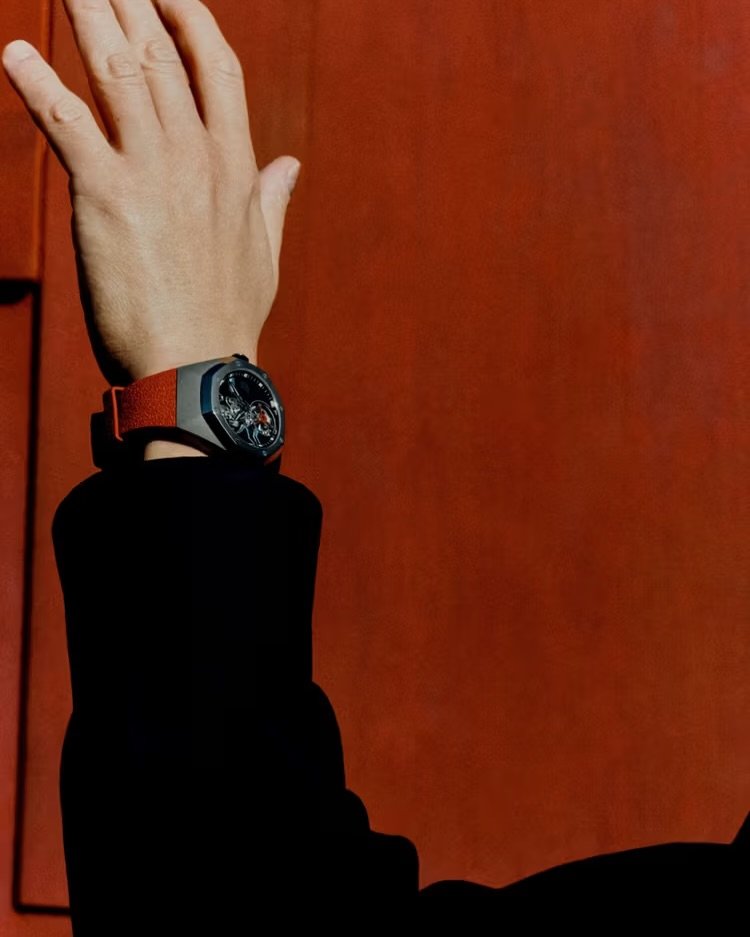
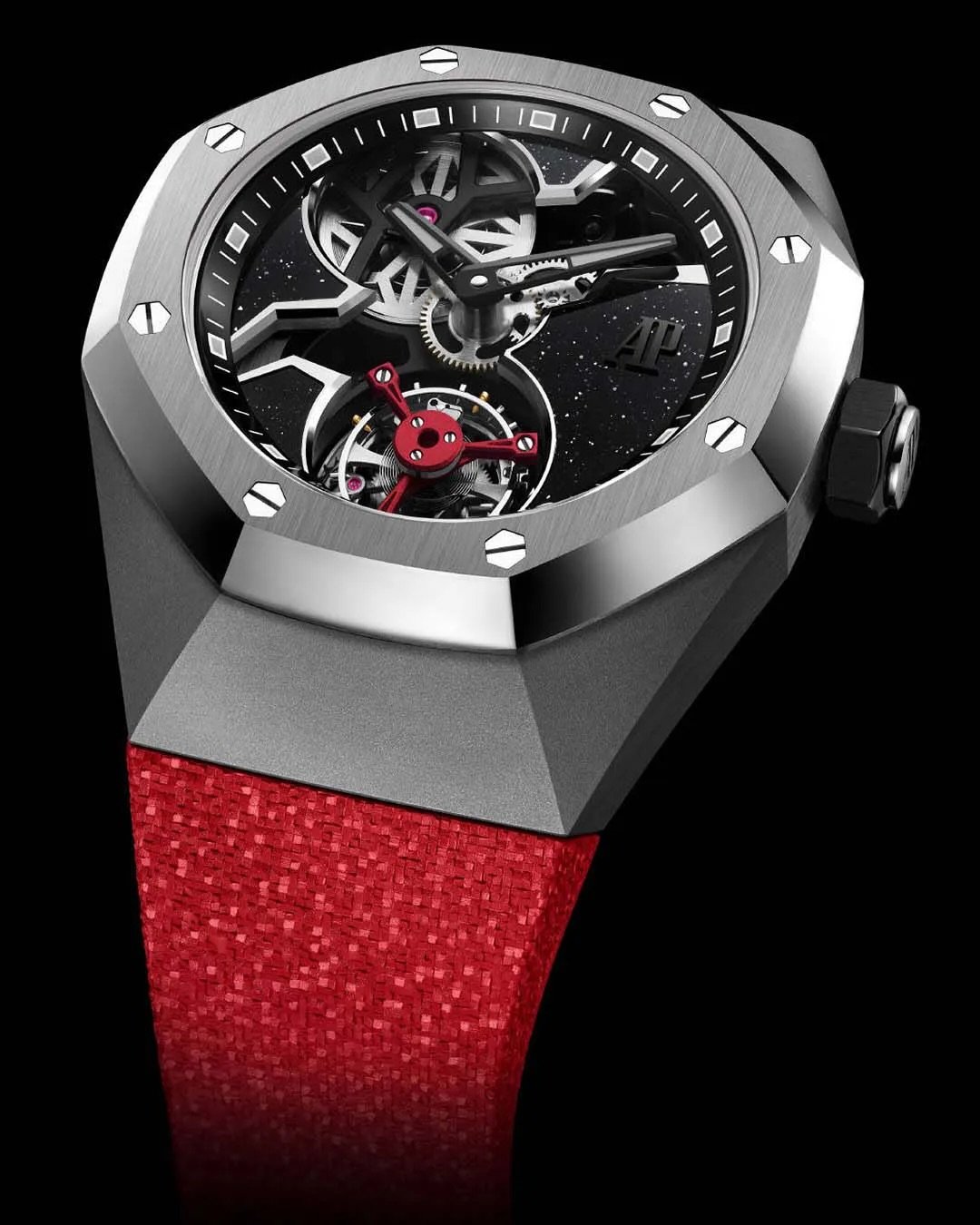
At first glance, the watch feels darker and more atmospheric than previous Royal Oak Concept releases. The 38.5mm titanium case keeps the architecture compact by Concept standards, but the visual impact remains unmistakably aggressive. The open-worked dial is finished in black aventurine, creating a shimmering, almost cosmic backdrop that shifts dramatically under changing light. It’s the kind of texture that feels alive on the wrist rather than static in a display case.
Then there’s the headline feature: a vivid red anodized aluminum flying tourbillon cage at 6 o’clock — the first time Audemars Piguet has used anodized aluminum for a tourbillon cage in its history. The effect is startling. Suspended against the dark dial, the rotating cage glows like a tiny neon engine, instantly pulling the eye into the movement. It’s an unusually emotional execution for a highly technical complication, and that’s precisely why it works.

Caliber 2982 Brings the Technical Substance
Inside sits the manually wound Caliber 2982, developed specifically for this edition as an evolution of the Caliber 2964. The movement measures just 6mm thick despite containing 212 individual components, while still delivering approximately 72 hours of power reserve. Audemars Piguet has long mastered the balancing act between avant-garde aesthetics and serious watchmaking credibility, but this piece feels especially refined in how it integrates both worlds. Nothing about the movement feels ornamental for the sake of fashion collaboration optics.
The watch is paired with two interchangeable “Micro Mosaic” rubber straps in black and red, both featuring a quilted inner lining and secured with a titanium AP folding buckle. The straps subtly reinforce the duality of the release: luxury finishing meets sneaker-culture versatility. Swap the strap, and the entire personality of the watch shifts from stealthy monochrome to full cyberpunk energy.

Why This Collaboration Actually Works
What makes this collaboration particularly interesting is how naturally AMBUSH fits into the Royal Oak Concept universe. Many luxury-brand partnerships still feel reverse-engineered for social media engagement. Here, the design language actually aligns. The Concept collection has always thrived on futurism, experimentation, and mechanical theater — all qualities that mirror AMBUSH’s own aesthetic instincts.
More importantly, this release signals something larger happening across contemporary watch culture. Collectors are increasingly drawn toward watches that bridge technical legitimacy with broader cultural relevance. They want pieces that speak fluently to both haute horlogerie and modern design culture without feeling diluted in either direction. This Royal Oak Concept understands that assignment perfectly.
A Signal of Where Luxury Watchmaking Is Heading
For Audemars Piguet, the collaboration also reinforces a growing willingness to let outside creative voices influence not just cosmetic details, but the emotional identity of a watch. And in a market saturated with safe heritage reissues and predictable anniversary models, that willingness to experiment suddenly feels far more valuable than another nostalgic callback.