
The rebirth of a defunct watchmaker rarely feels consequential. Most revivals trade on nostalgia and little else. But the return of Niton with its new Prima Jump Hour suggests something more deliberate: a resurrection rooted in archival credibility, mechanical substance, and a clear understanding of what today’s collectors actually value.
Rather than relaunch with a safe three-hander, the brand chose a complication that historically signaled technical ambition and stylistic confidence. It’s a bold opening move—and one that positions Niton less as a heritage curiosity and more as a serious entrant into contemporary independent-leaning haute horlogerie.
A Forgotten Name With Deep Roots
Niton’s origins trace back to early 20th-century Switzerland, when it produced refined dress watches known for precise finishing and restrained aesthetics. Like many small manufactures, it disappeared during the mid-century consolidation that reshaped the industry. For decades, the name existed only in vintage catalogues and auction listings, familiar mainly to specialists.
The modern revival isn’t a marketing exercise built from scratch. It’s spearheaded by industry veterans determined to restore the marque’s original ethos: compact production, complicated movements, and architectural design. That philosophy is evident immediately in the Prima, which channels historical inspiration without resorting to retro pastiche.
The Prima Jump Hour: Specifications That Matter
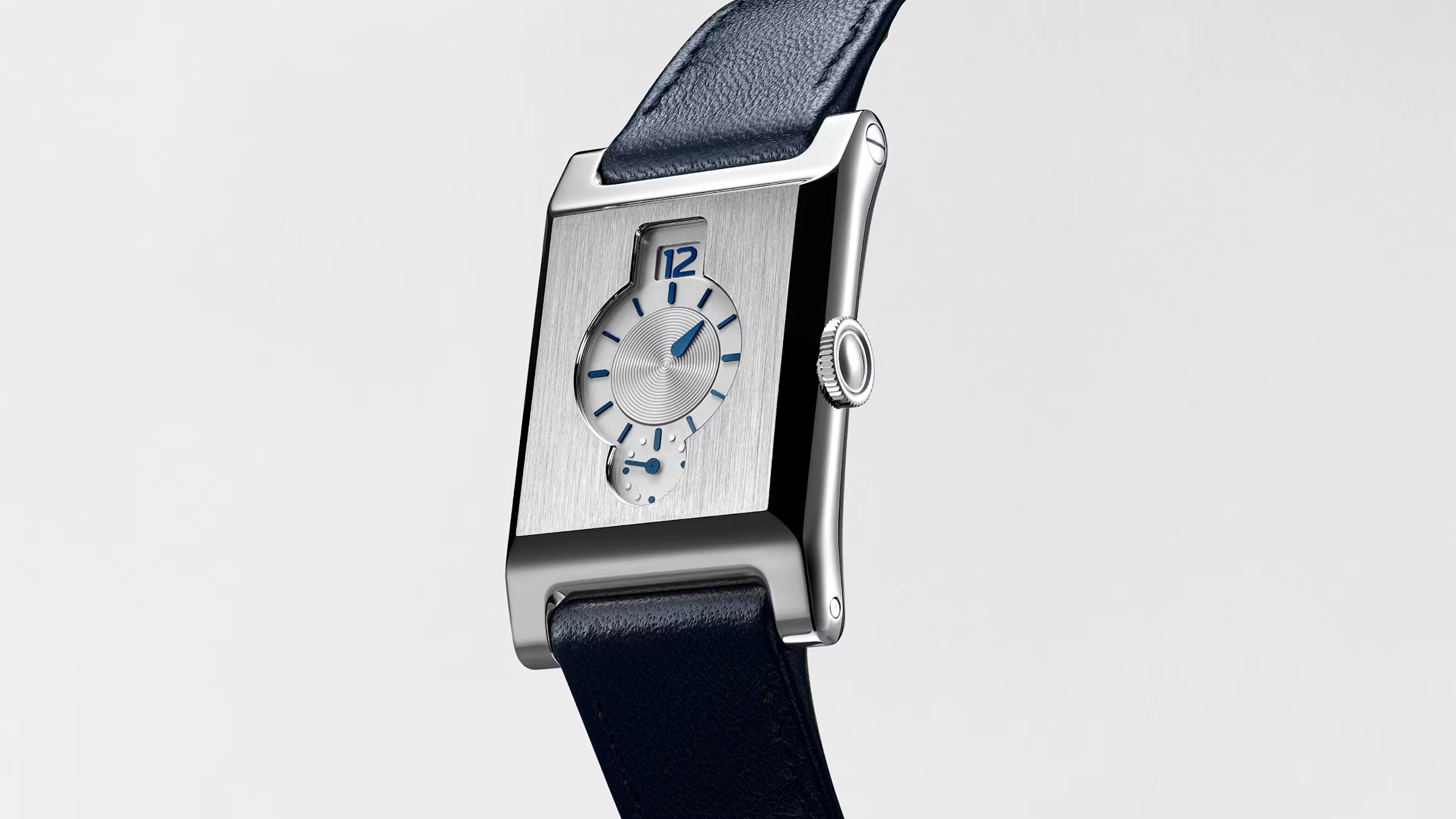
The Prima arrives in precious-metal cases—most notably rose gold and platinum—measuring roughly 38mm across, a dimension that aligns with classical proportions rather than modern oversizing. Its form is clean yet sculptural, with sharply defined lugs and a slim profile that underscores its dress-watch intentions.
Time is displayed digitally through apertures: a jumping hour window paired with a sweeping minutes indication. This layout is powered by a proprietary hand-wound calibre developed in collaboration with Le Temps Manufacture, a specialist known for constructing complex mechanisms for high-end independents. The movement incorporates a dedicated energy-storage system to ensure the hour disc snaps instantaneously at the top of each hour without compromising balance amplitude.
Finishing is unapologetically traditional—polished bevels, Geneva striping, and sharply cut internal angles—confirming that the watch is meant to satisfy loupe-carrying collectors as much as casual admirers. Power reserve is approximately two days, a pragmatic figure given the torque demands of a jumping-hour mechanism.
Why the Jump Hour Still Captivates
Jump hours occupy a peculiar niche in horology. Technically demanding yet visually simple, they bridge the gap between classical watchmaking and early digital design language. Their rarity today stems not from lack of interest but from engineering difficulty: delivering instantaneous switching without destabilizing the movement requires precise tolerances and careful energy management.
For collectors, that complexity is part of the appeal. A jump hour isn’t just a display; it’s a performance. Each sixty-minute cycle culminates in a mechanical snap—an almost theatrical reminder that timekeeping can still surprise.
Revival Done Right
Brand resurrections often falter because they misread their audience. Modern enthusiasts are highly literate; they expect transparency, technical credibility, and restraint. The Prima signals that Niton understands this landscape. Instead of flooding the market with variants, it launched with a focused, high-concept piece that communicates identity instantly.
Coverage from specialist publications like Hodinkee, Monochrome Watches, Watches by SJX, and Time and Watches underscores the point: the watch isn’t being discussed as a novelty comeback but as a legitimate entrant into the conversation around modern independent-style watchmaking.
That distinction matters. In today’s market, credibility travels fast—and so does skepticism.
The Bigger Picture
The Prima isn’t designed for everyone, nor should it be. Its significance lies in what it signals: that dormant names can return not as nostalgic relics but as platforms for serious watchmaking. If Niton follows this debut with the same discipline—limited production, thoughtful complications, and uncompromising finishing—it may carve out a niche alongside the small but influential circle of modern boutique manufactures.
For collectors, that possibility is the real intrigue. Because in horology, the most exciting revivals aren’t about the past. They’re about whether a rediscovered name can earn a future.