
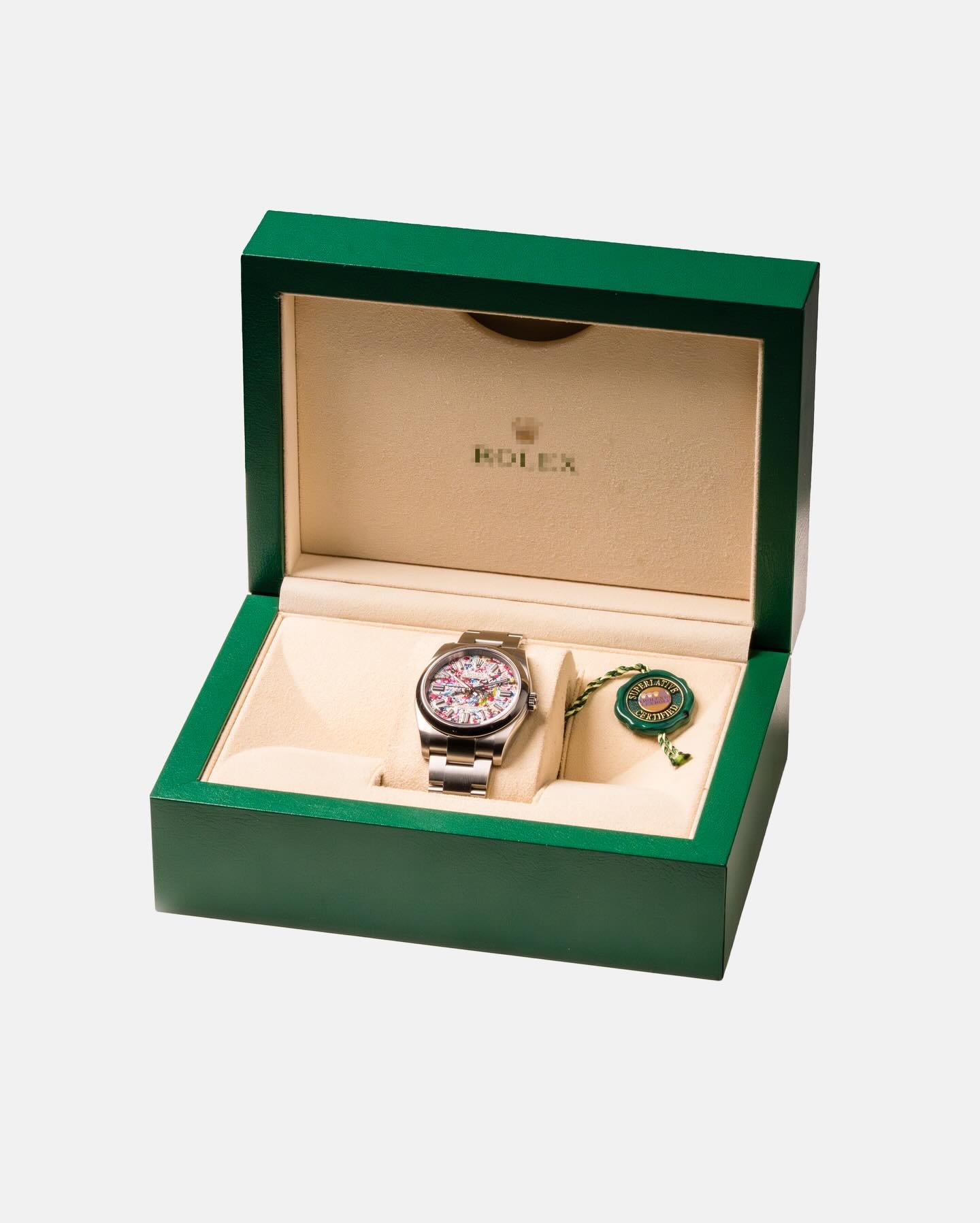
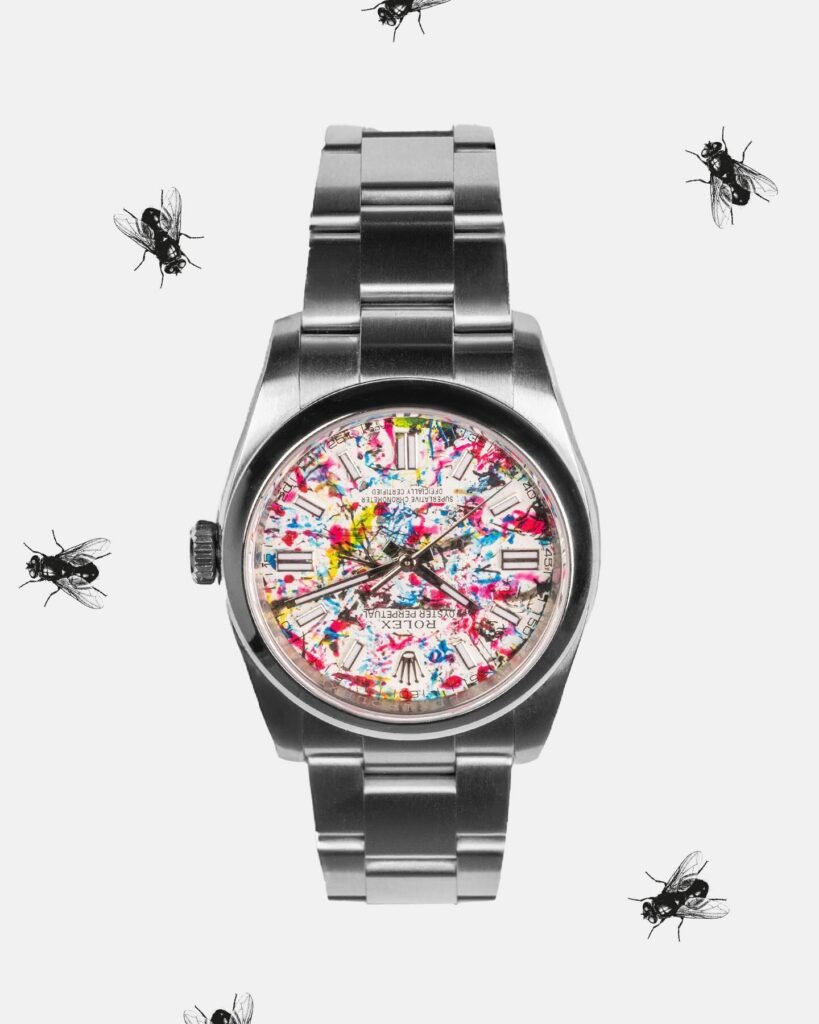
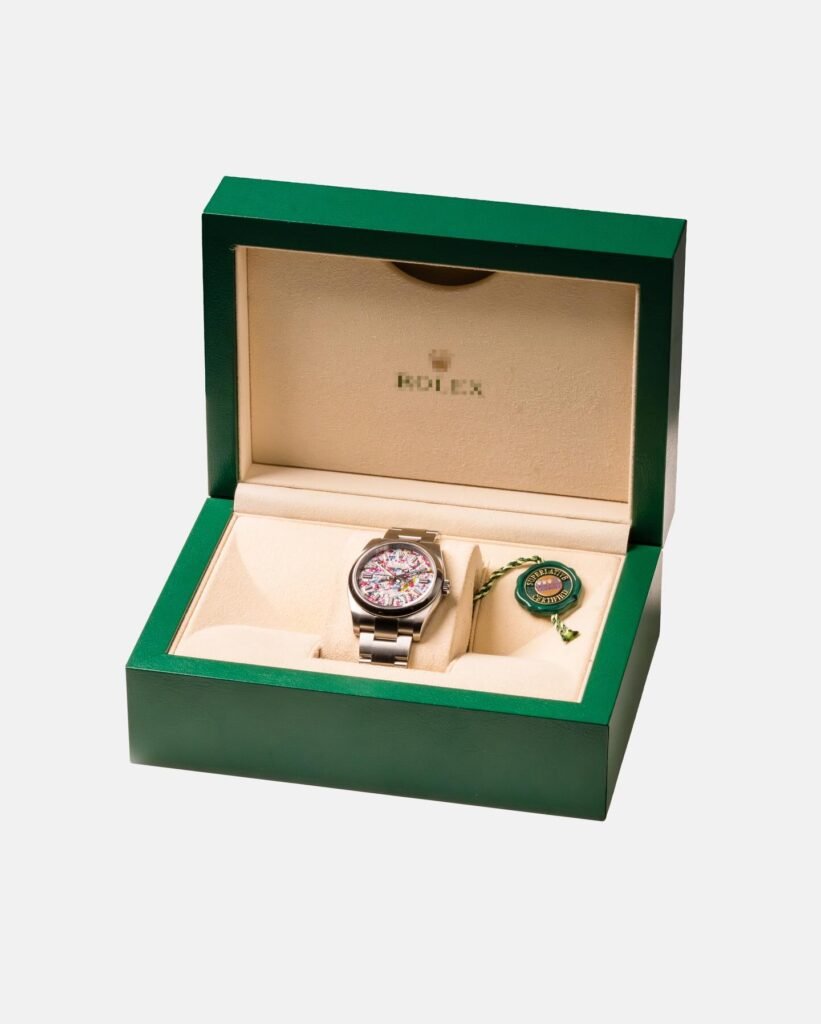
Luxury watches rarely spark genuine controversy anymore. Yet in February 2026, a project called “Time Flies” managed to do exactly that. The piece—created by Spanish street-art collective Milfshakes—took a genuine Rolex Rolex Oyster Perpetual and turned its dial into a biological canvas, using dye-fed houseflies to generate an unpredictable pattern of colorful speckles.
Part art experiment, part luxury provocation, the resulting watch quickly ignited debate across the watch community.
The Release: A Rolex Dial Created by Flies
The concept behind “Time Flies” sits somewhere between performance art and experimental design. Instead of hand-painting a dial or engraving a motif, the artists placed the Rolex dial inside a chamber filled with houseflies.
Beforehand, the flies were fed sugar water infused with brightly colored dyes. As they fed and moved across the dial surface, they naturally regurgitated small droplets of dyed liquid—a biological behavior that produced random splashes of pigment across the dial.
The result is a chaotic yet strangely mesmerizing pattern of microscopic color spots. No brush, no digital printing, and no human control over the final composition.
Each speck is the byproduct of a living organism—making the dial literally impossible to replicate.
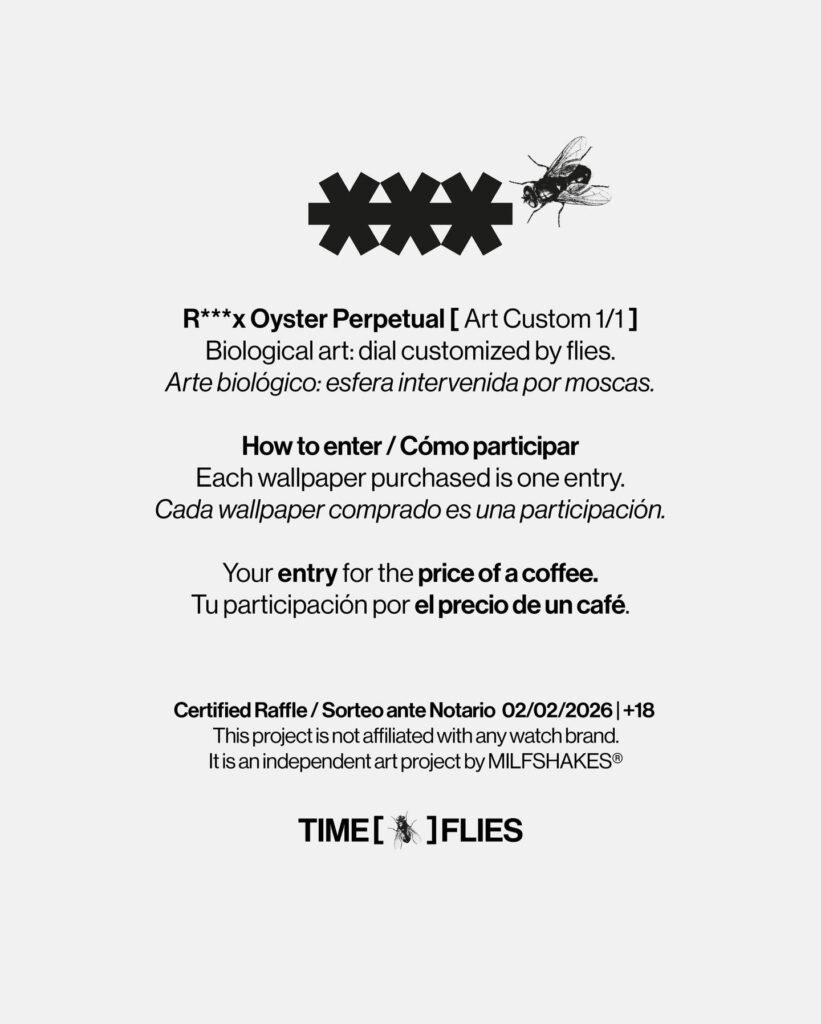
The finished watch was then raffled online, with entries costing just €3 per ticket, opening the project to thousands of participants rather than a single wealthy collector.
Design Highlights: Chaos as a Dial Aesthetic
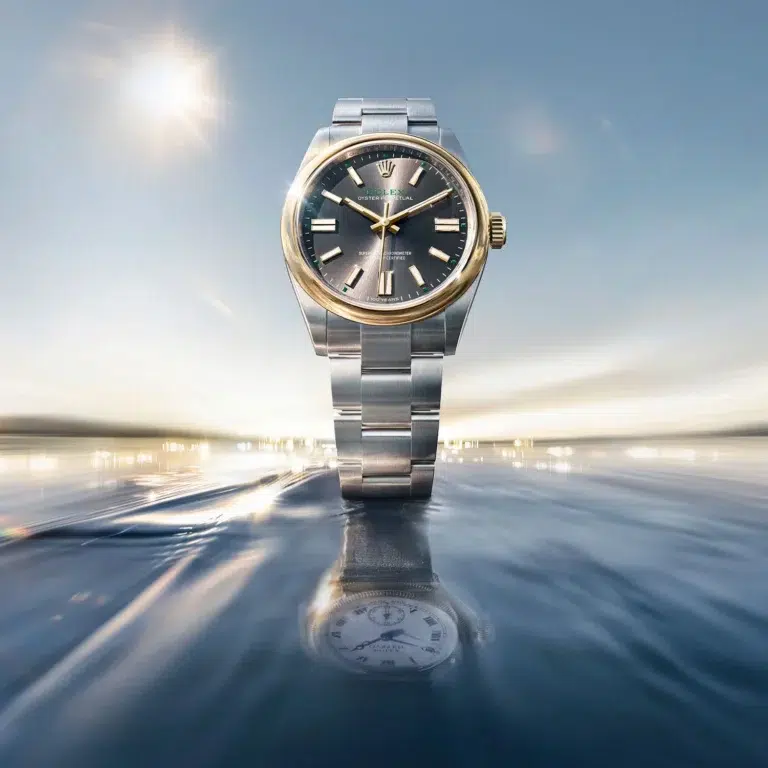
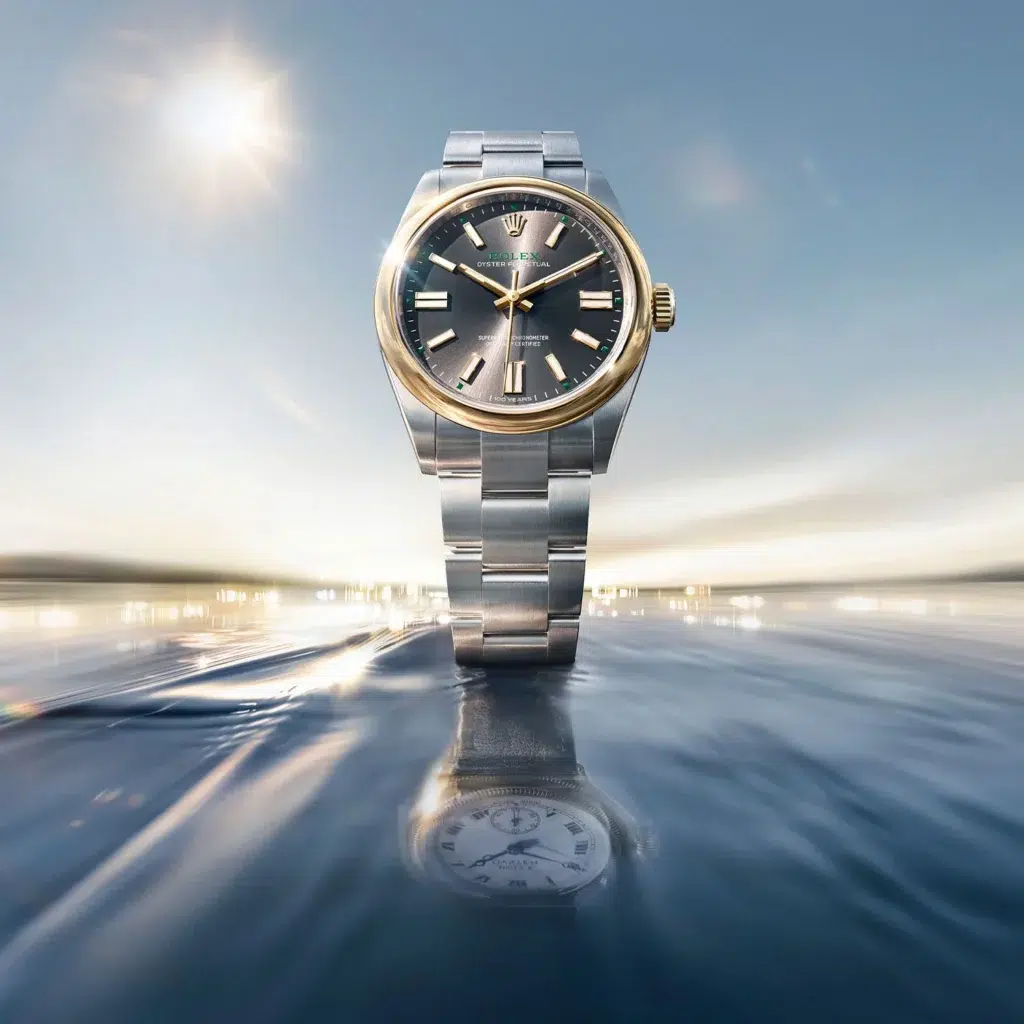
Visually, the watch remains unmistakably a Rolex Oyster Perpetual—clean, minimal, and instantly recognizable. But the dial completely disrupts that familiar aesthetic.
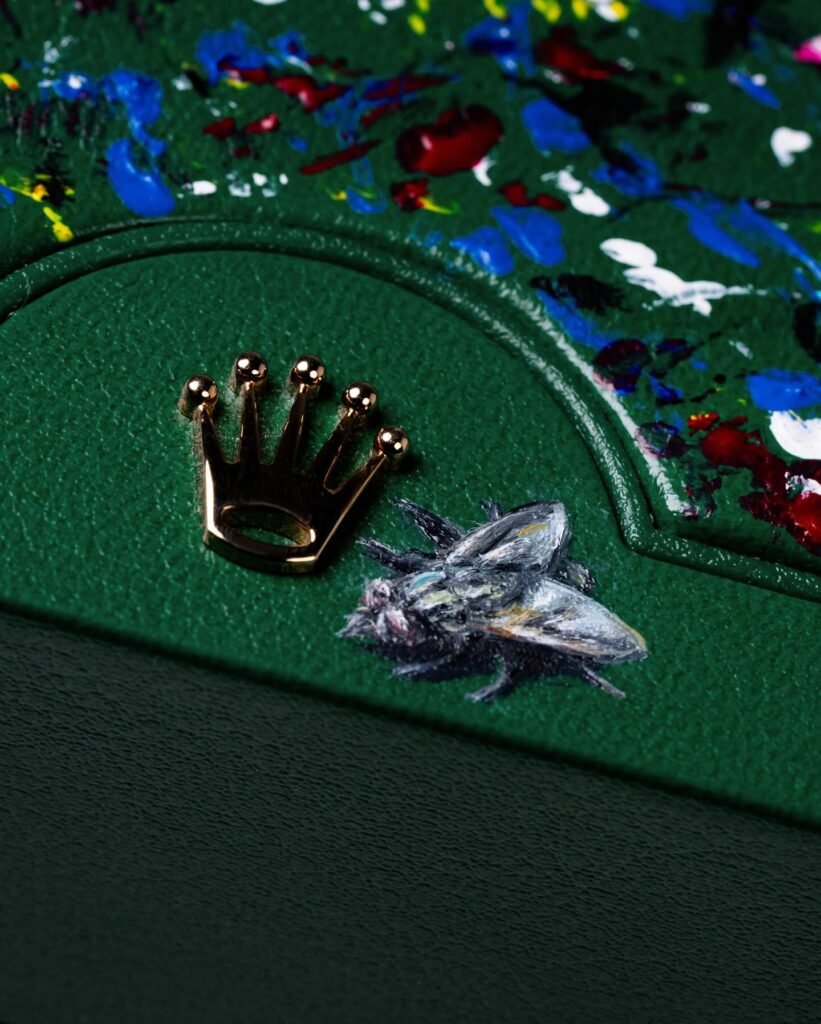
Instead of Rolex’s traditional lacquered or sunburst finishes, the surface appears like a microscopic abstract painting. Multicolored droplets scatter across the dial in irregular patterns, creating a visual texture that sits somewhere between street art and organic biology.
It’s precisely this tension that makes the project interesting. The Oyster Perpetual is arguably the purest expression of Rolex design discipline. By contrast, the dial treatment of “Time Flies” embraces unpredictability, imperfection, and chance.
The artists essentially surrendered authorship to nature.
Technical Specifications
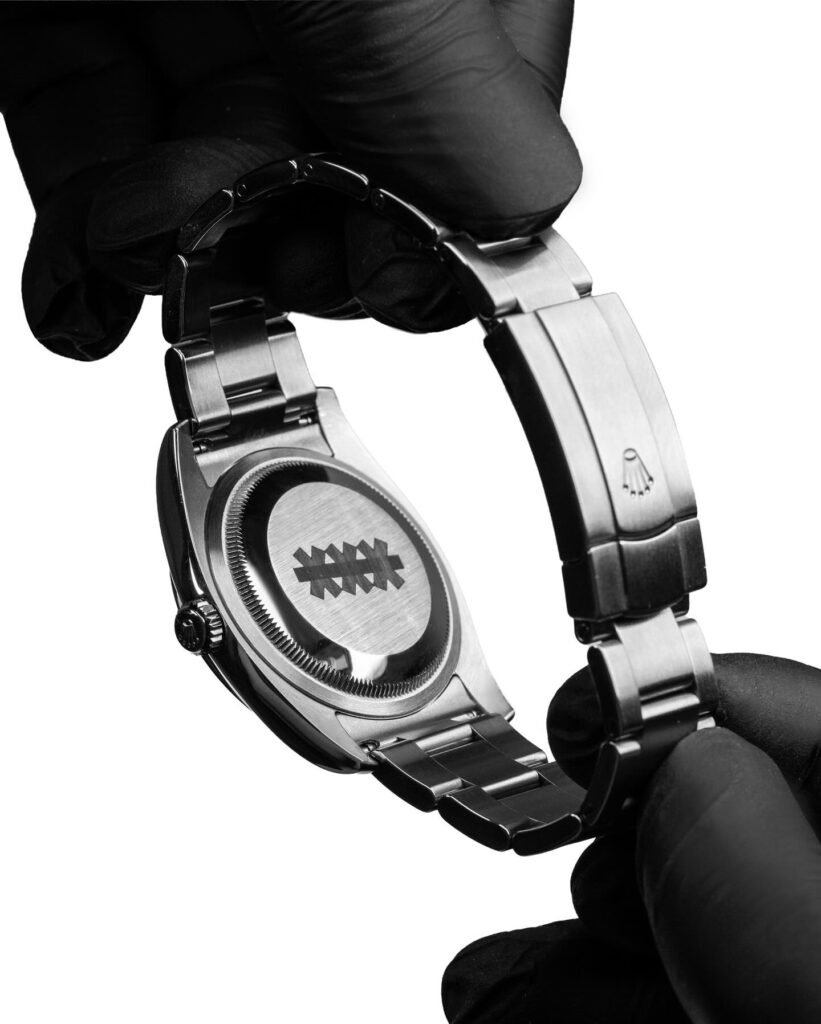
While the dial may be unconventional, the underlying watch remains a legitimate Rolex timepiece.
Watch Specifications
- Model: Rolex Oyster Perpetual
- Case: Oystersteel stainless steel
- Movement: Rolex automatic in-house movement
- Water resistance: 100 meters
- Dial: Custom “Time Flies” bio-art dial created with dye-fed houseflies
- Production: One-of-one artwork
It’s important to note that this is not an official Rolex collaboration. The project was carried out independently by the artists.
Market Reaction: Art or Absurdity?
Unsurprisingly, “Time Flies” sparked strong reactions online. Some enthusiasts praised the concept as an irreverent critique of luxury culture—turning a symbol of status into an experimental artwork driven by chance.
Others were far less enthusiastic, calling the method disrespectful to traditional watchmaking or simply… unpleasant.
But controversy is often the point with projects like this. By taking one of the most recognizable watches in the world and applying an unpredictable biological process to its dial, Milfshakes forced collectors to confront a simple question:
Where does watchmaking end and art begin?
A Strange New Chapter in Watch Culture
Whether viewed as provocative art, playful experimentation, or an absurd stunt, “Time Flies” undeniably succeeded in capturing attention. In an industry built on precision, control, and centuries-old craftsmanship, the idea of letting insects determine the final dial design feels almost rebellious.
Yet that unpredictability is also what makes the piece memorable.
Because in the end, the most intriguing watches aren’t always the most complicated ones.
Sometimes they’re simply the ones nobody expected.