
Few watches have shaped modern collecting quite like the Patek Philippe Nautilus. Born in 1976 from the pencil of Gérald Genta, it arrived at a moment when Swiss watchmaking was fighting for relevance in the early quartz era. What emerged was radical: a luxury steel sports watch priced like gold, with a porthole-inspired case, integrated bracelet, and a personality that blurred the lines between elegance and utility. Half a century later, the Nautilus is no longer just a watch—it is a cultural shorthand for status, restraint, and horological confidence.
From Nautical Inspiration to Cultural Icon
The original Nautilus was famously inspired by the silhouette of a ship’s porthole, a design cue that Genta translated into a bold, architectural case with visible side “ears” and a seamless bracelet integration. At launch, it challenged everything collectors thought they knew about Patek Philippe. This was not a Calatrava dress watch or a complicated grand complication—it was something entirely new: a luxury sports watch built for a world that was becoming more casual, more mobile, and more modern.
Over the decades, the Nautilus evolved from a niche curiosity into one of the most sought-after watches on the planet. Its gradual expansion into precious metals, complications, and smaller interpretations only reinforced its versatility, while production constraints and long waiting lists elevated its mystique. Today, references like the 5711 and its successors are less products and more symbols of access.
The 50th Anniversary Collection: A New Chapter
To celebrate the 50th anniversary of the Nautilus, Patek Philippe takes a notably purist approach with a trio of limited editions that strip the design back to its most essential codes. Rather than leaning into complications or visual excess, the brand returns to time-only execution, reinforcing the Nautilus as a study in proportion, finishing, and architectural restraint. All three models share ultra-thin cases and are powered by the calibre 240 micro-rotor movement—an icon in its own right, introduced in 1977, just one year after the original Nautilus debuted.
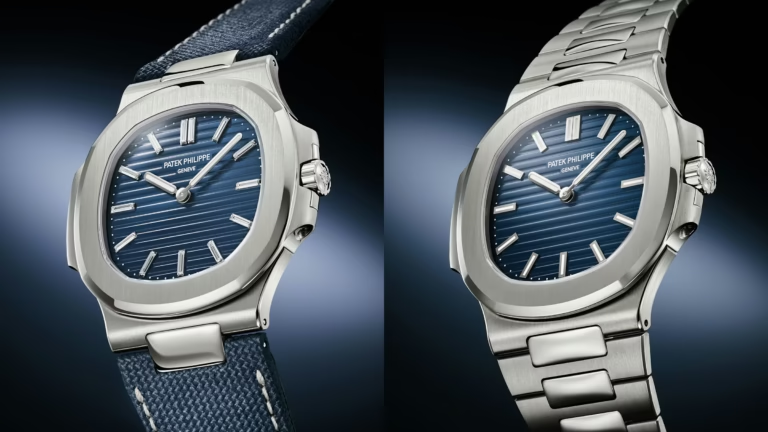
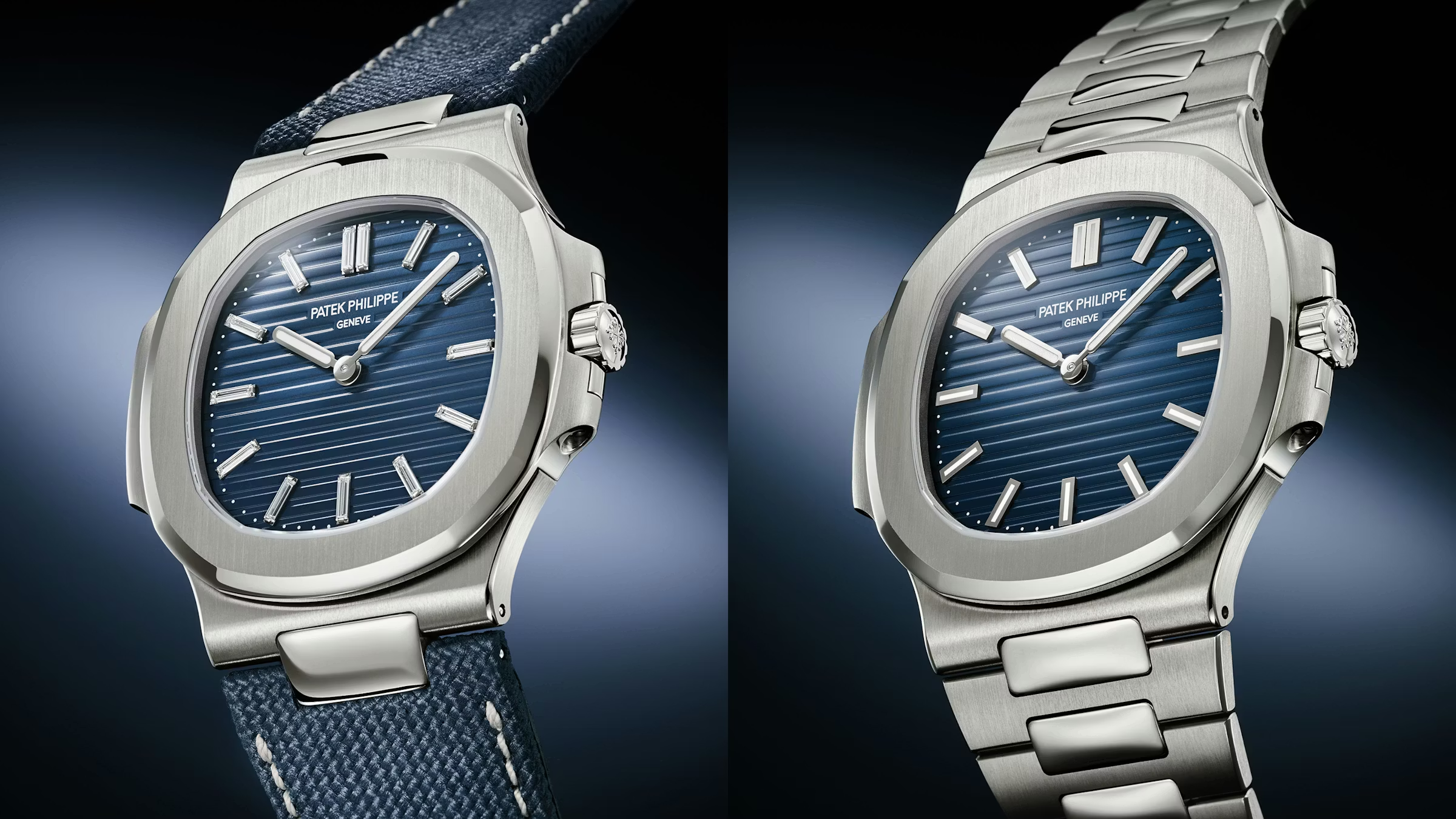
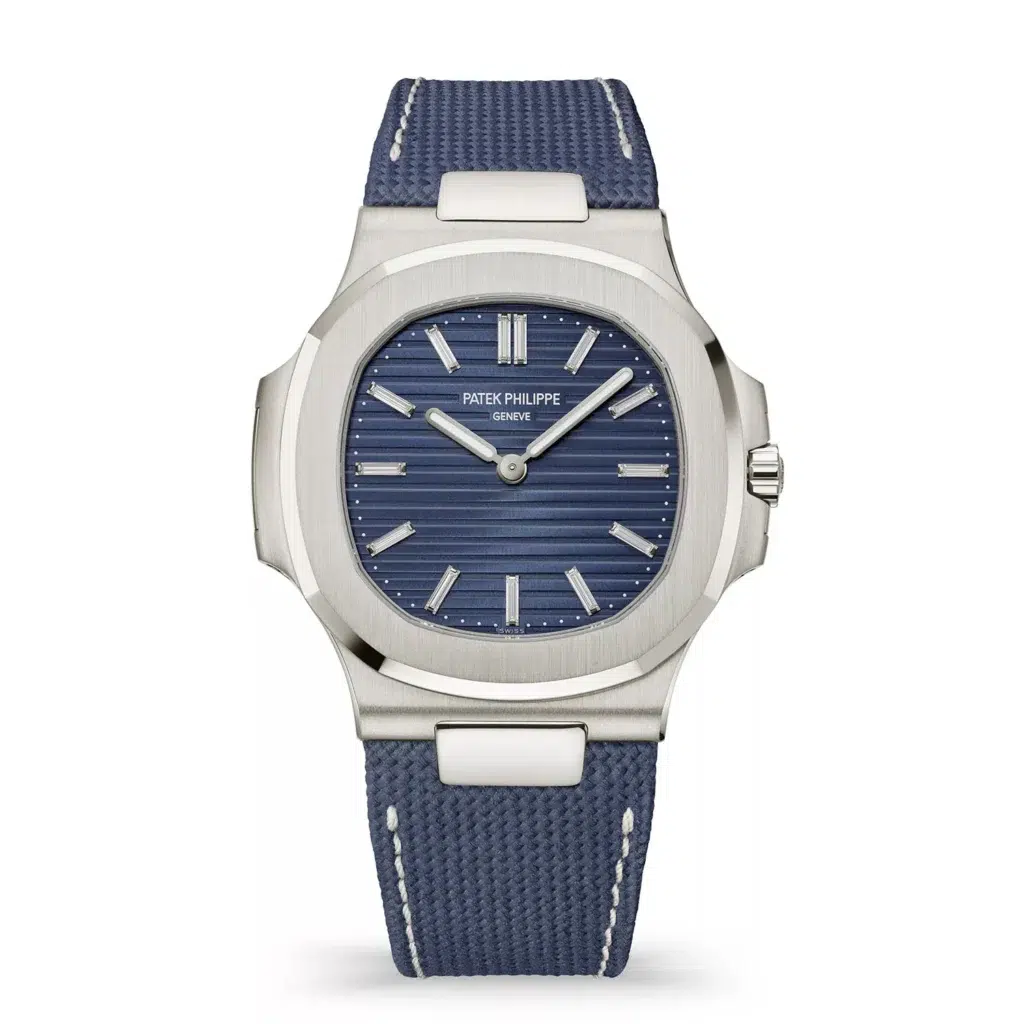
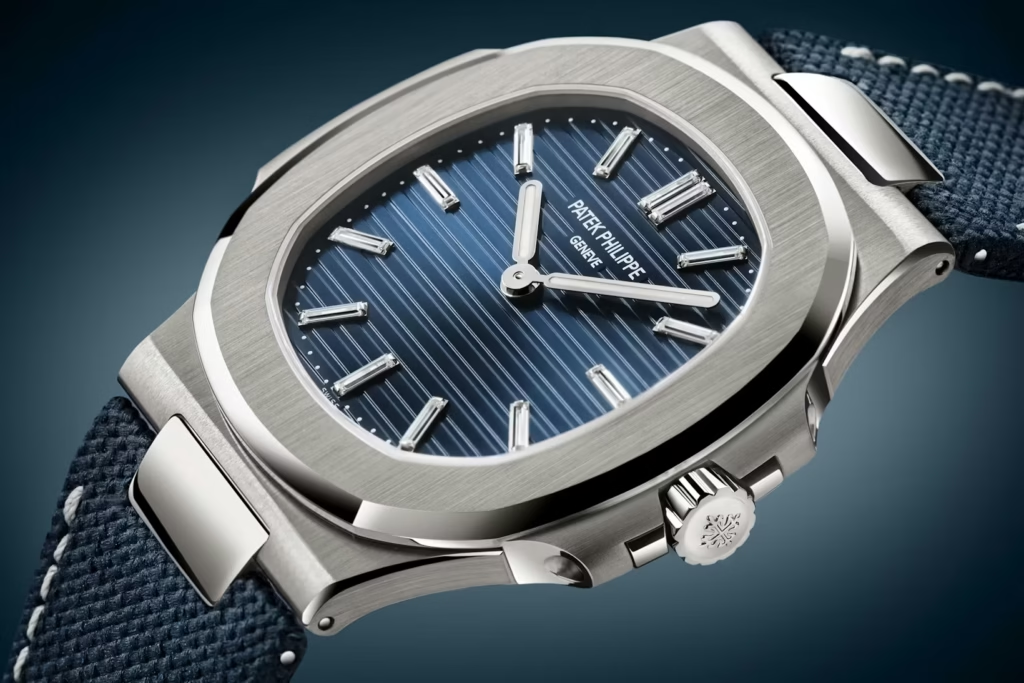
The 5810G-001 is the more contemporary expression of the trio, housed in a 41mm white gold case and paired with a composite strap. This reference distills the Nautilus into its purest modern sports-luxury form: lightweight on the wrist, visually clean, and focused entirely on balance and proportion. The absence of a seconds hand and date further sharpens its minimalist intent, allowing the horizontally embossed dial and case architecture to take full visual control. It feels like the most versatile interpretation—sporty, but deliberately restrained.
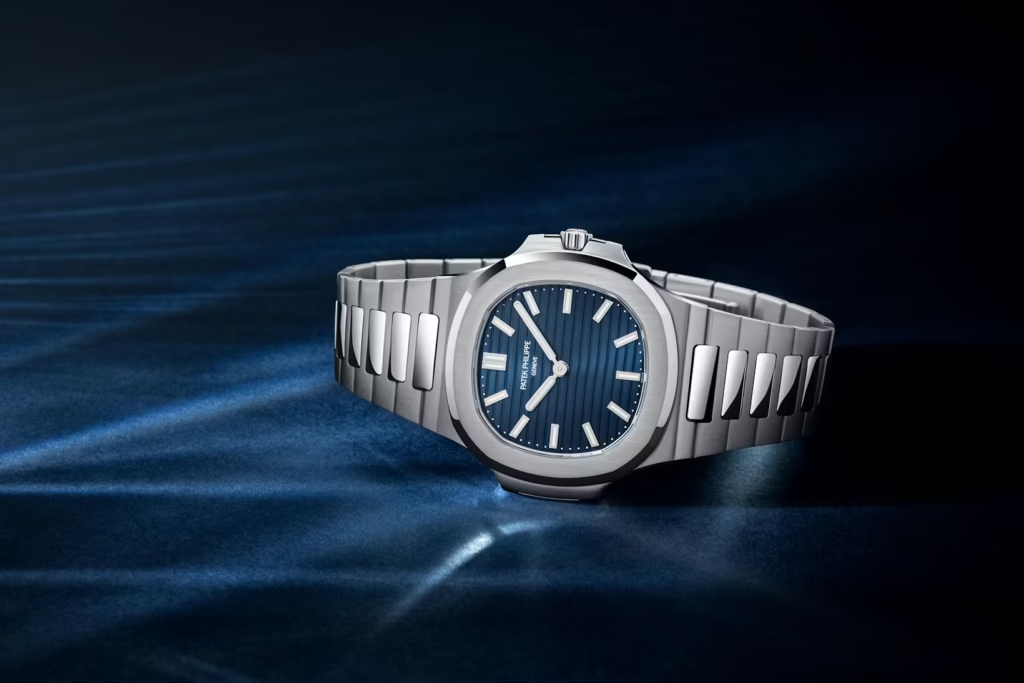
The 5810/1G-001 shares the same 41mm white gold case architecture as its sibling but shifts the character significantly through its integrated white gold bracelet. This version leans more heavily into the Nautilus’s identity as a luxury sports watch, where the bracelet becomes an extension of the case rather than a separate component. The visual weight increases, the presence becomes more formal, and the watch moves closer to the iconic image most collectors associate with the Nautilus lineage. It is, in essence, the more traditional and unmistakably “Nautilus” of the two 41mm references.
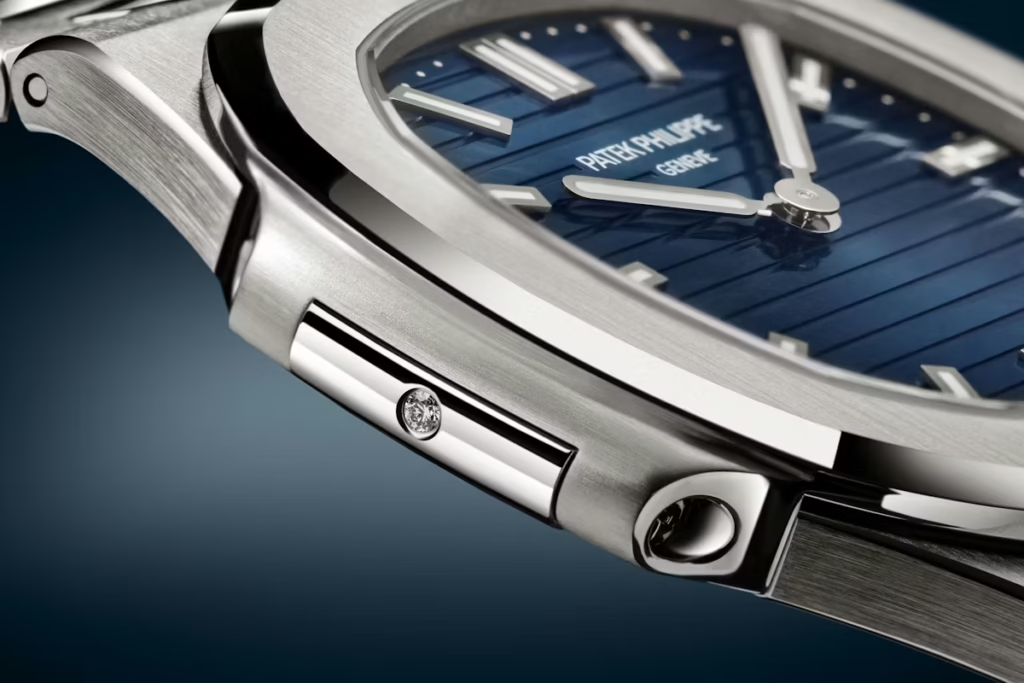
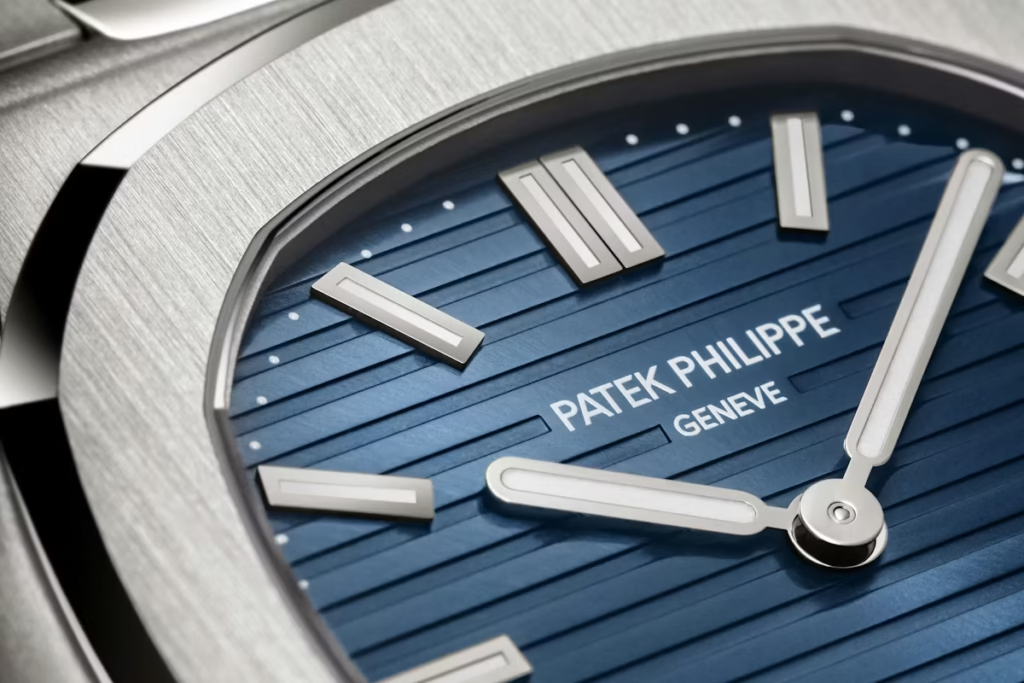
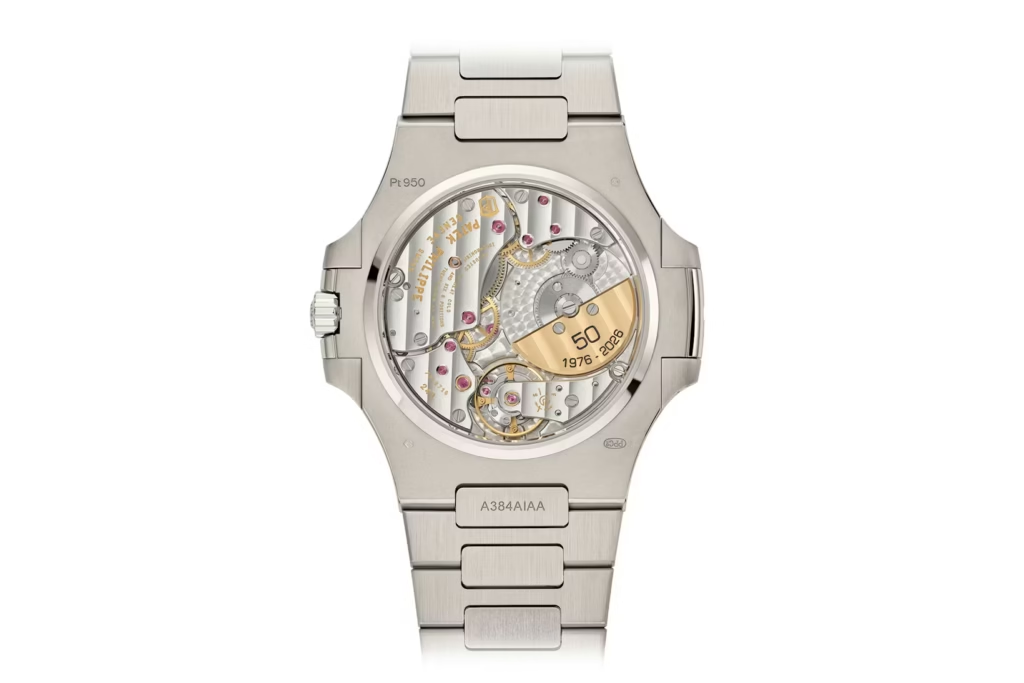
The 5610/1P-001 introduces a different interpretation entirely. At 38mm, and crafted in platinum with an integrated platinum bracelet, it brings a more compact and refined presence to the collection. This is the most elegant and discreet of the three, emphasizing wearability and subtle luxury over wrist dominance. The use of platinum elevates its tactile and visual density, while the reduced case size makes it feel more intimate and classic in proportion. It is the clearest expression of the Nautilus as a refined daily companion rather than a statement sports piece.
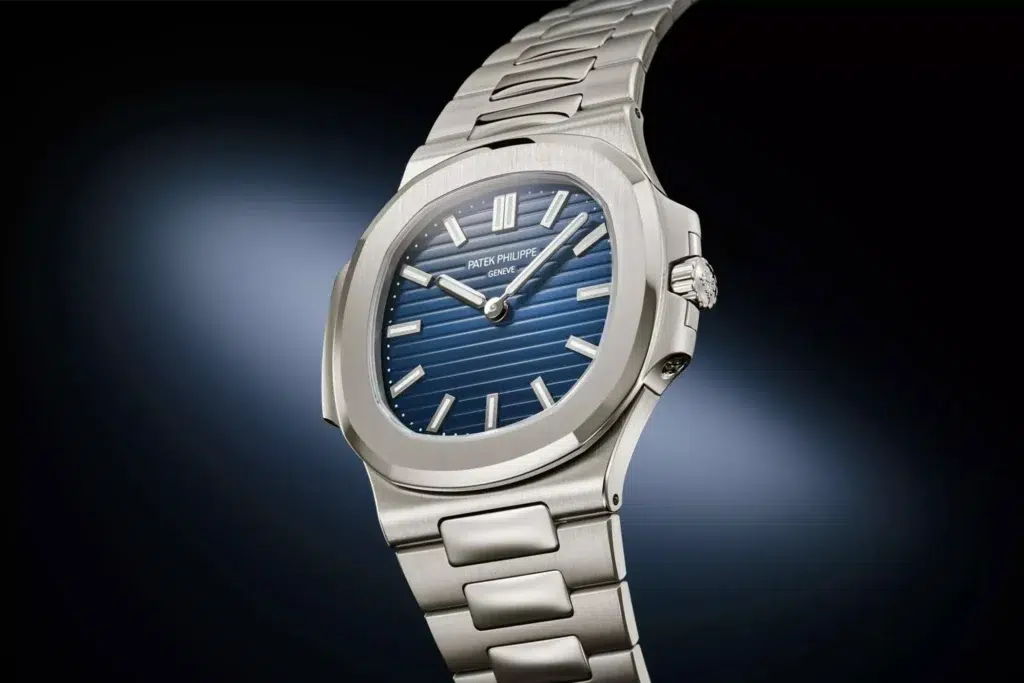
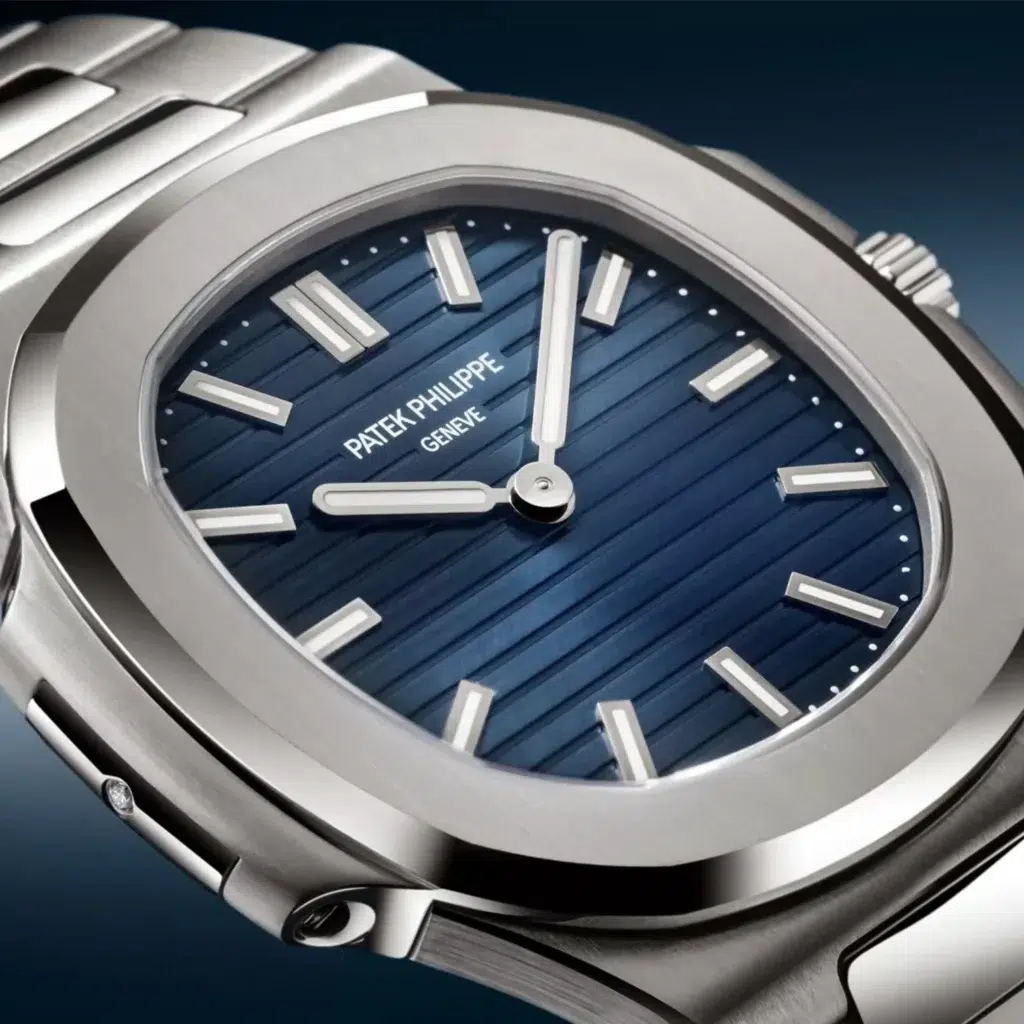
All three wristwatches carry the visual DNA that defines the modern Nautilus: integrated bracelet geometry, softened angularity, and a dial architecture that feels both technical and architectural.
The Unexpected Star: A Nautilus Desk Timepiece
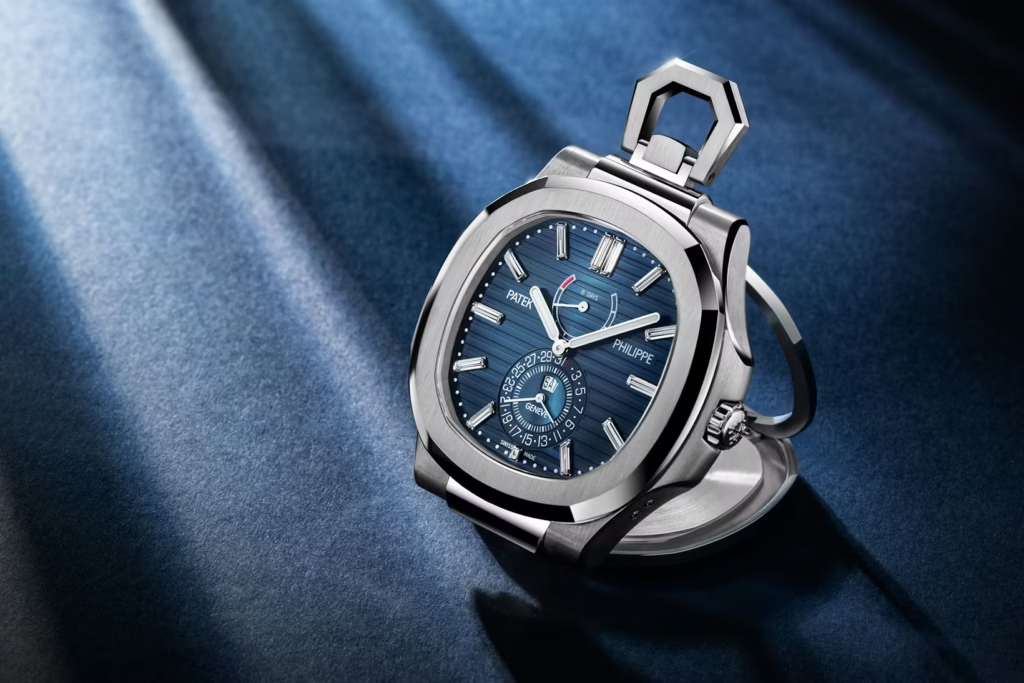
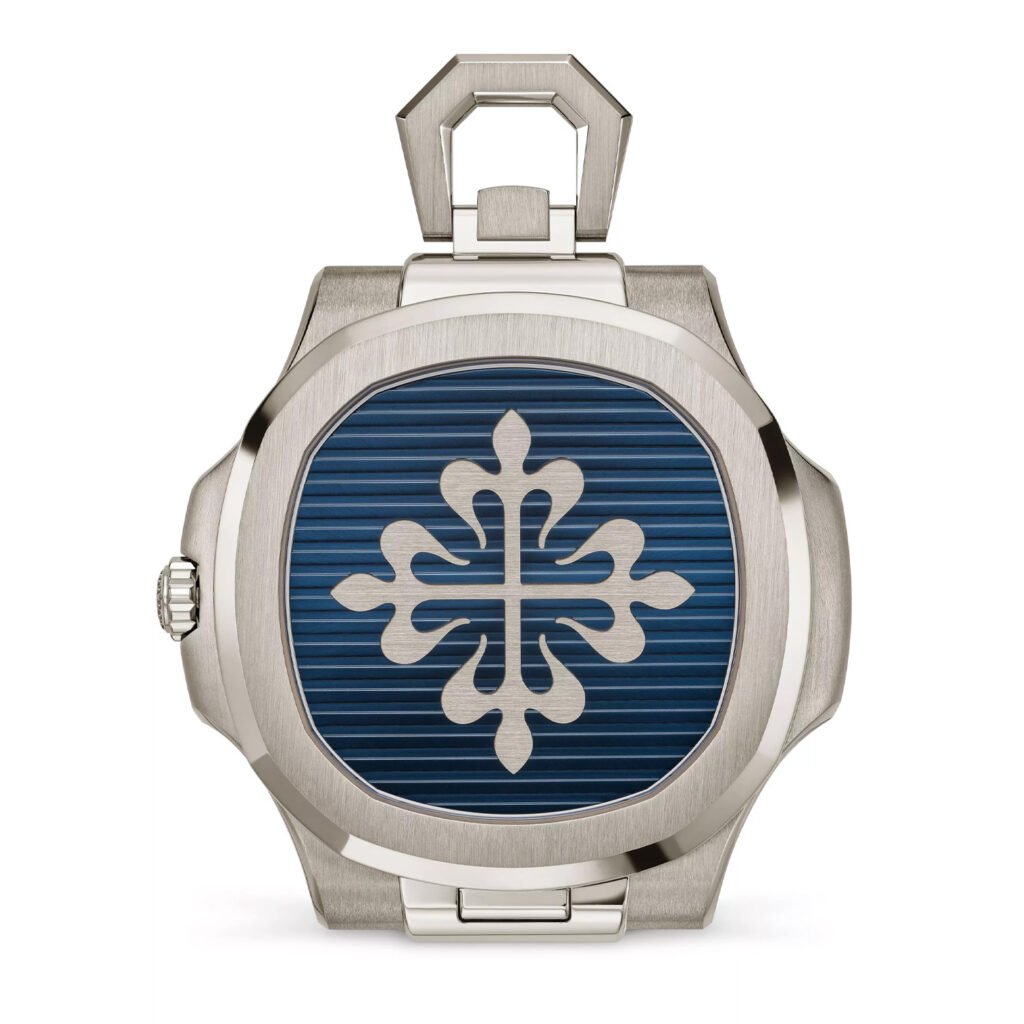
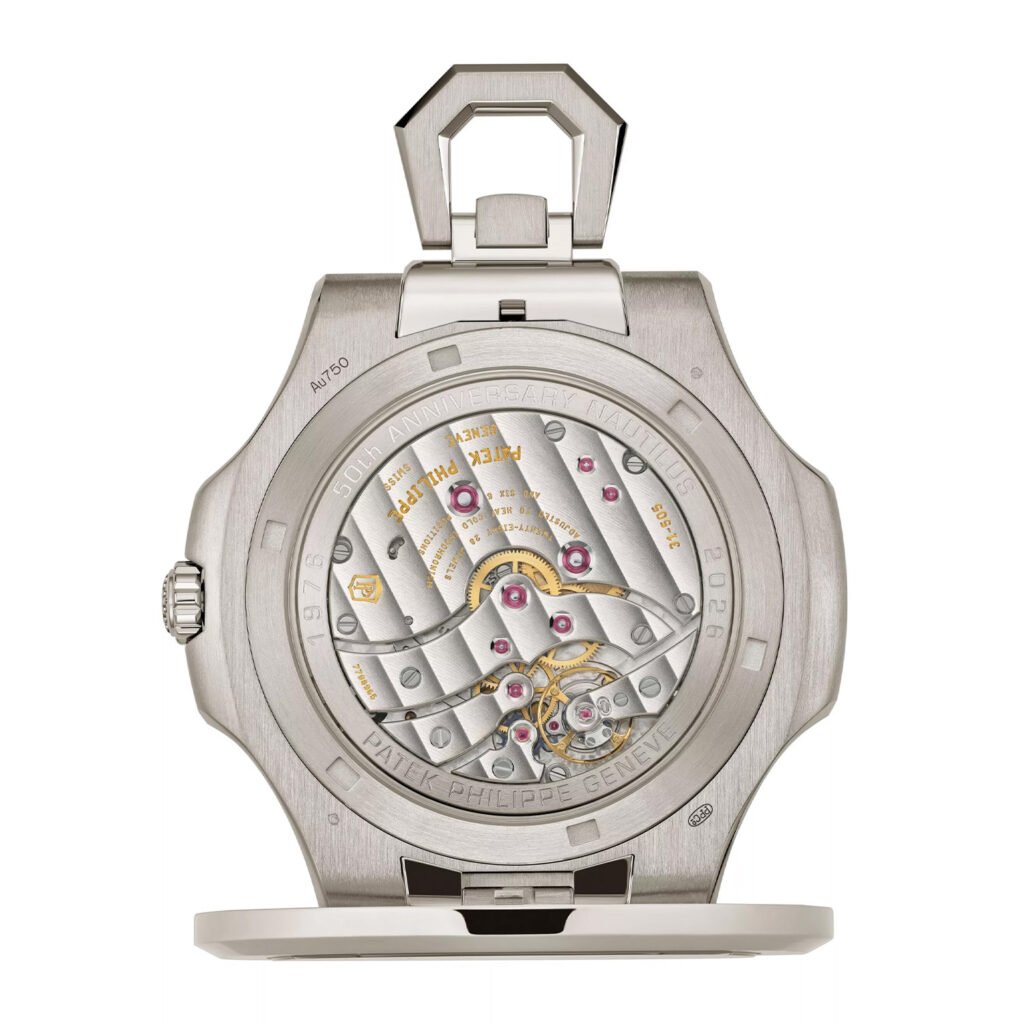
Perhaps the most surprising addition to the anniversary collection is not a wristwatch at all. Patek Philippe has introduced a Nautilus-inspired desk clock, reinterpreting the design language of the iconic sports watch into a stationary object of horological art.
This desk timepiece extends the Nautilus aesthetic into a new category, translating its case shape and dial cues into a sculptural object meant for interiors rather than wrists. It is a rare move for a brand that traditionally reserves such creations for its highest complication ateliers. The result is less functional instrument, more statement piece—a reminder that Patek Philippe’s design codes can exist beyond the wrist entirely.
Why This Collection Matters
Anniversary releases often risk becoming retrospective exercises, but this Nautilus collection feels more deliberate. Rather than reinventing the watch that already defines its category, Patek Philippe is reinforcing its language—tuning proportions, expanding formats, and exploring new contexts like the desk clock.
It also speaks to a broader shift in high-end collecting. The modern enthusiast is no longer focused solely on technical novelty but on narrative continuity—how a design evolves across decades without losing its identity. The Nautilus, now fifty years in, is one of the few watches that can claim that continuity without interruption.
A Half-Century of Controlled Evolution
The 50th anniversary Nautilus collection does not attempt to rewrite history. Instead, it tightens it. By introducing references such as the 5810G-001, 5810G-011, and 5610G-001, alongside a sculptural desk interpretation, Patek Philippe underscores what the Nautilus has become: a design system capable of existing across formats, sizes, and even environments.
As the Nautilus enters its sixth decade, the message from Geneva is clear. Evolution will remain cautious, deliberate, and deeply rooted in heritage—but never static. In a landscape where many icons are constantly reimagined, the Nautilus continues to do something more difficult: it simply endures, and in doing so, grows more desirable with every passing year.