
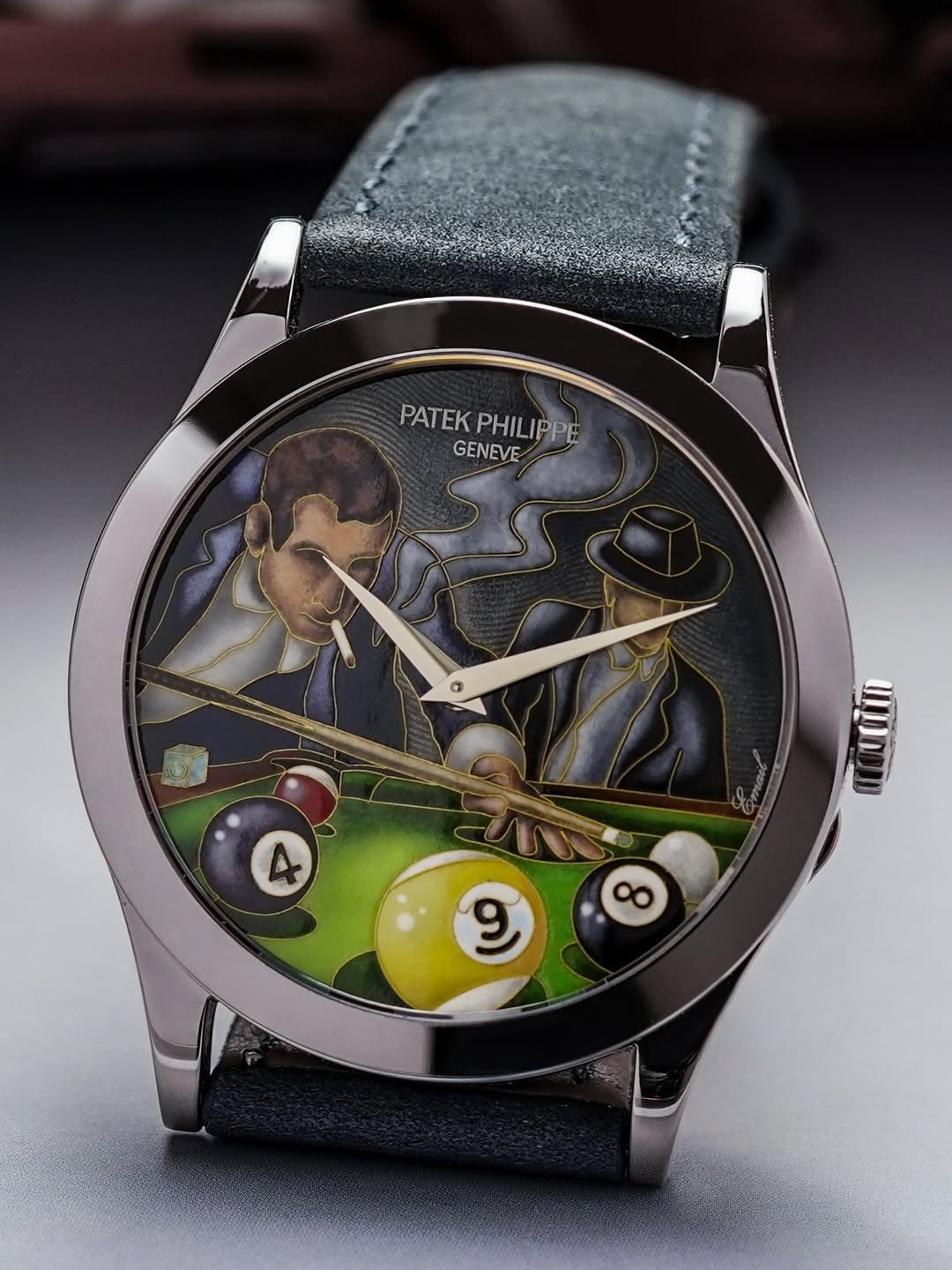
Every year, Patek Philippe reminds collectors that the art of watchmaking extends far beyond mechanical complexity. The Rare Handcrafts Calatrava Ref. 5089G “Billiards” is a perfect example. Beneath its elegant white-gold case lies not a conventional dial, but a painstakingly hand-painted enamel scene depicting a billiards table mid-game—executed using centuries-old decorative techniques.
It’s a watch that speaks less about timekeeping and more about artistry, craftsmanship, and the quiet patience required to produce a dial that can take weeks to complete.
The Rare Handcrafts Tradition
The Calatrava 5089 series belongs to Patek Philippe’s celebrated Rare Handcrafts collection, where the brand’s master artisans showcase traditional decorative crafts that have been preserved in Geneva for generations.
These crafts include grand feu enamel, miniature painting, engraving, wood marquetry, and cloisonné enamel—all techniques requiring years of training and an extraordinary level of precision. While many luxury watches rely on industrial dial production, these pieces are created almost entirely by hand.
In the case of the 5089G “Billiards,” the dial becomes a miniature painting, bringing a moment from the game to life in vivid color and remarkable detail.
A Dial Painted Like a Fine Artwork
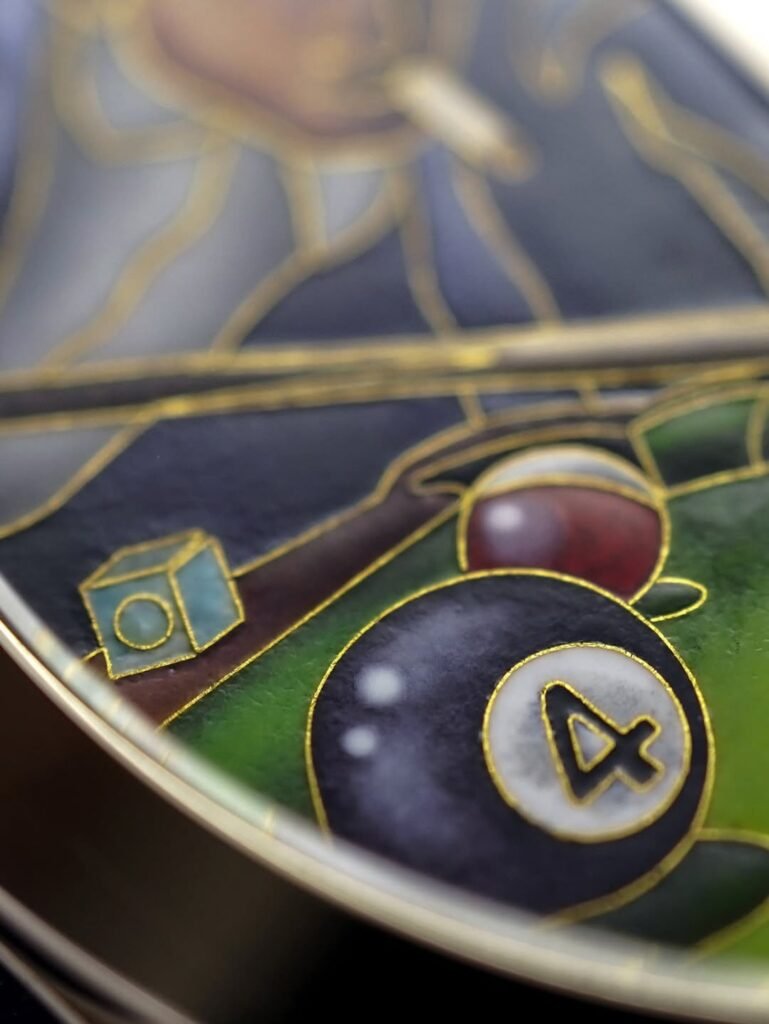
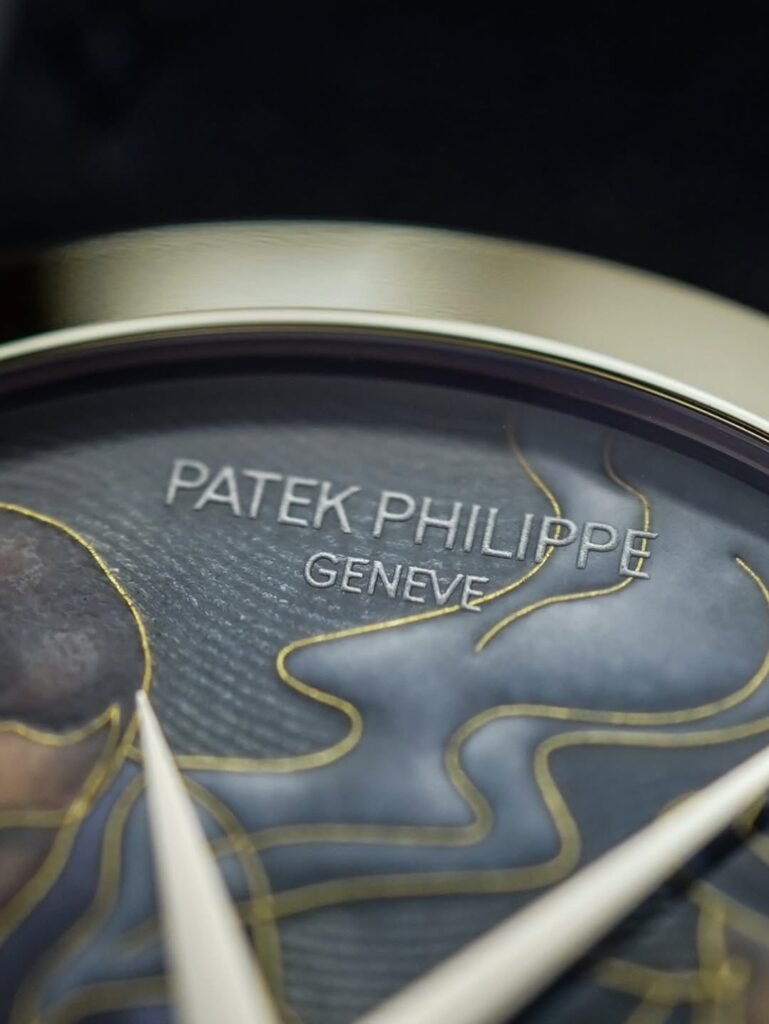
The dial of the 5089G “Billiards” is created using grand feu enamel miniature painting, one of the most demanding decorative techniques in watchmaking.
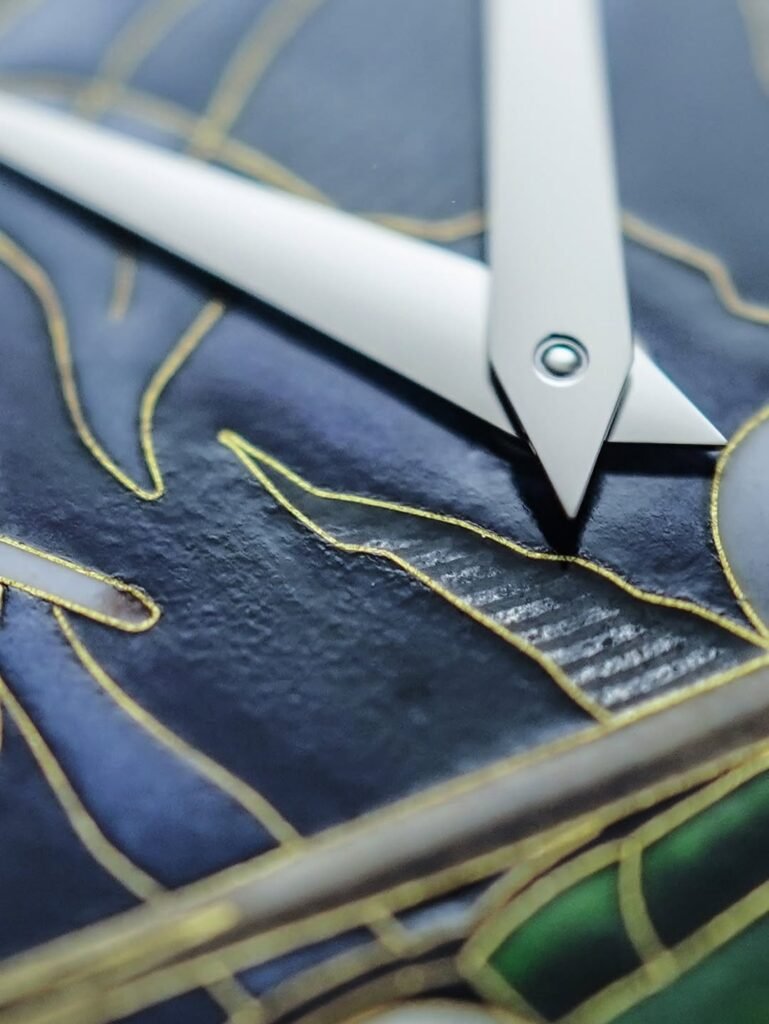
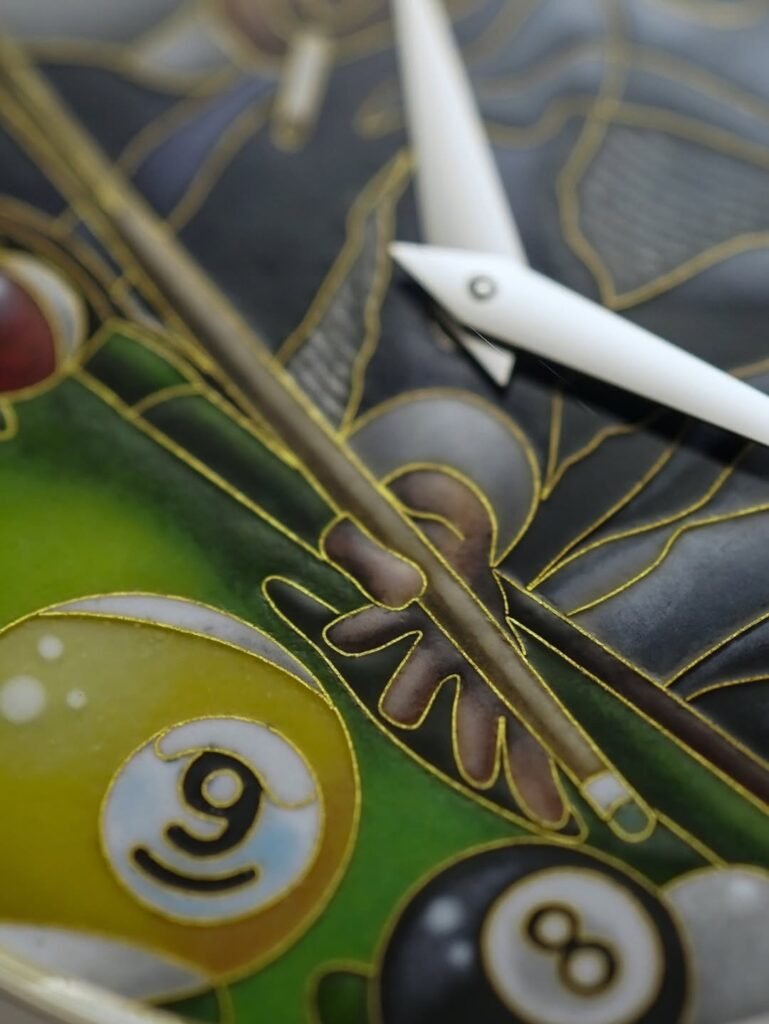
First, a base layer of enamel is fired at extremely high temperatures—often above 800°C—to create a smooth, glass-like surface. Once cooled, the artisan begins the painstaking process of painting the scene using extremely fine brushes and colored enamel powders.
Each shade must be applied in successive layers and fired repeatedly in the kiln. A single dial may require dozens of firings, and even a minor imperfection can ruin the entire piece, forcing the artist to start again from scratch.
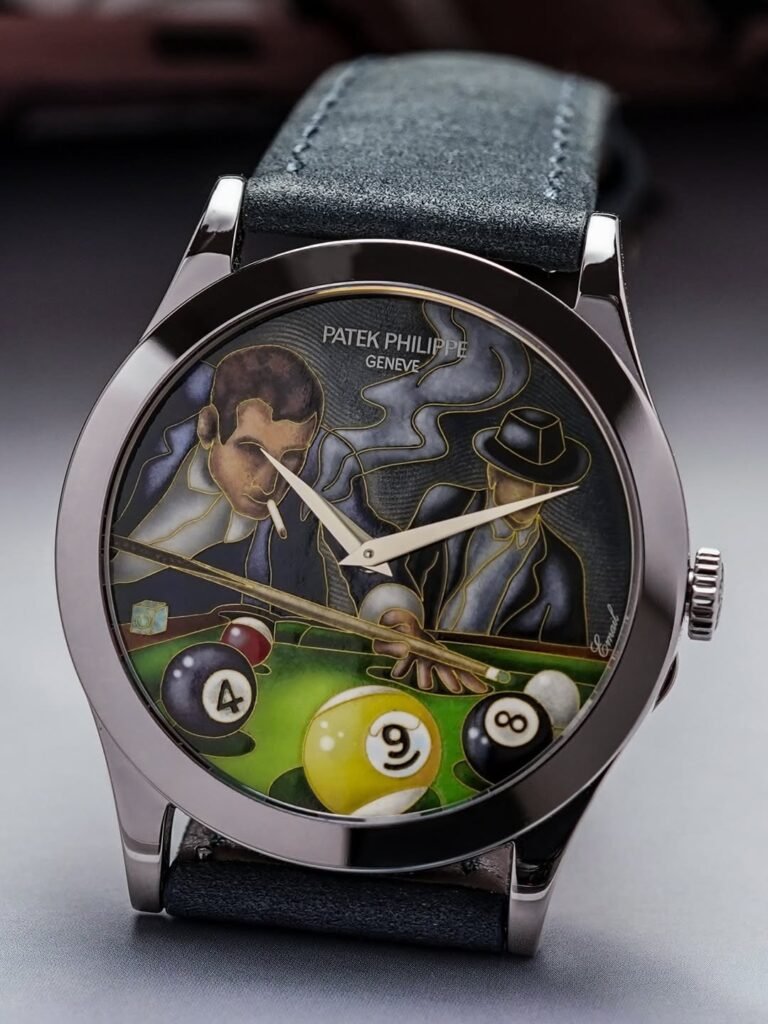
The billiards motif itself is remarkably detailed. The green felt table, the precisely positioned balls, and the subtle lighting effects are all rendered with careful brushwork, giving the dial a sense of depth rarely seen in watchmaking.
Because the enamel pigments fuse permanently with the dial during firing, the colors will never fade—ensuring the artwork remains vibrant for generations.
Design Highlights
The artistic dial is framed by a classic Calatrava case, reinforcing the idea that this is both a timepiece and a work of art.
Crafted in white gold, the 38 mm case features smooth polished surfaces and elegantly curved lugs that reflect the timeless design language of the Calatrava line.
A sapphire crystal protects the enamel dial, while the caseback reveals the finely finished movement inside.
Paired with a hand-stitched alligator leather strap, the watch maintains the understated elegance that has defined the Calatrava since its introduction in 1932.
Technical Specifications
Despite its artistic focus, the watch remains mechanically refined.
Key Specifications
- Model: Calatrava Ref. 5089G “Billiards”
- Case: 38 mm white gold
- Dial: Hand-painted grand feu enamel miniature scene
- Movement: Self-winding Calibre 240
- Power reserve: Approximately 48 hours
- Functions: Hours and minutes
- Caseback: Sapphire crystal display
- Strap: Alligator leather
The Calibre 240 is one of Patek Philippe’s most respected automatic movements, known for its ultra-thin architecture and micro-rotor winding system.
The Art of Time at Patek Philippe
For Patek Philippe, preserving traditional decorative crafts is just as important as developing new mechanical innovations. Through its Rare Handcrafts creations, the brand continues to showcase techniques that might otherwise disappear in the age of automation. The Calatrava 5089G “Billiards” embodies that philosophy perfectly: a watch where timekeeping becomes secondary to storytelling, and where a dial transforms into a permanent piece of miniature art. For collectors, it’s a reminder that the most captivating watches aren’t always the most mechanically complicated—they’re often the ones that carry the unmistakable touch of the human hand.