
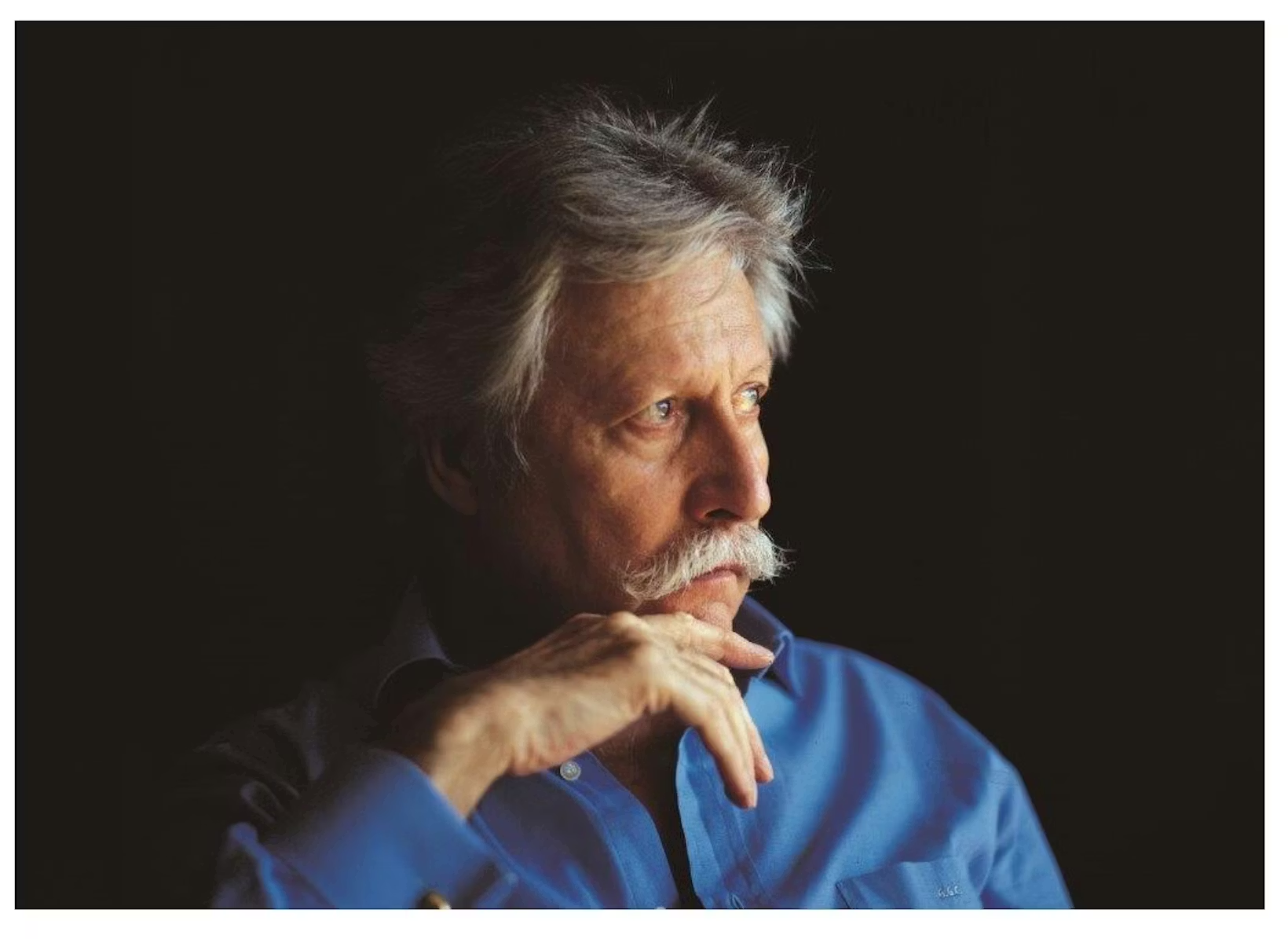
Few individuals have shaped modern watchmaking as profoundly as Gerald Genta. While the industry often celebrates brands, Genta proved that a single designer could redefine the direction of an entire category. His sketches gave birth to some of the most recognizable watches ever produced—models that not only saved historic manufactures during difficult periods but also introduced a new design language that continues to dominate luxury watchmaking today.
More than half a century after his most influential work first appeared, Genta’s legacy remains woven into the DNA of contemporary horology. And now, with the revival of the Gerald Genta name under the stewardship of Louis Vuitton and the LVMH group, his influence is entering a new chapter.
The Early Years: A Designer with an Architect’s Mind
Born in Geneva in 1931, Genta initially trained as a jeweler and designer before entering the watch industry during the 1950s. At the time, watchmaking was largely conservative. Cases were round, dials traditional, and creativity often constrained by established norms.
Genta approached watches differently. His design philosophy combined architectural structure with industrial aesthetics, blending bold geometry with functional clarity. Rather than seeing the watch as a purely mechanical instrument, he treated it as an object of design—one that could reflect modern taste and cultural change.
That perspective would soon lead to a revolution.
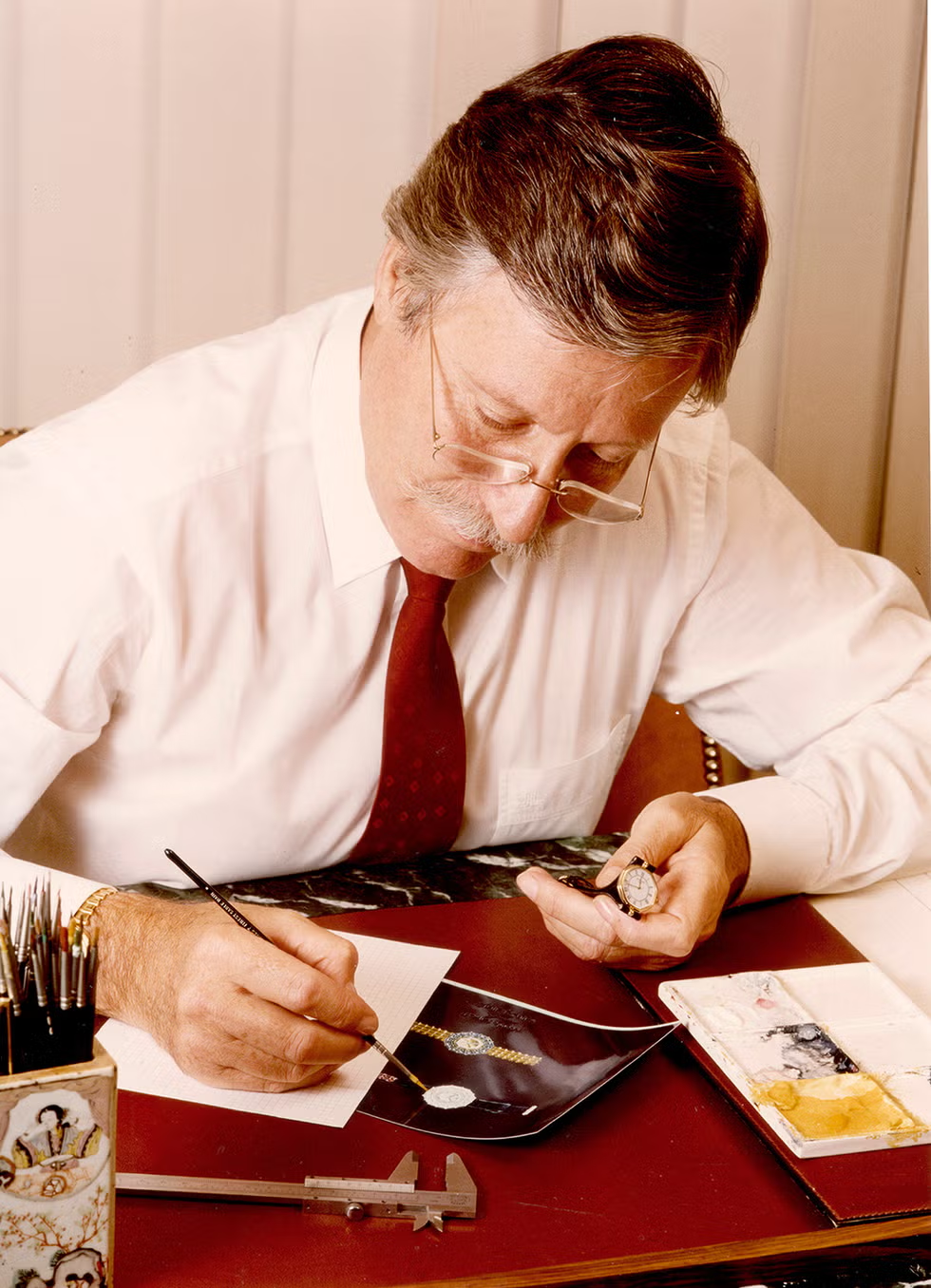
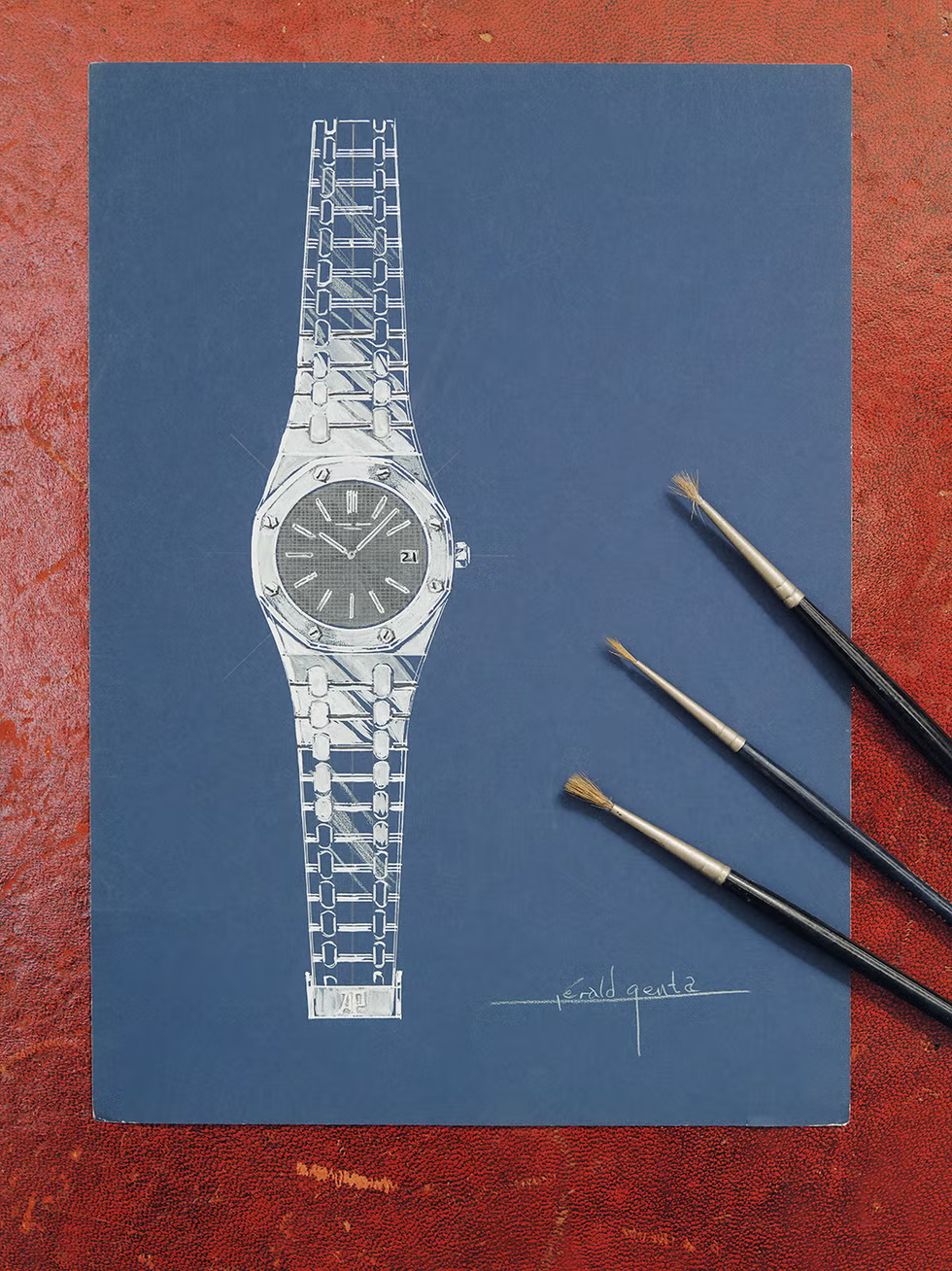
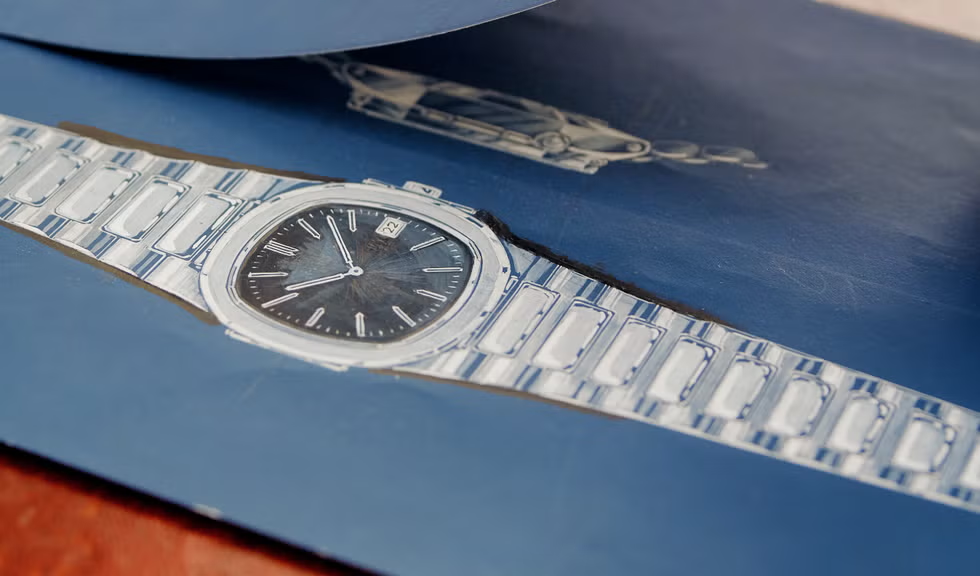
Photo references: Evelyne Genta
The Designs That Changed the Industry
Genta’s most famous creations arrived during the early 1970s, a turbulent moment for Swiss watchmaking as the quartz crisis began reshaping the industry. Ironically, his response was not technological innovation but radical design.
In 1972, Audemars Piguet introduced the Royal Oak, a watch unlike anything that had come before. Its octagonal bezel, exposed screws, and integrated bracelet transformed the concept of a luxury watch. Even more radical was the idea that a steel watch could command a price comparable to precious-metal pieces.
The Royal Oak redefined luxury sports watches—and it worked.
Just four years later, Genta delivered another icon for Patek Philippe: the Nautilus. Inspired by the porthole of a ship, its roun
ded octagonal case and integrated bracelet continued the theme of refined sportiness. Today, it remains one of the most coveted watches in the world.
Genta’s impact extended well beyond those two models. Among his other landmark designs:
- The Polerouter for Universal Genève, created when he was just 23 years old.
- The Ingenieur SL for IWC Schaffhausen, which introduced the integrated-bracelet aesthetic to the brand.
Collectively, these watches established a new genre: the luxury sports watch in steel. Today, virtually every major brand participates in this category—a testament to Genta’s enduring influence.
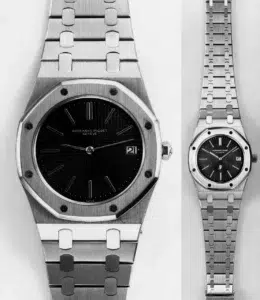
Photo references: APChronicles
The Neo-Vintage Era and Playful Complications
While his early career was defined by industrial design, Genta’s later work revealed a different side of his creativity.
During the 1980s and 1990s, he launched his own brand, producing watches that combined high complications with whimsical aesthetics. These pieces often featured retrograde displays, jumping hours, and minute repeaters—mechanical sophistication paired with unexpected visual storytelling.
Perhaps the most distinctive examples were his collaborations with The Walt Disney Company. Genta transformed characters such as Mickey Mouse into the hands of mechanical watches, blending pop culture with haute horlogerie in a way that collectors now recognize as quintessentially “neo-vintage.”
At a time when serious watchmaking often avoided humor, Genta demonstrated that craftsmanship and creativity could coexist.
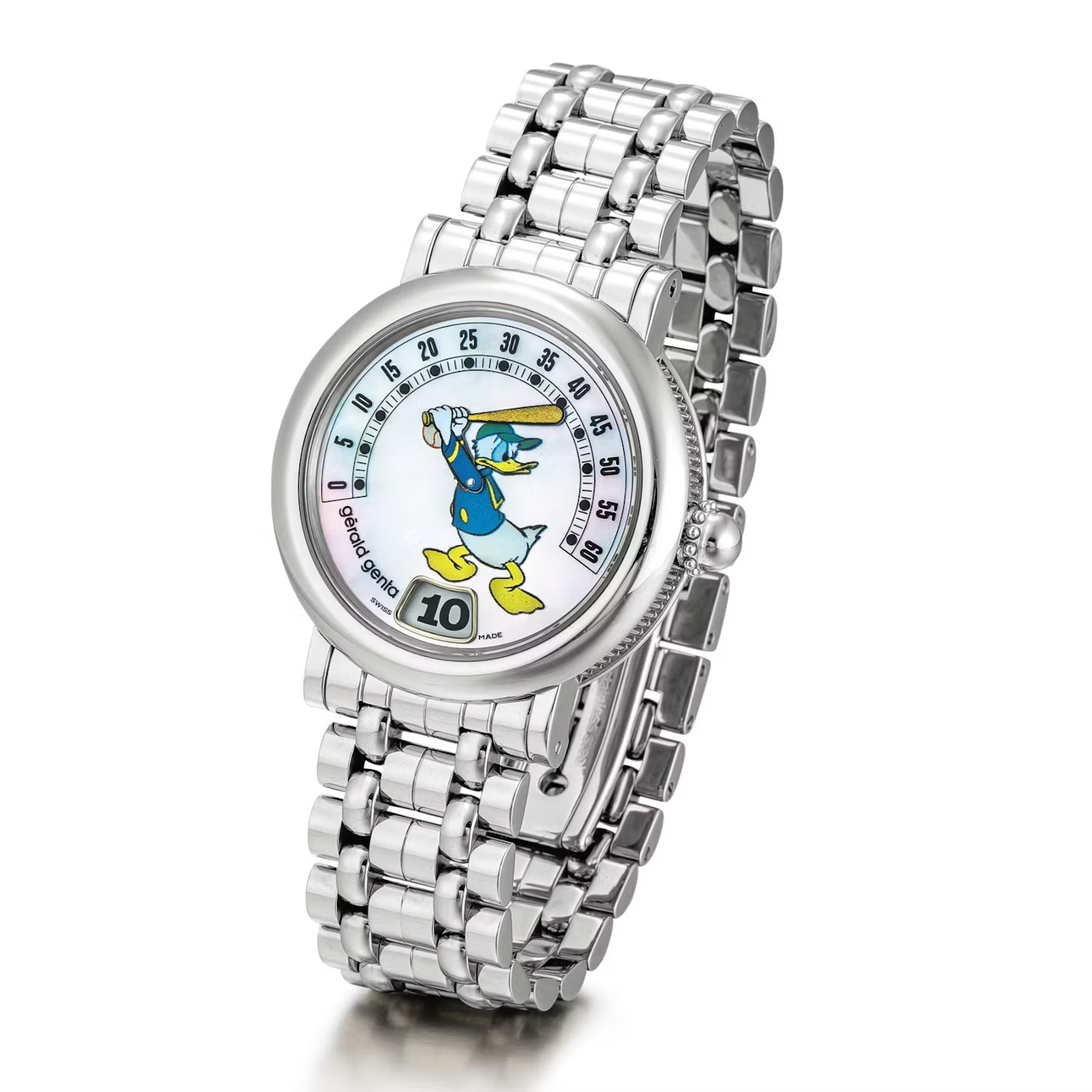
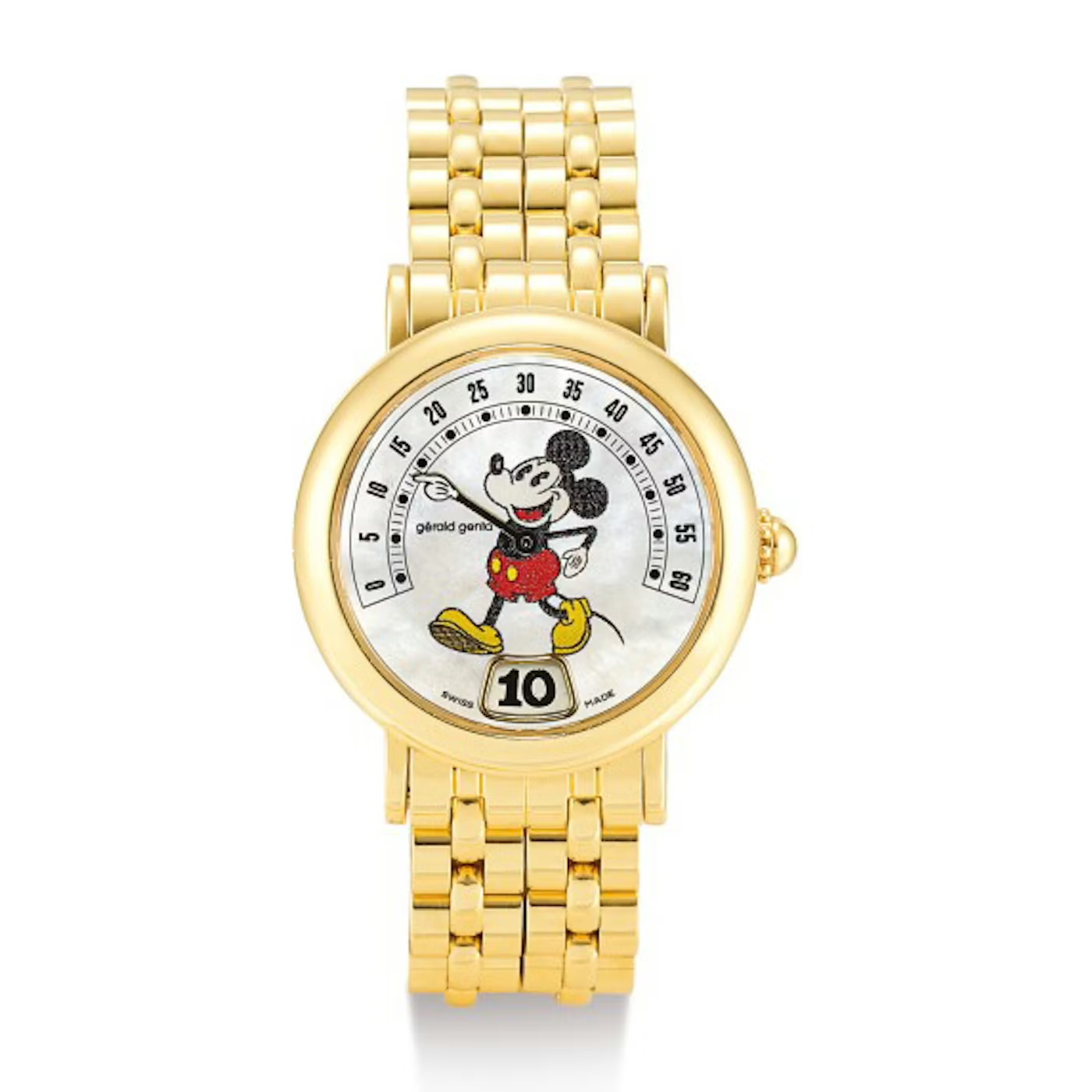
Photo references: Sotheby’s
The Revival of the Gerald Genta Brand
Following Genta’s passing in 2011, the brand bearing his name faded somewhat into the background of the industry. Yet interest in his work only intensified as collectors rediscovered the originality of his designs.
That renewed enthusiasm eventually led to a significant development. Under the leadership of Jean Arnault at Louis Vuitton Watches, LVMH announced plans to relaunch Gerald Genta as a standalone watch brand.
The revival aims to honor the designer’s unconventional spirit while introducing new interpretations of his signature complications. Early releases have focused on mechanical artistry—most notably sophisticated minute repeater pieces that echo the technical ambition of Genta’s original creations.
Rather than reproducing past designs, the strategy appears to center on continuing his philosophy: bold design paired with mechanical ingenuity.
Why Gerald Genta Still Matters
It is easy to view Genta as simply the designer behind a handful of famous watches. In reality, his influence runs far deeper.
He changed how watchmakers think about design itself. Before Genta, many brands treated case aesthetics as secondary to movement development. After the Royal Oak and Nautilus, design became central to a watch’s identity—and often its commercial success.
Today’s integrated-bracelet sports watches, architectural cases, and playful high complications all carry echoes of his thinking. Even brands that never worked directly with him operate within a landscape he helped create.
The revival of the Gerald Genta brand is therefore more than a nostalgic exercise. It is a recognition that one designer’s imagination continues to shape the future of watchmaking.
And if the next chapter remains faithful to his spirit of creative risk-taking, Gerald Genta’s influence may prove just as transformative in the decades ahead as it was in the last.